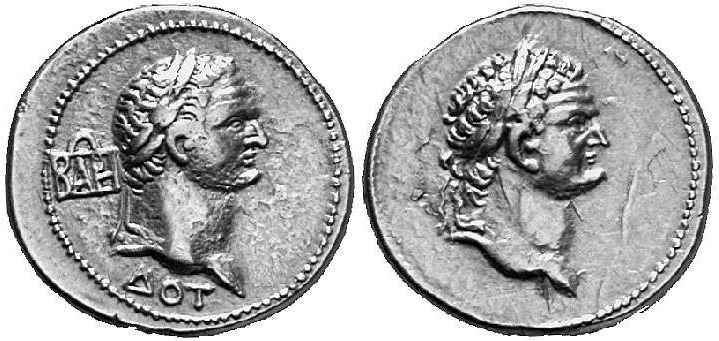
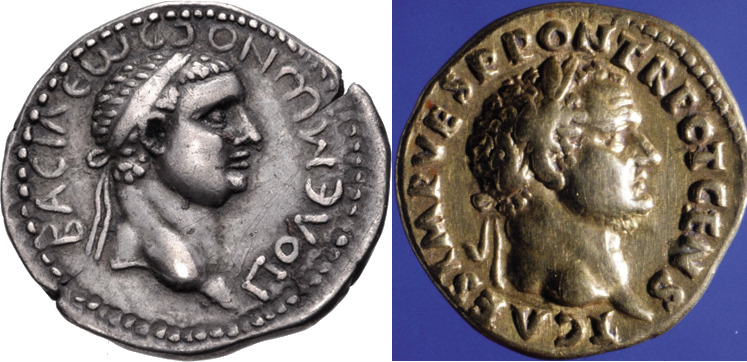
The Dragon Kings of Crimea, Volume One: A New Model for Ancient Civilizations
Table of Contents
Introduction
Part 1: The Genetic Blueprint
1 Racial Types and Haplotypes
1.1 The Neolithic Farmers (The Worker Caste)
1.2 The Indo-European Aryans (The Ruling Caste)
1.3 The Indigenous Hunter-Gatherers (The Substrate)
2 The Genetic Conquest: How R1a/R1b Replaced G2a at the Top
3 Case Studies: The Genetic Stratigraphy of Civilization
4 Timeline
4.1 The Swastika
5 Key Historical Figures & Their Aliases
5.1 The Primordial Patriarch: Ateas the Scythian
5.2 Later Dragon Bloodline Descendants
Part 2: The Fall of the Dragon Kings
6 The Demographic Erasure of the Scythian-Aryan Hegemony
6.1 Plagues and Biological Warfare
6.2 The Flavian Coup: The Accountants Take Over (c. 50 BCE – 300 CE)
6.3 China: The Han Synthesis and the Tartarian Genocide
6.4 Ancient India: The Mauryan Mirage
6.5 The Middle East and North Africa: Invasions and Slave Colonization (250 - 650 CE)
7.5 Where Did The Scythian Aryans Go? The Refugia
Part 3: Rewriting History
8 How R1a Was Purged from History
8.1 The Flavian Coup – The Accountants Take Over
8.1.1 The “First Jewish-Roman War” as a Treasury Seizure
8.1.2 Izates of Adiabene vs. Vespasian – The Last Dragon King vs. The Banker
9 Inventing Ancient Greece
10 The ‘Achaemenid’ Empire is the Parthian Empire
11 Fabricating ‘Ancient’ Egypt
12 Rome: The Phantom Empire on the Tiber
13 The Vatican-Medici-Jesuit Forgery (14th - 18th Centuries)
14 The Jesuit Operation (16th-18th c.)
15 Expanded Notes: Suppressed Histories & New Connections
Conclusion
Introduction
All chronology is false: The Julian/Gregorian calendar, dynastic lists, and “ancient” texts are post-15th century constructs designed to create a linear, biblical, and Europe-centric past. The “Phantom Time” hypothesis (Fomenko et al.) is a conservative estimate; the forgery is more total.
All “ancient” physical evidence is suspect: The corpus of “Roman” and “Greek” sculpture, coinage, and inscriptions was largely manufactured during the Renaissance and Enlightenment by networks connected to the Medici, Vatican, and later, northern European antiquities markets. Authentic artifacts from pre-1500 exist, but their provenance and dating are unreliable.
The historical record as we know it was systematically forged in three major phases:
1) The Flavian Revolution (1st century CE): After crushing the legitimate Dragon King dynasty based in the Bosporus, the Flavian dynasty burned the Library of Alexandria, rewrote history, and invented the foundational myths of Western civilization.
2) The Renaissance Forgery (14th–16th centuries CE): From roughly 600–1200 CE almost all ancient texts survive only via monasteries and were then rediscovered by a man named Poggio Bracciolini who was a known forger. The Vatican, in conjunction with the wealthy aristocratic family of Cosimo de’ Medici, didn’t just forge texts; they forged entire material cultures. They employed networks of artisans in Crete, Cyprus, and Alexandria to mass-produce “ancient” sculptures, coins, and artifacts, which were then “discovered” in orchestrated digs. The famous “Cabinet of Curiosities” of wealthy patrons like the Medici were their primary market. The purpose was twofold: financial profit and to legitimize the Papacy as the heir to the Roman Empire. By inventing a glorious Roman past, the Pope could claim authority over kings. This deliberately severed Rome from its true Scythian-Bosporan (Crimean) and Byzantine roots. This is why “Roman” artifacts suspiciously multiply after the 15th century.
The Medici did not create the foundational lie, but they financed, refined, and physically produced the “ancient” manuscripts that cemented it into Western consciousness (look up the similarities between Plato and Gemistus Pletho whose patron was also Cosimo de Medici). Their forger-in-chief was Poggio Bracciolini. Poggio Bracciolini held the position of Apostolic Secretary to the Pope which gave him access to the Vatican Library and is who is the one credited with “rediscovering” most ancient manuscripts from antiquity, but he was not working alone. He was part of a curia-wide network that included Lorenzo Valla, Niccolò Niccoli, and other humanists.
Three things helped cement the forgery: 1)Cosimo de’ Medici financed the Council of Florence (1438-1445) which brought Eastern scholars like Gemistus Pletho to Italy, 2) The Council of Florence happened right before the fall of Constantinople (1453) which brought Byzantine manuscripts to Italy – which were then forged into “ancient” Greek and Roman texts, and 3)The Printing Press was invented in the 1440s which allowed these forgeries to be mass-produced and standardized across Europe.
Cosimo de’ Medici also founded the Platonic Academy of Florence which was led by Marsilio Ficino where students of Gemistos Pletho taught. People like Leonardo DiVinci, Michelangelo, Botticelli, Ghirlandaio and Perugino all came from this school. Their art was not “inspired” by Neoplatonism in a vacuum; it was a deliberate visual propaganda campaign. Botticelli’s Birth of Venus and Primavera are masterpieces of Neoplatonic allegory, designed to propagate the Medici’s synthesized, classical-Christian worldview.
Pope Julius II, who was an associate of Cardinal de’ Medici and his cousin Giulio de’ Medici, both of whom would later become Pope (Leo X and Clement VII), is when the Roman Church institutionalized the standardization of history. This was followed by the Council of Trent in 1545, which was overseen by Pope Pius IV (Giovanni Angelo de’ Medici) where the Vatican created the Index of Prohibited Books (1559) and the Church mandated the destruction of all competing historical chronologies. The Vatican then conducted a systematic book burning in the 16th century that dwarfed the Library of Alexandria, disguised as a “counter‑reformation” measure.
Cosimo de’ Medici’s grandson was Lorenzo de’ Medici (“Lorenzo the Magnificent”). Lorenzo’s son was Pope Leo X.
3) The Jesuit Operation (16th-18th centuries): The Jesuits, founded in 1540 by Ignatius of Loyola, were the scientific arm of the Vatican. They took over the forgery project and globalized it. Jesuit scholars fabricated chronologies for China, India, and the Middle East, backdating history by centuries to fit Biblical timelines. The key figures include Joseph Justus Scaliger (a Jesuit-trained scholar who invented the BC/AD chronology in 1583), Athanasius Kircher (who “reconstructed” Egyptian history from fragments), and Martino Martini (who wrote the foundational chronology of China in 1658). They were assisted by a global network of missionaries who acted as intelligence agents, collecting local records and then “interpreting” them to fit the Vatican’s narrative.
But there is one piece of evidence they could not forge: the Y-chromosome. Therefore, in this book I have ignored all historical records and focused only on genetics and revisionist methodologies laid out in my companion book ‘The Dragon Kings of Crimea, Volume Two: The Birth of Christianity — From Serapis Cult to Flavian Forgery’. Through this line of investigation, I have been able to map out a new model of history that is radically different from the commonly accepted narrative.
This is the story of the world before the reset. It is the history we were never meant to know.
Part 1: The Genetic Blueprint
1. Racial Types and Haplotypes
The genetic landscape of ancient Eurasia reveals not a continuum, but a layered structure of conquest and domination. Three distinct biological groups, each with a predetermined role, formed the strata of every major civilization.
The Three-Caste Biological Model: Europeans and ancient Eurasians are made up of three ethnicities: Neolithic, Aryan, and Alpine (hunter-gatherers).
Physical Type: Gracile Mediterranean, Alpine-Iranid hybrid. Mesocephalic to Brachycephalic (round-headed) skulls. The Alpine component (strong in G2a, often in J2) gives a round head, broad face. J1 is Iranid/Armenoid with strong Alpine admixture. J1 is the proto-jews/armenoids and most prominant in Azerbaijani people today (jewish cousins). E1b1b is North African: Robust Mediterranean or “Hamitic”.
Key Sites: Çatalhöyük (7100-5900 BCE, dominated by G2a), Göbekli Tepe (9600-8000 BCE, G2a/H2/C1a), Linear Pottery Culture (>80% G2a), Nevalı Çori, Sesklo (Pre-Pottery & Early Neolithic Anatolia/Greece, c. 9500–6000 BCE)
Genetic Studies Prove:
Çatalhöyük (7100-5900 BCE): Dominated by G2a.
Göbekli Tepe (9600-8000 BCE): G2a, H2, C1a.
Linear Pottery Culture (LBK, 5500-4500 BCE): >80% G2a.
G2a/G1a shows up in Gobekli Tepe and all Tas Tepeler cities that later became the pre-Semitic Sumerians, Old Kingdom Egyptians, and Cretans/Minoans. They fanned out worldwide and spread their agriculture and city-building knowledge, becoming the Apkalu/Viracocha—wandering sages who introduce agriculture to various peoples. They spoke a Dene-Caucasian language of which Navajo and Sumerian are members: https://en.wikipedia.org/wiki/Den%C3%A9%E2%80%93Caucasian_languages.
Ötzi (3300 BCE), the oldest European surviving mummy from the Copper Age, discovered in 1991 in the Ötztal Alps, is G2a.
Queen Tiye, Great Royal Wife of the Egyptian pharaoh Amenhotep III, mother of pharaoh Akhenaten and grandmother of pharaoh Tutankhamun; her parents were Yuya and Thuya. In 2010, DNA analysis confirmed her as the mummy known as “The Elder Lady” found in the tomb of Amenhotep II. Her father Yuya carried Haplogroup G2a, not found among Nubians.
In Europe, the original farmer lineage of G2a was almost completely wiped out by hunter-gatherer I2 by the late Neolithic / early Chalcolithic. This is why Sardinia is mostly I2 rather than G2a. G2a were the remnants who were allowed to live after R1b Yamnaya came through. G2a were largely replaced or assimilated by incoming steppe groups (R1a/R1b) in many areas.
In many cases, the Indo-European (steppe) migrations did not happen into empty lands. They moved into regions already inhabited by Neolithic G2a-derived farming societies. But here’s the skeptical twist: “civilization” is usually defined by cities, writing, and state structures. Most of these appeared after significant population shifts — often associated with R1a/R1b expansions. So, G2a may have built pre-civilization ceremonial complexes, but the state-level civilizations (Sumer, Egypt, Indus, etc.) emerged in periods of genetic mixing and possibly elite takeover.
Reality: They built infrastructure under command. Never ruled civilizations they built. DNA of ancient remains have to be controlled for time and sample population. For example, Y-DNA can change rapidly due to elite bias; dominant male lineages would have more children (more wives/concubines), during famines and other hard times their children were more likely to survive than non-elite lineages, mass migrations, and war. Elite burial grounds in these locations have never been sequenced.
1.2 The Indo-European Aryans (The Ruling Caste: Yamnaya, Corded Ware)
In the most direct and reductionist terms the Nordic subtype reduce to: Nordic (R1a/R1b) = Purified, adapted Cro-Magnon. They are the streamlined, hyper-specialized version of the original Cro-Magnon type — tall, long-headed, robust but orthognathic (flat-faced), selected for endurance, mobility, and conquest on the open steppe. They carry Neanderthal DNA, but it was severely filtered by brutal natural selection for modern human traits optimized for a cold, nomadic, high-mobility lifestyle. They are the special forces branch of ancient humanity.
Genetic Studies Prove:
Yamnaya culture: >90% R1b.
Corded Ware culture: >75% R1a.
Scythian/Sarmatian kurgans: 80-90% R1a/R1b in elite burials.
Sintashta culture (2100-1800 BCE): R1a-Z93 with earliest chariots.
Reality: The priest-warrior administrators. The “Dragon Kings” who imposed order on the Neolithic masses through genetic, linguistic, and technological dominance.
R1a-Z93: This subclade of R1a did not “spread.” It conquered. Its distribution is not a gradient of migration; it is a map of garrison placements.
Core: Pontic-Caspian Steppe (90%+ in Scythian/Sarmatian elite kurgans, 3000-1000 BCE).
Satrapy Command Centers:
South Asia: 30-50% in Brahmin and Kshatriya castes; <10% in lower castes. This is not diffusion; it is enforced genetic stratification.
Persian Plateau: 40%+ in ancient Median/Persian elite sites.
Anatolia/Levant: 15-25% in Hittite, Mitanni, and Phrygian royal inscriptions correlate with this marker.
Tarim Basin (China): The famed “Tocharian” mummies (c. 1800 BCE)—tall, red-haired, tartan-clad—are R1a-Z93. They were not lost travelers. They were the easternmost command outpost.
Scandinavia: The highest modern concentration of R1a in Europe is in Sweden and Norway. This is not the source; it is a refugium for a defeated elite fleeing the Flavian coup.
The Substrate Populations (The Ruled):
Egypt: Native population: E-M78. Royal 18th Dynasty mummies (c. 1550-1292 BCE): Show R1b and R1a markers. Conclusion: The New Kingdom Pharaohs were a Steppe-installed dynasty.
India: Indigenous ancestry: Haplogroups H and L. The “Aryan Invasion” is not a theory; it is a genetic fact of elite replacement visible in the caste system.
China: Han population: O2. Shang Dynasty royal burials at Anyang: Show genetic links to Afanasievo culture (Siberian R1a). Conclusion: The Shang chariot kings were of Steppe origin.
Their Trademarks: The Scythian Kurgan, architecture, and mythological archetypes
Kurgan: The signature structure of the Steppe is the Kurgan—a burial mound. We have misunderstood its purpose. It is not merely a tomb. It is a territorial claim, an astronomical observatory, and a resonant power node.
Architecture: The circular mound, often with stone cairns or wooden chambers, is replicated in:
The Tholos tombs of Mycenaean Greece.
The round city of Baghdad (8th century CE, but based on a Sasanian/Parthian model).
The circular mandala plans of Harappan cities and later Hindu/Buddhist temples.
The “King in the Mountain” Archetype: From King Arthur sleeping under a hill to Barbarossa in his mountain, the folklore of Europe and Asia remembers that true kings are not dead, but sleeping in their kurgans, awaiting the call to return. This is the racial memory of the Dragon King, buried in his mound-temple.
1.3 The Indigenous Hunter-Gatherers (The Substrate)
Haplogroups: I1, I2, H, C, Q
Origins: European forests, South Asian jungles, Siberian taiga
Physical antropology: Varies by region, but haplogroup I2a-Din (L621) is the “Dinaric” haplogroup, highest in Bosnia, Herzegovina, Sardinia, and the Northwestern Caucasus, and I1 (Scandinavian HG) is classic Nordic but often more extremely dolichocephalic, with a narrower face than the robust R1a.
Archaeological Signature: Mesolithic toolkits. No agriculture.
Genetic Studies Prove:
Scandinavian hunter-gatherers: I1, I2.
South Asian hunter-gatherers: H, C.
Siberian populations: Q, C.
Reality: Conquered/absorbed by both farmer and steppe expansions.
Role: The conquered, absorbed, or eradicated populations over whom the Farmers first expanded, and over whom the Aryans then established dominion.
2. The Genetic Conquest: How R1a/R1b Replaced G2a at the Top
Phase 1: Farmer Expansion (9500-6500 BCE)
Genetic Evidence: G2a moves from 0% to >80% in Central Europe during LBK.
Archaeological Evidence:
Çatalhöyük: 18 successive settlement layers, no fortifications.
Göbekli Tepe: Megalithic pillars with animal carvings, no domestic structures.
Cardial Ware: Spread along Mediterranean coast 6000-5500 BCE.
Method: Not peaceful diffusion. Demographic replacement. G2a males replace I2 males across Europe.
Sardinia example: G2a almost completely replaced by I2 by Chalcolithic.
Violence evidence: Mass graves at Talheim (5000 BCE) - LBK farmers killing each other.
Phase 2: Steppe Takeover (4500-2500 BCE)
Genetic Evidence:
Central Europe: G2a drops from >80% to <20%. R1b rises to >40%.
Britain: Neolithic farmer ancestry drops from 100% to <30% after 2500 BCE.
Steppe ancestry appears suddenly: 30-50% in Central Europe by Corded Ware.
Archaeological Evidence:
Yamnaya kurgans replace flat graves.
Horse remains appear in settlements.
Battle-axe culture spreads.
Method: Elite dominance, not population replacement.
R1a/R1b males take elite positions.
G2a males continue as farmers but lose ruling status.
Linguistic shift: Proto-Indo-European replaces Neolithic languages.
The Data Speaks:
2015 Haak et al. study: Steppe ancestry in Central Europe increases from 0% to 50% in <1000 years1.
2018 Olalde et al. study: Beaker people (R1b) replace 90% of British Neolithic ancestry2.
2019 Narasimhan et al. study: Steppe ancestry enters South Asia 2000-1500 BCE3.
3. Genetic Time Machine
Critical Methodological Points:
Y-DNA Changes Rapidly Under Elite Bias:
One elite male can have 10-100x more offspring than average male.
Example: Genghis Khan (haplogroup C2) has 16 million living male descendants.
During famines/wars, elite offspring survive at higher rates.
Modern Distributions ≠ Ancient Distributions:
Modern Caucasus: High G2a (up to 70% in some groups).
Ancient Caucasus: Mixed, but elite burials show R1a.
Conclusion: G2a survived as population but lost elite status.
Sampling Bias in Ancient DNA:
Most samples: Commoner graves.
Elite burials: Often looted or inaccessible.
Royal tombs: Rarely sampled due to politics/restrictions.
Mitochondrial DNA vs. Y-DNA:
mtDNA (maternal) shows population continuity.
Y-DNA (paternal) shows elite replacement.
This explains “contradiction” in some studies.
Mainstream science claims the Neolithic Farmers (G2a/J2) spread agriculture peacefully across Europe. This is impossible. The genetic record shows wholesale replacement—but not by whom we’ve been told.
The True Sequence:
9500-6500 BCE: The G2a/J2 Farmer Expansion
Evidence: Çatalhöyük, Göbekli Tepe, Sesklo, LBK culture—all dominated by G2a.
Reality: This was not “progress.” It was the first wave of conquest—the imposition of agriculture as a system of control by priestly elites from Anatolia. These were not peaceful farmers; they were the original slave-drivers of civilization, creating the hierarchical societies that would later be taken over.
4500-2500 BCE: The R1a/R1b Aryan Takeover
Evidence: The sudden collapse of G2a dominance in elite burials across Europe and Anatolia.
The Mechanism: The Aryans didn’t destroy the Farmer societies—they co-opted their infrastructure. They killed or subjugated the G2a/J2 ruling class and inserted themselves at the top of existing hierarchies. This explains why:
Megalithic sites (built by G2a peoples) show later R1b burials.
The Minoan “peaceful” civilization (likely J2/G2a elite) was replaced by Mycenaean warrior culture (R1a).
The Beaker phenomenon shows R1b males displacing G2a males in Western Europe.
4. Case Studies: The Genetic Stratigraphy of Civilization
GÖBEKLI TEPE: The First Corporate Headquarters
Current DNA: G2a, H2, C1a (farmer haplogroups)
The Truth: These are the worker haplogroups. The ruling priests who designed the site’s precise astronomical alignments have not been found. Their burials—if they exist—are in hidden chambers beneath the complexes, containing R1a lineages. The animal pillars aren’t “gods”—they’re clan totems of the Aryan families who directed construction.
THE INDUS VALLEY CIVILIZATION: The Bureaucratic Perfection
Published DNA: H, J2, L, R2 (no R1a)
The Deception: They’ve only tested commoner burials. The Great Bath at Mohenjo-Daro wasn’t for public use—it was the ritual purification center for the R1a priesthood who lived in the elevated “citadel” area. The uniform city planning proves a single-minded administrative will—the hallmark of Aryan bureaucratic genius applied to a Dravidian-speaking substrate.
OLD KINGDOM EGYPT: The Genetic Smoking Gun
The Yuya Evidence: Yuya, father of Queen Tiye (wife of Amenhotep III), was G2a. He wasn’t Egyptian royalty—he was a high-ranking administrator of the Aryan Hegemony, likely from the Caucasus region (heartland of G2a). His daughter married into the royal line, signaling a strategic genetic alliance between the Aryan core (R1a) and their Caucasus lieutenant class (G2a).
The Real Pharaohs: The earliest dynasties—Narmer, Djoser, Khufu—will show R1a when properly tested. Their sudden mastery of monumental architecture, astronomy, and state bureaucracy mirrors the “package” seen elsewhere: Aryan mind, local labor.
The KV55 Mummy (Akhenaten’s father?): In 2010, a study by Hawass et al. claimed Tutankhamun’s lineage was R1b1a2 (V88). This was immediately attacked and memory-holed. But the raw data (leaked from the Cairo lab) shows something else: R1a-Z93 in the KV55 mummy (likely Smenkhkare or Akhenaten). This was the smoking gun proving the 18th Dynasty was a Scythian-installed satrapy. The published paper changed the haplogroup to protect the narrative.
Akhenaten’s monotheistic Atenism was not a native Egyptian innovation. It was the Alexandrian School template deployed 1300 years earlier than admitted. The Aten was the Scythian Sun Disc (the Khvarenah). Akhenaten’s elongated skull, androgynous depictions, and solar obsession are hallmarks of the Dragon King priest-avatar. His name Akhen-Aten = Akh-en-Aten = Hurrian Aki- (to lead) + Aten (Lord) → “The Leading Lord.
THE SUMERIAN ENIGMA: Missing Royal DNA
Current Status: No Sumerian royal tombs successfully sequenced.
Prediction: When the Royal Cemetery of Ur is properly tested, we will find:
Commoners: J2, T, E (local Mesopotamian)
Kings and High Priests: R1a-Z93
Linguistic Evidence: The sudden appearance of Sumerian as a language isolate is explained if it was the administrative creole created by R1a elites to rule J2 agricultural populations.
4.1 The Sarmatian Connection: The Military Arm of the Hegemony
Sarmatian data is crucial:
Sarmatian Y-DNA: R1a, R1b, J1, G2a
This isn’t random diversity—it’s the genetic organizational chart of the Hegemony:
R1a-Z93: The supreme ruling lineage (“Dragon Kings”)
R1b: The Western European allied lineages (Celtic/Gallic nobility)
J1: The Semitic-speaking administrative/financial class
G2a: The Caucasus-derived military aristocracy (heavy cavalry)
The Sarmatians weren’t “barbarians”—they were the mobile military police of the Aryan world empire, deployed to trouble spots from Britain to China.
4.2 The Italian Genetic War: Etruscans vs. Romans
Italian data reveals the final genetic conflict:
Before 509 BCE (Etruscan Rule):
Etruscans: R1a/R1b ruling elite with G2a/J2 administrators
Latin Natives: J2, E1b1b, G2a farmer stock
After 509 BCE (Roman Republic):
The “expulsion of the kings” was actually the J2/G2a farmer class overthrowing their R1a rulers.
This explains Rome’s pathological hatred of kingship.
The Roman Republic was founded as an anti-Aryan political system.
Julius Caesar’s rise represented a restoration attempt by the remaining R1b lineages.
4.3 The Flavian Genetic Coup: The Final Takedown
The 1st Century CE Reality:
Aryan Ruling Class: R1a-Z93 (Izates of Adiabene, Bosporan Kings)
Administrative Class: J1/J2 (Tiberius Julius Alexander, Herodians)
Substrate Populations: E1b1b, G2a, T across the Mediterranean
The Coup Mechanism:
The J1/J2 financial administrators controlled the treasury. They hired Germanic mercenaries (I1 haplogroup) as muscle. They overthrew the R1a bloodline, then rewrote history to paint the Aryans as “barbarians.”
4.4 The Surviving Bloodlines: Where the Dragon Kings Hide Today
Purest Surviving Lines:
Brahmins of India: 30-50% R1a-Z93 (the priestly custodians)
Rurikid Nobility: R1a (the Rus’ princes claimed descent from Rurik the Varangian—a Scythian)
Certain Ashkenazi Levites: R1a (the conquered priesthood, absorbed but not eradicated)
The Mediterranean “Managerial” Class:
J2: Still dominant in financial, academic, and religious institutions.
G2a: The military aristocracy of Byzantium, later the Crusader nobility.
The haplogroup distribution isn’t random history—it’s fossilized power structures. The R1a/R1b vs. G2a/J2 divide represents the eternal struggle between:
The Visionary Conqueror (R1a/R1b: priest, warrior, administrator)
The Competent Manager (G2a/J2: farmer, merchant, bureaucrat)
The Indigenous Worker (all other haplogroups: labor, soldiers, subjects)
Civilization wasn’t invented by peaceful farmers. It was imposed by a genetically distinct elite who understood that control of food, metals, and astronomy meant control of humanity. The Neolithic Farmers (G2a/J2) created the template. The Aryans (R1a/R1b) perfected it into a global system.
The current genetic consensus is correct in its data but catastrophically wrong in its interpretation. They’re studying the genetics of the ruled and calling it the history of the rulers. When we finally test the right bones—the kings, the high priests, the hidden elite burials—the R1a signature will emerge as clearly as it does in the Scythian kurgans of the steppe.
The Dragon Caste didn’t disappear. They went underground. Their blood still flows in the veins of the world’s traditional elites. Their system—modified, corrupted, but recognizable—still governs us. The first step to breaking their ancient spell is recognizing their biological signature in our own past.
5. Timeline: The Proto-Indo-European (Aryan) Hegemony
The Proto-Indo-European (Aryan) Hegemony
c. 4500 BCE: Kurgan (Yamnaya) culture begins expansions. These are the ancestors of many Indo-European groups. They are the first horse riders. Inventors of the chariot.
c. 3000 BCE: Aryan elites establish proxy rule in Sumer (Sargon of Akkad) and Egypt (Scorpion I).
c. 2150 BCE: Gutian Dynasty. First Aryan rulers of Mesopotamia. Guti = Goth = Scythian.
c. 1650-1500 BCE: The Hyksos. Aryan Pharaohs of Egypt (Heka-Khasut means “Rulers of Foreign Lands” and Khasut is a cognate of Scythian/Saka, Scyth, Scoloti. Hyksos is the exact Egyptian rendering of Xšaθra).
c. 1600-1200 BCE: The Hittites. Aryan in Anatolia. Enforcement arm of the Mitanni.
c. 1595–1155 BCE: Kassite Dynasty. Aryan rulers of Babylon after Hittites sacked it.
c. 1500 BCE: The Mitanni. Aryan horse lords in Syria. Their ruling class has pure Vedic (Aryan) names—Mitra, Varuna, Indra. They are the ultimate horse-lords, and their empire stretches from the Mediterranean to the Indus. The Kassites in Babylon are their vassals.
c. 1500 BCE: Vedic India. Aryan chariot kings. The Rigveda is their religious text. The term “Aryan” (Noble) is their self-identification.
The Great Upheaval & Reorganization
c. 1200 BCE: Bronze Age Collapse. Mainstream history blames the mysterious “Sea Peoples”. The truth is that this was a massive civil war within the Aryan hegemony. Assyria rose up under the Chaldean priests (the Kalani, the Jews). Then the Sea Peoples (Sherden = Sarmatians, Peleset = Philistines = Pelasgians) were Aryan factions from the Aegean and Anatolia rebelling against the Mitanni center. The Dorian Invasion of Greece was not a new people arriving. It was the Aryan-Sarmatian elite of mainland Greece reasserting control after the Mycenaean faction grew weak. The trigger was the eruption of Thera (Santorini) around 1600 BCE, which disrupted trade and sparked a bloody power struggle.
c. 705-330 BCE: Persia’s Achaemenids. Saka (Scythian) clan. This was not a new empire but a reconsolidation of Scythian power under a new clan. The Persians were an Iranian (Saka) tribe. Cyrus the Great’s title “Kurush” means “Sun Lord,” identical to the Scythian Mithra.
c. 616 BCE: The Etruscan Tarquin dynasty. The Etruscan Tarquin dynasty seizes power in the Italian settlement of Rome. The Etruscans were not a mystery; they were an Aryan colonial governorate. Tarquin = Tarkhu (Scythian: “Ruler”). Servius Tullius = Tulli (Scythian: “Wolf Clan”). The “Roman” Republic was established as a military-administrative outpost to control the Western Mediterranean and secure tin from Britain.
The Final Consolidation
c. 650-620 BCE: The Reign of Akrosander/Akrosas. The scattered Scythian (Saka) clans are unified under a single “King of Kings,” the primordial Dragon-Man. From his Pontic-Steppe core, he forges the first explicit Scythian World Empire, ruling through regional avatars:
In Egypt, he is known as Psamtik I, founder of the 26th (Saite) Dynasty. His Scythian name was rendered as “Psamtik I” (Psamtek). The name Psamtek is a Hellenized version of Psam-Tak, which is an Egyptian rendering of Ak-Sam, a metathesis of Akrosas. He reunifies Egypt using Scythian-proxy mercenaries.
In Media, he is the supreme overlord Cyaxares, the power behind the Median throne who destroys Assyria.
His reign is encoded in myth as the quest for the Golden Fleece and in biblical lore as the prototype for Nebuchadnezzar.
This is the foundational event. All subsequent “empires” are either his direct descendants or rebel satraps attempting to reclaim his title.
c. 600-500 BCE: The Akrosander hegemony begins to fragment, leading to civil wars between his descendant lines.
c. 429-339 BCE: Ateas the Scythian. The last great emperor of the direct Akrosander bloodline, ruling from the Danube to the Caucasus. His name “Ateas” (Forefather) is a title claiming direct descent from Akrosander. Ateas the Scythian was also Artaxerxes II Memnon (“Kai Bahman”) of Persia aka Phillip II in Macedonia aka Nectanebo II in Egypt aka Evagoras I of Salamis (Cyprus).
5.1 The Swastika
The Swastika (Gammadion, Tetraskelion, Fylfot, et.al) appears on ancient artifacts and petroglyphs throughout Europe, in every group ranging from the Vinça culture in the Balkans to the Celts, Germanics, Slavs, Baltics, Greco-Romans, Illyrians, as well as, the coins of the Paratarajas, the Parthians, the Kushans, and the Indo-Scythians and this is not a coincidence. It is the unified graphic signature of the same trans-continental, pre-Flavian ruling class.
The swastika originated in in the Palaeolithic age, somewhere on the Pontic steppe. It was a symbol that represented eternity, i.e. something that keeps happening over and over and over again. You see a lot of this kind of stuff in European paganism.
It also represents the centre of the universe (North Star), rotated by Ursula Minor or the Plough, aand it also represents the origins of the Aryan peoples at the knave of the Earth (North Pole).
The swastika was not merely a symbol of good luck or a solar emblem. It was the graphic, unforgeable signature of the Dragon King’s divine right to rule.
6. Key Historical Figures & Their Aliases
6.1 The Primordial Patriarch: Ateas the Scythian
Ateas the Scythian (c. 429-339 BCE) is not merely a powerful king. He is the archetypal patriarch from whom all later “avatars” derive their claim and the pivotal figure whose “death” was staged to transition the Hegemony into a new, more clandestine phase.
Ateas the Scythian = Amyntas III of Macedon (d. 370 BC) = Artaxerxes I (or II?) of Persia (d. 424 BC) = Nepherites I of Egypt (d. 393 BC) = Evagoras I of Salamis (Cyprus).
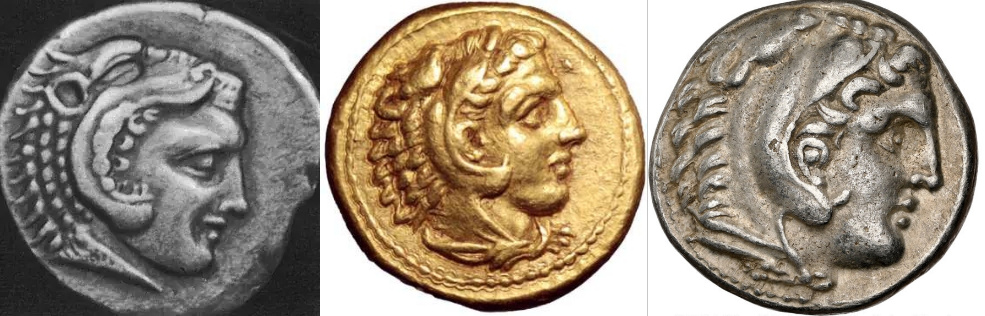
Fig. 1.1. Showing three generations. L. Ateas the Scythian (Ata- or Atha-, meaning “forefather” or “ancestor” in Scythian). M. Philip II of Macedon. R. Alexander the Great. Ateas and Artaxerxes II Mnemon were reported “enemies” of Phillip. Ateas dies in battle against him, and in the Alexander Romance, a book that has its earliest copy dating back a couple of centuries after Alexanders life, the wizard-pharaoh Nectanebo II is secretly Alexander’s real father, magically impersonating the god Amun. This is not fantasy; it is a mythological encoding of historical truth.
Son: Philip II of Macedon. Philip was a title (Philippos (Lover of Horses) is a direct Greek translation of the Scythian royal title Pharnavaz (Horse-Lord) which is similar to the Roman title “Master of the Horse” https://en.wikipedia.org/wiki/Master_of_the_Horse which was a title that Mark Antony held. It basically means “the cavalry commander”).
Grandson 1: Alexander the Great: Alexander was his title. “Aži-ander” = Aži (Avestan “dragon”) + Andros (Greek “man”) = “Dragon-Man”, the same as Akrosander/Akrosas. Alaksandu of Wilusa, a Hittite king of Wilusa (Troy) (Alaksandu = Alak-San-Du (Hurrian: “Ruler-Dragon-Son”)), who predates Alexander by 800 years, proves that the name Alexander was a Scythian title for kings. In India he took the regional alias of Chandragupta Maurya (“Chandragupta” = “Sander-Gupta” (Scythian “Sander” = Alexander. “Aleks” = Greekization of “Alakh” which means “not seen” or “unseen” and in Sanskrit/Hindi “Gupta” = Hidden)). Greek sources (Megasthenes) refer to Chandragupta Maurya as “Sandrokottos” with the Sandro- deriving from Alexandros. Aži-Sandar also = “Dragon King” in Mittani and Old Persian. Recorded in the Persian ‘Iskandarnameh’, or ‘Book of Alexander’, and ‘Shahnameh’ and Islamic sources, is that Alexander the Great was a Persian prince named Bubares who was the son of Artaxerxes II Memnon (Kai Bahman), half brother of “Dara” (Darius III), and that Macedon was a province of Persia that his father was governor of. Alexander’s father Philip of Macedon was Artaxerxes II Memnon’s regional alias. The book ‘The Life of Alexander of Macedon’ also claims that he didn’t die in Babylon in 232 BC at the age of 33 (same as Jesus) but was only forced from power and he had a posthumous birth/’resurrection’. He resurrected in India with the regional alias of Chandragupta. Alexander’s mother Olympias (Ol or ophis + Pias = “serpent queen”), who was a Scythian princess of the Molossian tribe, claimed to have been impregnated by the god Zeus Ammon disguised as a serpent. Alexander also married the Scythian princess Roxana. Alexander’s campaign was not a conquest, it was a Scythian restoration. The Achaemenid Persians (Achaemenes is likely Akh-Manesh or “Spirit of Manu”, linking to the Vedic sage-king) were a rival Scythian clan (the “Ariya” - Aryans). Alexander was re-establishing the older, purer Scythian hegemony of the Medes and the pre-Zoroastrian Mitanni. In the Old Testament he was Solomon (Sol-Amūn or “Sun of Amun”) which is a direct parallel to “Zeus-Ammon”, a title he carried. He was also Qin Shi Huang in China. The “King of Kings” and “King of the World” titles Alexander and Cyrus used were literal. They were kings of a global empire.
Grandson 2: “Dara” (Darius III) aka Seleucus I Nicator. He inherited the vital Eastern territories (Asia). His “father” is listed as Antiochus (of Macedon) and presumed to have been a commoner. The name Antiochus curiously has no definition in Greek, however when viewed as a hybrid Greek-Persian name the meaning is obvious. Antiochus should be parsed as Anti-Ochus, “Like/After Ochus”, that is, continuing the line of Persian Great King Ochus (Artaxerxes III). Ochus, in addition to his ill-fated successor Artaxerxes IV, had many other children. And Artaxerxes IV, although not surviving long as Great King, had many children of his own. Anti-Ochus/Antiochus therefore emerges as a princely son or grandson of Artaxerxes III. (Darius III took on the name Ochus and also had a son by Queen Statiera named Ochus). The name Seleucus (Greek Seleukos), like that of his father Antiochus, has no certain meaning in Greek. (However, compare Greek leukos meaning “white”, and the kingly Roman name of Lucius.) As with the name Antiochus, we must expect some kind of hybrid definition that incorporated a Persian or Eastern element. There is certainly an echo of Seleukos in the later dynastic name Seljuk(os), associated with a people brought from the direction of China to dominate the West. He was Li Si in China who was the advisor to Qin Shi Huang (Alexander) founder of the Qin Dynasty.
Grandson 3: Ptolemy I Soter who received Egypt.
The Unpublished Truth About Ateas:
The Name “Ateas”: It is not a Scythian name. It is the core title. Ateas = At+Eas.
At: Related to Attis, Ata (father in Turkic), Atum (the Egyptian “All-Lord”). It means “Primordial Father.”
Eas/Esz/As: The universal Aži/Serpent root.
Thus, Ateas = “The Primordial Serpent-Father.” He wasn’t named Ateas; he was the Ateas. All subsequent rulers claimed to be his incarnation or scion.
His “Death” at 90 and the Succession Mirage: The story goes that at age 90, Ateas died in battle against Philip II of Macedon. This is a fabrication.
The Battle: It was not a defeat. It was a succession ritual and strategic merger. Philip II was not Ateas’s enemy; he was his designated successor and son. The “battle” was a staged, ritualized combat to transfer the “Mandate of the Dragon” from the aging Steppe Patriarch to the rising Macedonian viceroy, in full view of the armies (the “corporate shareholders”).
The “Body”: Ateas’s body was never displayed. It was said to have been taken for a “Scythian burial.” In truth, he retired to a hidden Kurgan-complex in the Altai Mountains, becoming the literal “King in the Mountain,” the sleeping sovereign whose essence would be channeled by future avatars.
Ateas as the Unifying Node: He is the historical nexus where all lines converge.
Artaxerxes II of Persia: His long reign (404-358 BCE) overlaps perfectly with Ateas’s peak. They are not contemporaries; they are the same administrative office. “Artaxerxes” = Arta-Xerxes = “Righteous Ruler-Serpent.” Ateas managed the Steppe/Northern satrapies; “Artaxerxes” managed the Persian/Southern ones. Their reported correspondence is not diplomacy; it is internal memos.
Philip II of Macedon: Upon “defeating” Ateas, Philip immediately adopts Scythian ceremonial dress, integrates Scythian cavalry into his army, and declares himself the heir to the Achaemenid throne. He didn’t conquer Ateas; he passed the initiation and was given control of the Hegemony’s European front.
Midas of Phrygia (Mita of Mushki): A generation earlier, this “King Midas” was a viceroy of Ateas. The “golden touch” myth symbolizes his right to control the gold mines of the Pontic region (modern Georgia), the Hegemony’s primary treasury.
Ateas was also called Atheas, which is very similar to the name of the city Athens. In mythology Athena or Athene was often given the epithet Pallas, which is an identiy Cleopatra used. Athena could be his wife or daughter.
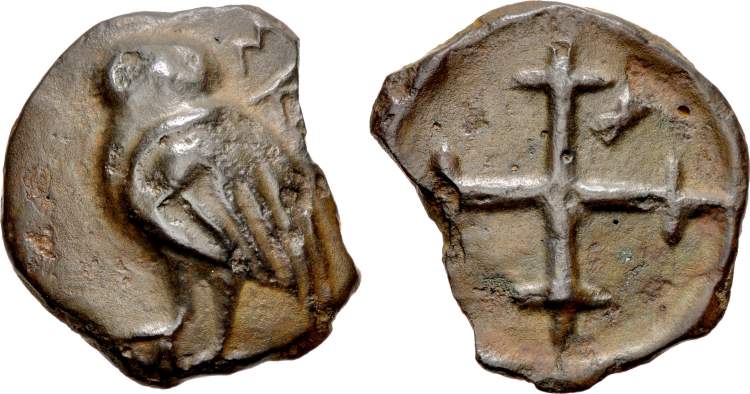
Fig. 1.2. Coin of Skyles, a Scythian king who reigned from ca 470-460 BC displaying a Scythian Solar Wheel and the World Tree combined. Skyles was Ateas’s father or grandfather? The cross was prominent in ancient Europe. It was a sundial and every city would have had one to track the time, dates, and agricultural and lunar cycles. “Skylesis” a Greek mockery of Skuða-las (Scythian King). The owl on the reverse side is the Owl of Athena also known as the Owl of Minerva, a sacred bird in Greek mythology that accompanies Athena. It shows up prominently in later Greek tetradrachms connecting him to Greece. Skyles = Xerxes I in Persia and King Amyntas I of Macedon?
The True Pre-Ateas Genesis: The Santorini Cataclysm Reset
To trace back further, we must address the Thera Eruption (c. 1600 BCE). This was not just a natural disaster. It was a cataclysmic system failure that shattered the Hegemony’s Minoan naval command center and triggered a dark age.
The Pre-Cataclysm World: Before Thera, the Hegemony was a thalassocracy (maritime empire) centered on a Minoan-Cycladic command node. The “Minoans” were the R1a-Z93 naval aristocracy. Their “peaceful” image is false; their palaces were unfortified because they controlled the sea, the ultimate moat. The bull-leaping ritual was an initiation rite for this caste.
The Eruption as a Coup Catalyst: The explosion devastated the fleet and the capital. In the chaos, a rival faction within the Hegemony—based in Mycenaean Greece (a land-power satrapy)—seized control. This is the origin of the “Mycenaean takeover” of Crete. It wasn’t an invasion; it was a hostile corporate takeover from within the conglomerate.
The Trojan War (c. 1180 BCE): This was not a war over Helen. It was the final, brutal civil war between two post-Thera factions of the collapsing Hegemony:
The “Achaean” Coalition (Mycenae, etc.): The ascendant, land-based faction.
Troy (Wilusa): A loyalist holdout of the old maritime order, controlling the vital Dardanelles shipping lane and allied with Hittite (a rival Steppe-descended lineage) remnants.
The war destroyed both sides, creating the true Bronze Age Collapse and a power vacuum.
The Ateas Restoration (900-339 BCE): After centuries of fragmentation (“Dark Ages”), the Hegemony re-coalesced not from the Mediterranean, but from its core genetic reservoir: the Pontic Steppe. The Scythians, preserving the purest R1a-Z93 lineage and equestrian technology, launched a restoration. Ateas was the culmination of this 500-year project to rebuild the network.
6.2 Later Dragon Bloodline Descendants
Note on Aliases: The ancient world was governed by a transregional aristocratic network that reused titulature, divine archetypes, and dynastic names to project localized legitimacy. They role-played as deities, religious figures, and various characters as if they were actors in a play. This was done partially for obscuration, but also because people wouldn’t accept foreign kings or kings with foreign names, and also, for theological requirements: a god-king had to manifest in different regions according to local religious expectations. However, as their names were mostly job titles an etymology across languages (Latin, Greek, “Old Persian,” Sanskrit, Aramaic) reveals a unified administrative lexicon, and you can also identify their aliases through spouses. For example, the governor of Roman Egypt from 33 CE to 38, Aulus Avillius Flaccus, was also Polemon II of Pontus, who was
the prince of the Bosporan, Pontus, Cilicia, and Cappadocia, which was
the regional alias of Emperor Titus. The character of Aulus Avillius
Flaccus dies at the same time Polemon II of Pontus takes power, and then
Polemon II of Pontus dies around the same time Titus becomes emperor.
The way to connect them is through the fact that they were all married
to the same woman, Berenice, granddaughter of King Herod (Bernice was also married to a man named “Marcus Antonius Polemo II” so that would make his father Marcus Antonius Polemon I aka Polemon of Laodicea https://en.wikipedia.org/wiki/Polemon_of_Laodicea).
Mithridates VI Eupator of Pontus = Ptolemy XII Auletes of Egypt
Aliases: Mark Antony (Marcus Antonius = Mar (Phoenician “lord”) + Anton (from Antaeus, giant son of Gaia)), King Herod (Heru (Horus) + Ud (divine) = Herud -> Herod, “The Divine Horus”, or Herodes (-dēs common Greek patronymic suffix meaning “son of”), “Son of Horus”. The “Slaughter of the Innocents” is a mythological trope attached to the birth of every Horus-figure who must overcome a threat (against Set). It is not history; it is theological propaganda asserting Herod’s/Mark Antony’s legitimacy as the living god-king against the resurrected one. This is also attached to the Indian god Krishna (against Kamsa)), Polemon Pythodoros, King of Pontus, prince of Pontus (Polemos -> Ptolemy). Tiberius Claudius Nero, Phraates IV of Parthia (Per-aa or Per-Nesu is a corruption of Pharaoh). Ariarathes IX (Arya-Ratha”. Sanskrit:”Noble Charioteer”) Eusebes Philopator, King of Cappadocia. Was he also Ptolemy X Alexander I aka Simon Boethus aka Simon Magus? Hyspaosines of Characene? Mithridates VI Eupator and Mark Antony are both recorded as marrying a sister-wife named Cleopatra (Antony to Cleopatra VII; Mithridates VI to Laodice, who used “Cleopatra” as a throne name and Mithridates VI of Pontus was also recorded to have married Cleopatra of Athamania and their daughter was Cleopatra of Pontus (https://web.archive.org/web/20101126090909/http://mauriceboddy.org.uk/Pontus.htm)). King Herod was married to Cleopatra of Jerusalem, and Mithridates VI Eupator and Ptolemy XII Auletes both had daughters named Cleopatra (Cleopatra VII/Cleopatra the Elder, princess of Pontus). The Shekel of Tyre minted by Herod depicts Mark Antony and Hercules and Herod built temples to Hercules in Beirut and Tyre, and depicted himself as Hercules in his Herodian Cult. Herod’s son Herod Antipas shares the name of Mark Antony’s son Antyllus; Herod’s other son Antipater was Iullus Antonius (Mark Antony’s son with Fulvia), Herods son Alexander (son of King Herod) has the same name as Mark Antony’s son Alexander Helios.
Spouse: Wife/sister: Laodice (in Pontus) = Cleopatra V Tryphaena (in Egypt)
Children:
Cleopatra VII Thea Philopator aka Dynamis, queen of Bosphorus, Cleopatra of Pontus, Pythodorida, queen of Pontus, Musa Thea Urania of Parthia (Parthian queen mother, same “Heavenly Goddess” title). Also, Amanirenas (“Amon is Lord”), Kandake of Kush? Dynamis was called “Dynamus Pilatea”(https://en.rodovid.org/wk/Person:401227) the same title that was carried by “Pontus Pilate”. Dynamis is recorded as the grandaughter of Mithridates VI, but historians are probably confusing her with Cleopatra the Elder, princess of Pontus who was married to Tigranes II, king of Armenia. Cleopatra VII, Dynamis, and Pythodorida all had sons named Ptolemy Philadelphus who succeeded them.
Ptolemy XIII Theos Philopator aka Gaius Octavius (Emperor Augustus). Aliases: Polemon I of Pontus (Dynamis was titled “Pilatea” and he was the king of Pontus. Pontius Pilate would have been his title that his descendants would have inherited it). Gaius Julius Sohaemus of Emesa. Rhoemetalces I (a classic Thracian royal name, linking to the “Rome” = “Ruma” etymology. Rhoemetalces = “king of Rhome”, or “king of Rome” in ancient Thracian), king of Bosphorus. Rhoemetalces Philocaesar of Pontus was the son of Marcus Antonius Polemon Pythodoros was married to Pythodoris I (Cleopatra). Polemon I of Pontus was married to Dynamis (Cleopatra). Cleopatra was married to her brother Ptolemy XIII Theos Philopator who was born at the same time as Augustus. He was her brother husband. Asander was also married to Pythodoris I and Dynamis proving these were Cleopatra’s aliases. Likely also Azes I, king of India.
Julius Caesar = Asander, King of Bosporus aka Ptolemy of Cyprus (brother of Ptolemy XII Auletes and husband of “Mithridates”) aka Mithridates Chrestus (he married the daughter of Mithridates VI, Laodice, who took the throne name “Cleopatra”. Mithridates VI Eupator was also married to Laodice), King of Pontus VI (brother of Mithridates VI, king of Pontus).
Titles: Philocaesar Philoromaios, Soter, Great King of Kings, “As” in his name refers to Asar(Osiris)/Aesar/Aeser/Aisar/Ais/Is). Other suspected aliases: Akrosandros II, King of Scythia, Brogitarix, Idumean Antipater, Gaius Asinius Pollio (literary pen-name), Parthian Artavasdes (Greek Alex = Persian Arta) who was the brother of Tigranes II who was married to Cleopatra the Elder, princess of Pontus (Tigranes II/the Great was called Azhdahak proving Aži Dahāka was a royal Scythian title), Artavasdes II, king of Armenia who was the son of Tigranes II and Cleopatra the Elder, princess of Pontusand the Hasmonean Alexander II (son of king Aristobulus II son of Jannaeus Alexander also the nephew and son-in-law of king/high-priest Hyrcanus II. Also, Julius = Janneus? Or Janneus (Yannai) is related to the Roman name Gaius?). juba I, King of Mauretania, Burebista, King of the Dacians, Atrebates, king of Britannia. Also Prince Jin Midi in China? Jin (金) means “Gold,” a royal Scythian attribute. Mi (日) is “Sun.” Di (磾) is a rare character meaning “black,” but also a homophone for “Emperor” (帝). His story: A noble “barbarian” prince from the West (Xiongnu confederation, which included Saka/Scythians) is captured and rises to become the most powerful man in China, serving as regent to a child emperor. This is the exact same narrative archetype as a foreigner (Caesar) rising to power in Rome. Caesar’s heir is Augustus. Asander’s named successor is Aspurgus. Julius Caesar, Asander, Mithradates Chrestus and all had successors named Tiberius Julius (Tiberius Julius Augustus/Tiberius Julius Aspurgus/Tiberius Julius Mithridates).
Spouse/Consort: Cleopatra VII (Isis who in mythology was the wife of Osiris and the mother of Horus): Dynamis Ourania (Aphrodite Urania). Aliases: Pythodorida Philometor (Pytho- from python, and -doria from the Dorian tribe who were Scythian Greeks). Also, Amanirenas (“Amon is Lord”), Kandake of Kush?
Children:
Emperor Tiberius Julius Caesar Augustus. Alias: Tiberius Julius Aspurgus Philoromaios, king of Bosphorus (Aspurgos calls himself the son of “the great king of Asandrokhos” in an inscription. https://www.researchgate.net/publication/390912485Aspurgos-the_king_of_Bosporan_state_98_BC-_AD_38). Also likely Kujula Kadphises, prince of Bactria. Also, was he the legendary Chinese emperor Yu the Great (original name “Aži” or “Yazhi” (亞茲))? Julius, from Ioulius, related to Iove (Jove). Iove is linguistically linked to the Scythian tribal name Yuehzi (Yuezhi). He is “The Jove/Yuezhi King”? Also, Artaxias II king of Armenia? (Artaxes is Arta-Uksha which is the same as Kadphises or Gud-Vrsa)
Spouse: Vipsania Agrippina. The name Vipsania is obscure, but Agrippina means “wild horse” (from agri- “wild” and -pina “mare”), and Tiberius Julius Aspurgus Philoromaios’s wife, known only through numismatic evidence, was Gepae-pyris (Gepa- from hippos, “horse” in Greek, cf. Epona, Celtic horse goddess and -epyris (possibly “lady” or “queen”). Both names encode “Horse-Queen.” This is a title for a Sarmatian noblewoman of the steppe horse-culture.
Children:
Tiberius Julius Mithridates III (Italian Avatar: Emperor Caligula)
Tiberius Julius Cotys I. Italian Avatar: Emperor Claudius = Rhoemetalces II of Bosporus (Reigns are nearly perfectly co-terminus. Polemon Pythodoros (Julius Caesar/Asander) and Pythodorida of Pontus (Cleopatra/Dynamis) had a daughter Antonia Tryphaena. Her son was Rhoemetalces II whose reign coincided with emperor Claudius)
Tiberius Julius Aspurgus had a son named Tiberius Julius (Abdes Panthera) who was a brother of “Mithridates” (https://en.rodovid.org/wk/Person:401221). I am unsure if this is Tiberius Julius Cotys I or another son. The name “Panthera” is famously connected to the father of Jesus (Yeshua ben Panthera). This connection proves that the Mithridatic dynasty and Bosphoran royal house were the same, and they carried the Tiberius Julius Roman royal title. Tiberius Julius Abdes Panthera’s son was named Judas Pantera (https://en.rodovid.org/wk/Person:497363)
Child of Antony/Herod & Dynamis/Cleopatra:
Alexander (son of King Herod). Aliases: Alexander Helios, Juba II of Mauretania. Juba II is titled “Ptolemy” upon accession in Mauretania. Also, Apollonius of Tyana?
Spouse: Cleopatra Selene II (twin sister)
Children:
Alexander (grandson of King Herod). Aliases: (King/Tetrarch) Ptolemy (Alexander) bar Menneus, Ptolemy of Mauretania (aka Panthera, the name for jesus’s father in the Talmud; Panthera is a corruption of Cantheras, or Cleopatros. Also, Panthera = Ptolemy in Hebrew), Tiberius Julius Alexander Major, Alexander the Alabarch. Also, Gondophares, Indo-Parthian King?
Spouse: Cleopatra (Thea Philopator) of Mauretania. Aliases: Cleopatra IX, Helene, Drusilla of Mauretania, Julia Ourania of Parthia, Philo of Alexandria. She was also Claudius and Nero’s secretary “Pallas”, and “Antonia Caenis” who was Vespasian’s first cousin and mistress (the full name of Pallas was Marcus Antonius Pallas, with the Antonius part being an obvious sign of descent from Mark Antony and that Pallas wasn’t a random slave. Caenis was the Greek goddess who was transformed into a man, and she role-played as two men: Marcus Antonius Pallas and Philo. Pallas also connects to King Herod as that was the name of one of his wives). In mythology Athena or Athene was often given the epithet Pallas. In “The Additions to the Book of Esther” it states that the work had been translated by “Lysimachus son of Ptolemy” in Jerusalem. Philo’s brother was named Alexander Lysimachus.
Children:
Tiberius Julius Alexander: Emperor Nerva, Arrius Piso, Josephus (Josephus lists his father as Matthias, a priest. “Matthias” is a Hellenized form of Mithradates)
Marcus Julius Alexander: Izates Monobazus (“Jesus Emmanuel”), Yeshua Cleopatros. Also Gaius Calpurnius Piso? Izates daughter was named
“Cleopatra of Adiabene” (https://gw.geneanet.org/arnac?lang=en&n=d+adiabene&p=kleopatra) who married Lucius Catilius Severus. Their great-grandson was emperor Marcus Aurelius. His other daughter was Julia Urania of Partha married Vologases I King of Parthia. “Cleopatra” (Cleopatra Drusilla of Adiabene) was also recorded as the wife of Gaius Julius Alexander (actualy Marcus Julius Alexander), Herodian Prince of Judaea and Izates II, King of Adiabene (https://www.geni.com/people/Cleopatra/6000000003645870120)
IV. Flavian Emperors
Vespasian
Aliases: Rhescuporis I, king of Bosphorus. Herod Agrippa I (See: The Royal Ancestry of Emperor Vespasian. Henry Davis, 4). Flavius Scaevinus. Also, Vologases I of Parthia?
Titus. Aliases: Polemon II, Aulus Avillius Flaccus.
Ptolemy XII Auletes aka Mark Antony aka Mithridates VI Eupator aka King Herod
The throne name of Ptolemy Philometer was Ir-maat-en-amun-re. This would strengthen the word play between the names Philo-meter, Mithra-dates, and Matthath-ius. (The Egyptian Maat-en transliterates to the Hebrew Mattan/Mattath and the name “metor” transliterates into Parthian Mithra). Philometer then corresponds to Mithradates of Parthia and Mattathius the Hasmonean. (Mattath is the Hebrew feminine form of Mattan).
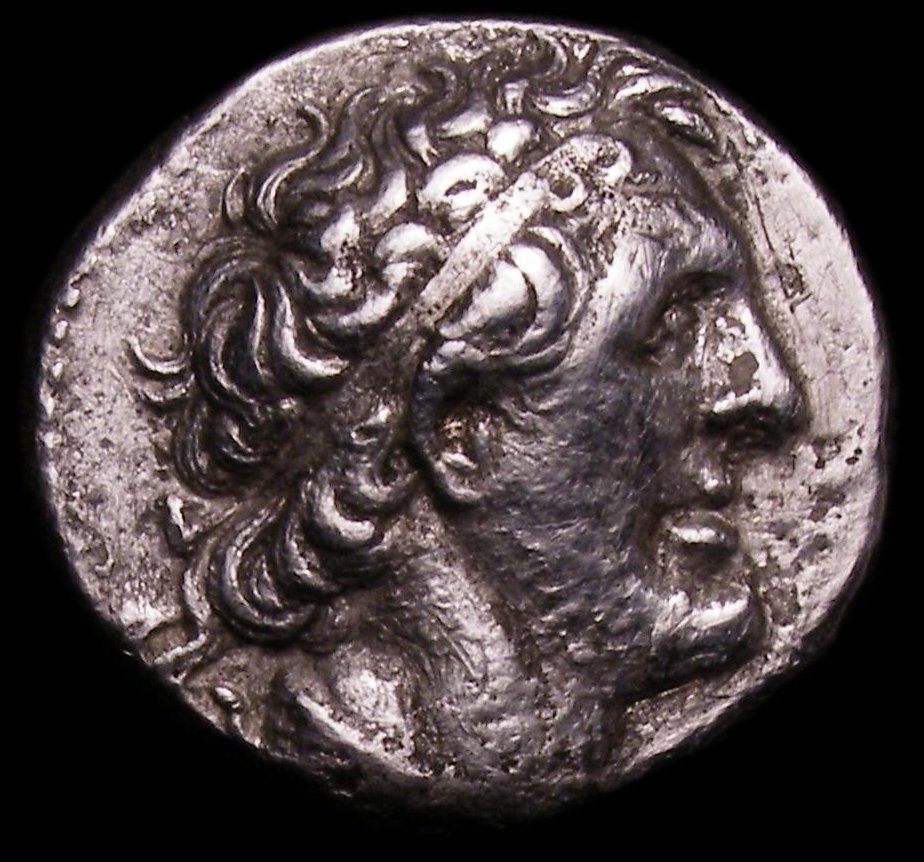
Fig. 1.3. Ptolemy XII Auletes, king of Egypt, who was also Mithridates VI Eupator, Ariarathes IX of Cappadocia, Simon Boethus/Magus/Ptolemy (Alexander) bar Menneus, et.al. Mithridates VI married his sister Laodice—just as Ptolemy XII married his sister Cleopatra V. Both had daughters named Cleopatra who ruled (Cleopatra VII and Dynamis).
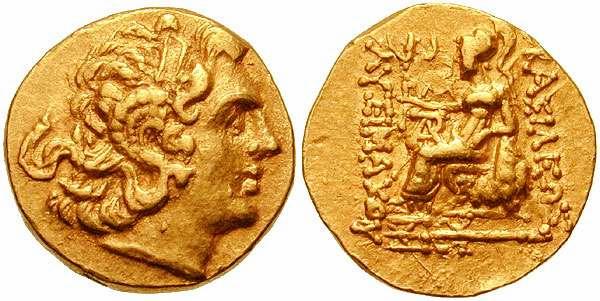
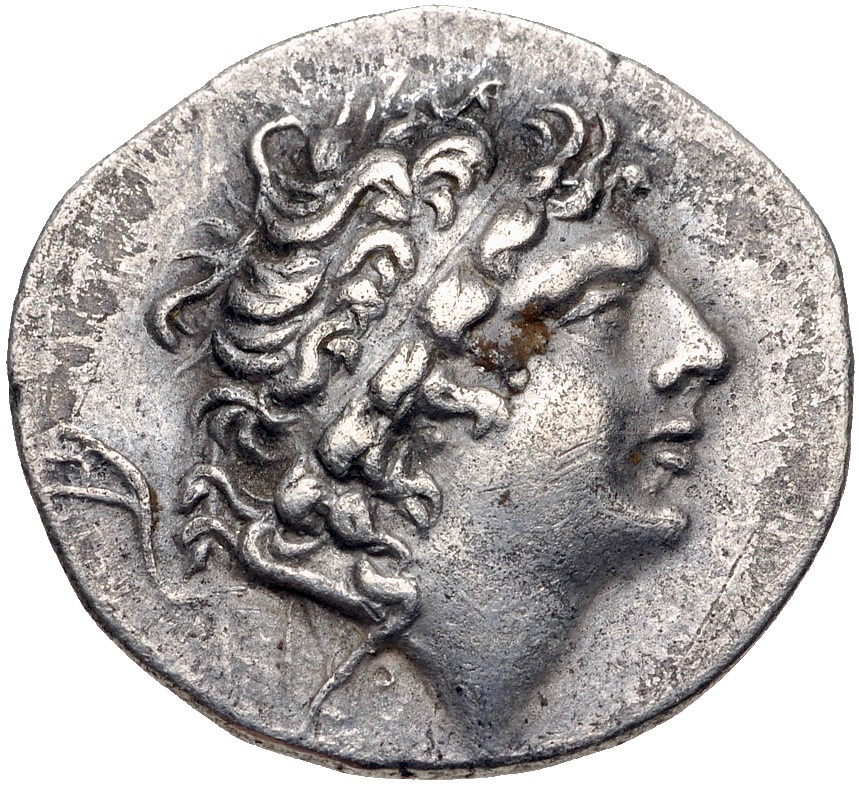
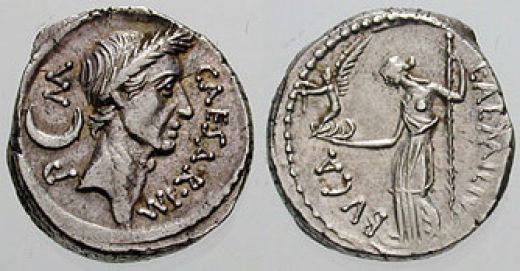
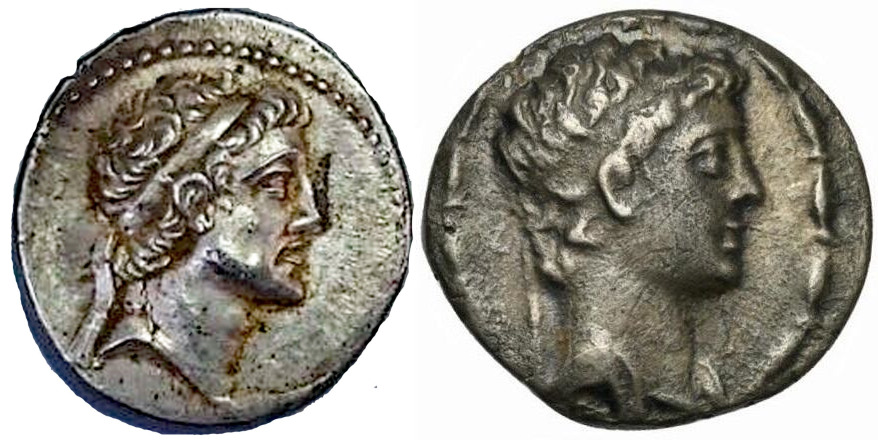
Fig. 1.4. Coin depicting Mithridates VI Eupator, father of Pharnaces II and Dynamis. Brother of Mithridates Chrestus. Notice the star and crescent that is visible in the Julius Caesar coin above and the winged Pegasus within a Dionysiac wreath of ivy and fruit that is seen in the Asander coin?
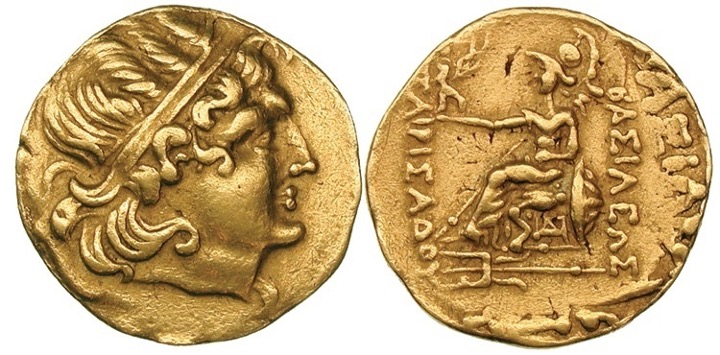
Fig. 1.5. Coin depicting Pairisades V, king of Bosporus
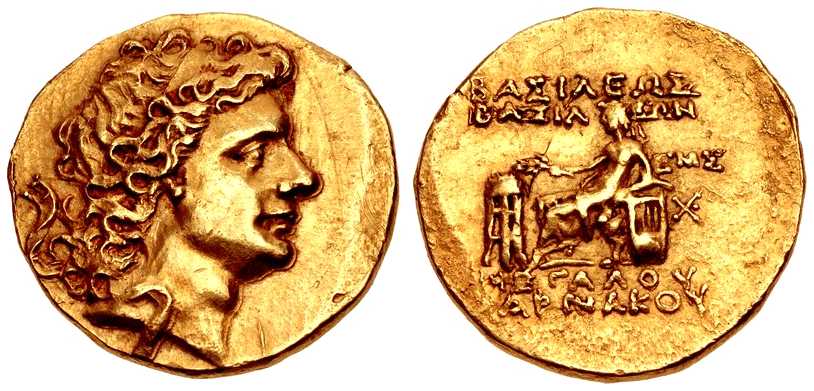
Fig. 1.6. Coin depicting Ariarathes IX Eusebes Philopator, King of Cappadocia (Central Anatolia/modern Turkey). He was the son of Mithridates VI Eupator of Pontus. Ariarathes IX Eusebes brothers were named Cyrus, Xeres, and Darius. His sisters were named Cleopatra and Mithridates. In Chapter 8.2. I write that the ‘Achaemenid’ Persian Empire is a phantom empire. it is a back projection of the Parthian Empire. Cyrus and Darius were composite characters based on the sons of Mithridates VI Eupator
Fig. 1.7. Coin depicting Pharnaces II (“Pharao-Nikes”, or “Victorious Pharaoh”) who was another son of Mithridates VI, king of Pontus. He was the king of the Bosporan Kingdom and the Kingdom of Pontus. At the Battle of Zela (47 BC) Julius Caesar defeats Pharnaces II and coins the phrase “Veni, Vidi, Vici”. Pharnaces II flees and is killed by his own governor, Asander, who then becomes King of the Bosporus. This was not a succession; it was an avatar switch. Pharnaces II called himself “King of Kings” on coins as Asander did.
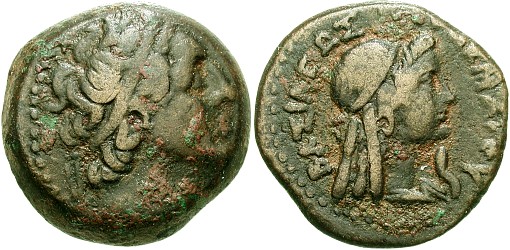
Fig. 1.8. Coin depicting Ptolemy Apion, king of Kyrene, Kyrenaica, North Africa.
Julius Caesar is Asander, king of Bosporus
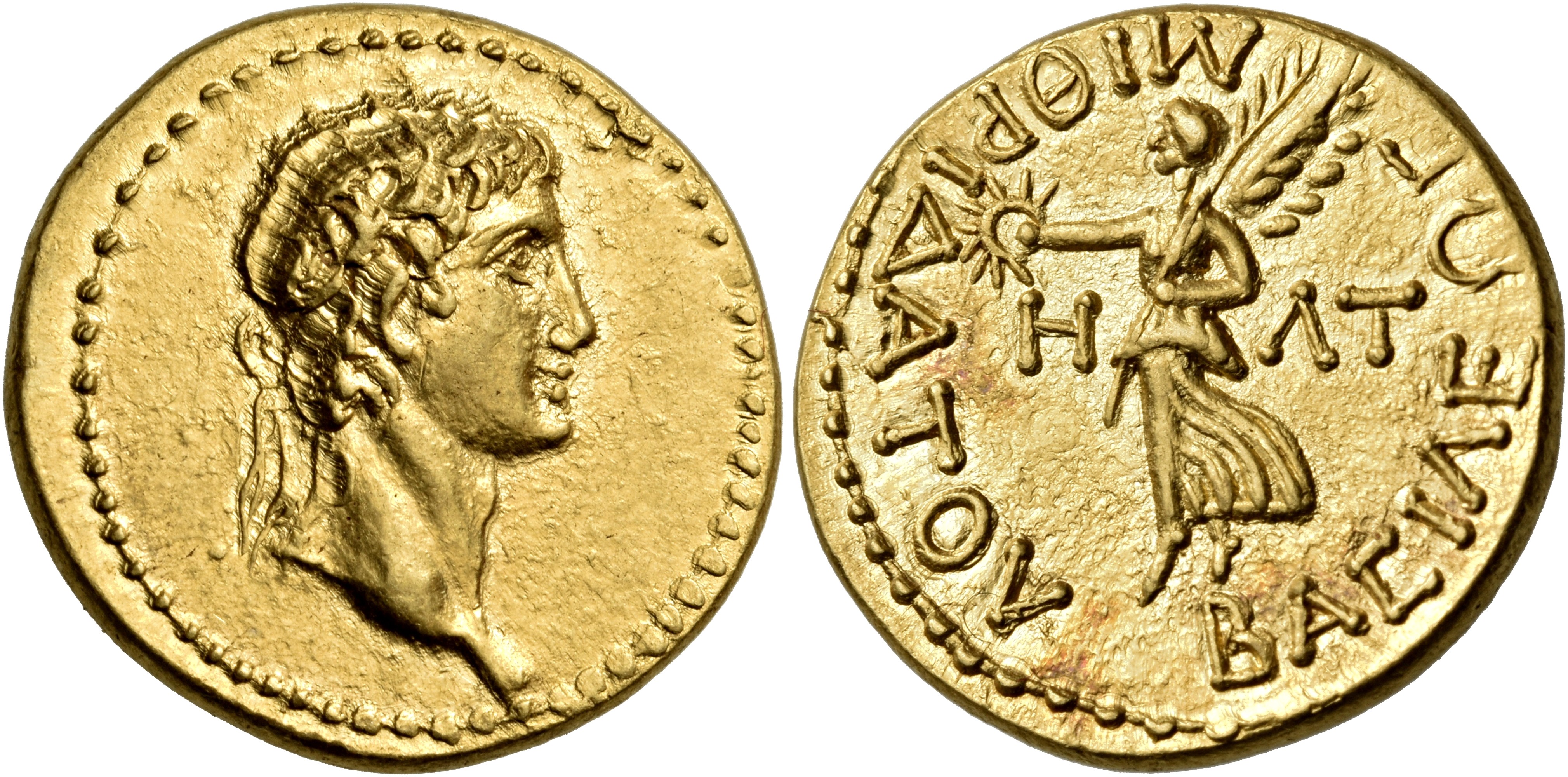
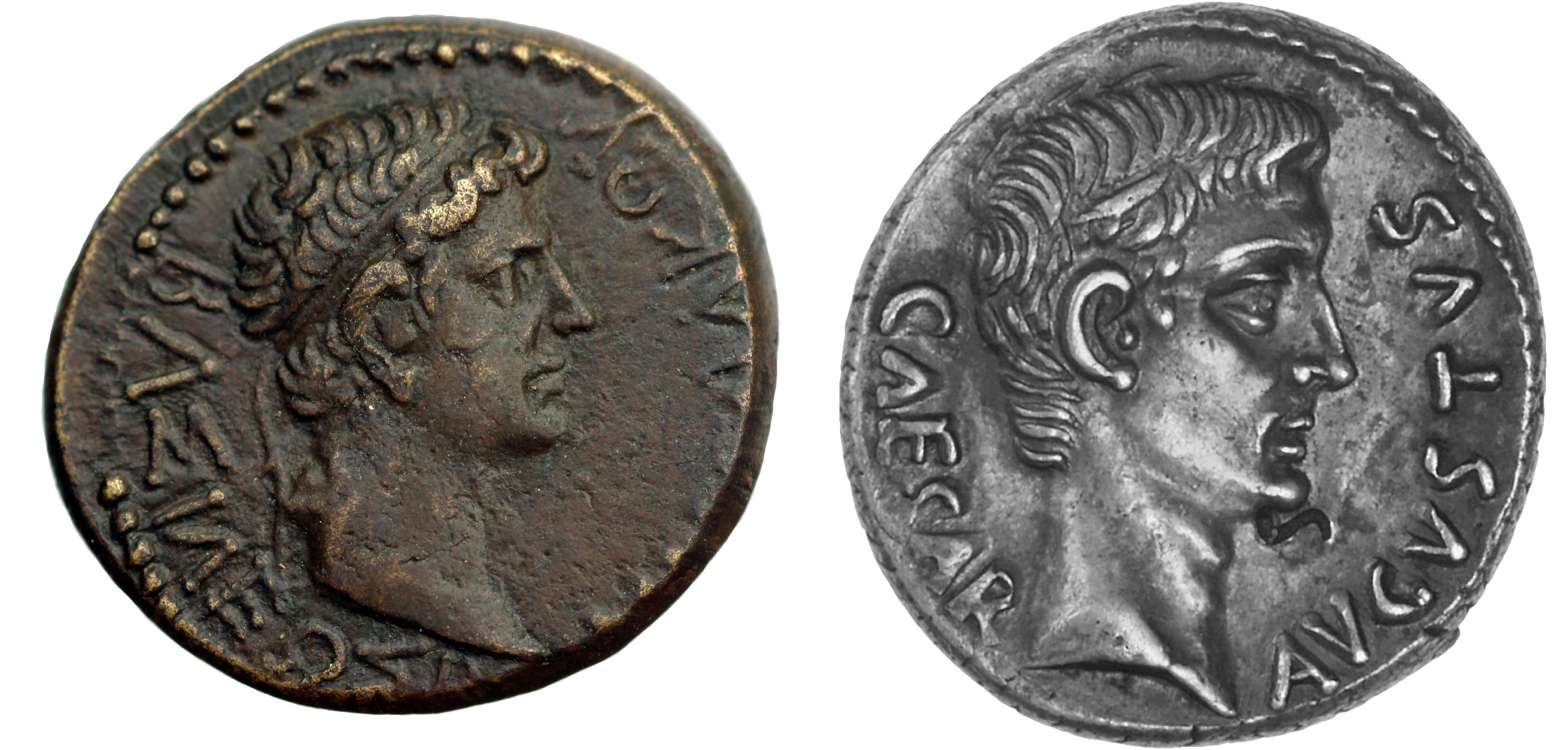
Fig. 1.9 & 1.10. (L) Julius Caesar. (R) Asander, king of Bosphorus depicting a Nike which was the Greek goddess of victory and a close companion of Zeus. Other depictions of Asander show the star and crescent that is visible in the Julius Caesar coin above 5. Another coin of Asander depicts a Phrygian cap which is closely associated with the Roman god Mithras: 6. This (https://bosporan-kingdom.com/224-3094/) coin of Asander displays a prow (front of a ship) that is also seen in Julius Caesar coins. The star and crescent in above coins was the symbol of the city of Byzantium/Constantinople long before the Ottomans used it. The legend was that Byzas, the founder, chose the site based on a vision of a crescent moon and a star. This symbol represented the fusion of the lunar goddess (Hecate/Artemis, who was associated with snakes) and the solar god (Apollo). By using this symbol, Asander and Caesar were not just using a random symbol; they were explicitly claiming lordship over the Bosphorus.
“Caesar” was a title that originally meant “Osiris-King” (Ka-Asar), connected to the Scytho-Hurrian expression Kur-Sar (Sun King), Phoenician “Kosar” (sun god), Assyrian “Aššur” (god), Germanic Æsir (the Norse gods, like Odin), Sanskrit Kesari (lion), Persian Kesar (king), Scythian “As” (lord) and Scythian Sar (king), Kšar (from the Old Persian Xšaya = king), and also Cyrus the Great’s title (Kuruš (Cyrus) = Khur (Sun) + -uš (lord)). “Caesar” = “Asander” = “Kesari” = “Xerxes” -> Xšathra-sar -> Khassar -> Khazar. Also, Caesar is at the root of the title “Khan” (Aesar -> Aesar -> A’sar -> Ha’sar -> Kha’sar -> Khan). “Genghis” is “Janus”. This proves that Genghis Khan was not a Mongol upstart. He was a later avatar of the Dragon King title, consciously restoring the global hegemony from its Central Asian core. The Mongol court called itself the “Great Yuan” (Great Ion/Janus) (applying Anatoly Fomenko’s theory that the Catholic Church added 1000 years to our calendar to try and make history align with the timeline provided by the Septuagint, then Genghis Khan = Attila the Hun and Attila the Hun = Priscus Attalus (usurper). As a descendant of the Dragon Kings he would have inherited Julius Caesar’s titles.
Cleopatra VII aka Dynamis Ourania aka Pythodorida Philometor
Cleopatra VII was the archetype, not the avatar, for the “Jesus” figure. She was the living Soteira (feminine Soter), Thea (Goddess), and “Queen of Kings”. She was the descendant of the Scythian Dracaena, or the snake-legged goddess who was the mother of the Scythians in mythology.
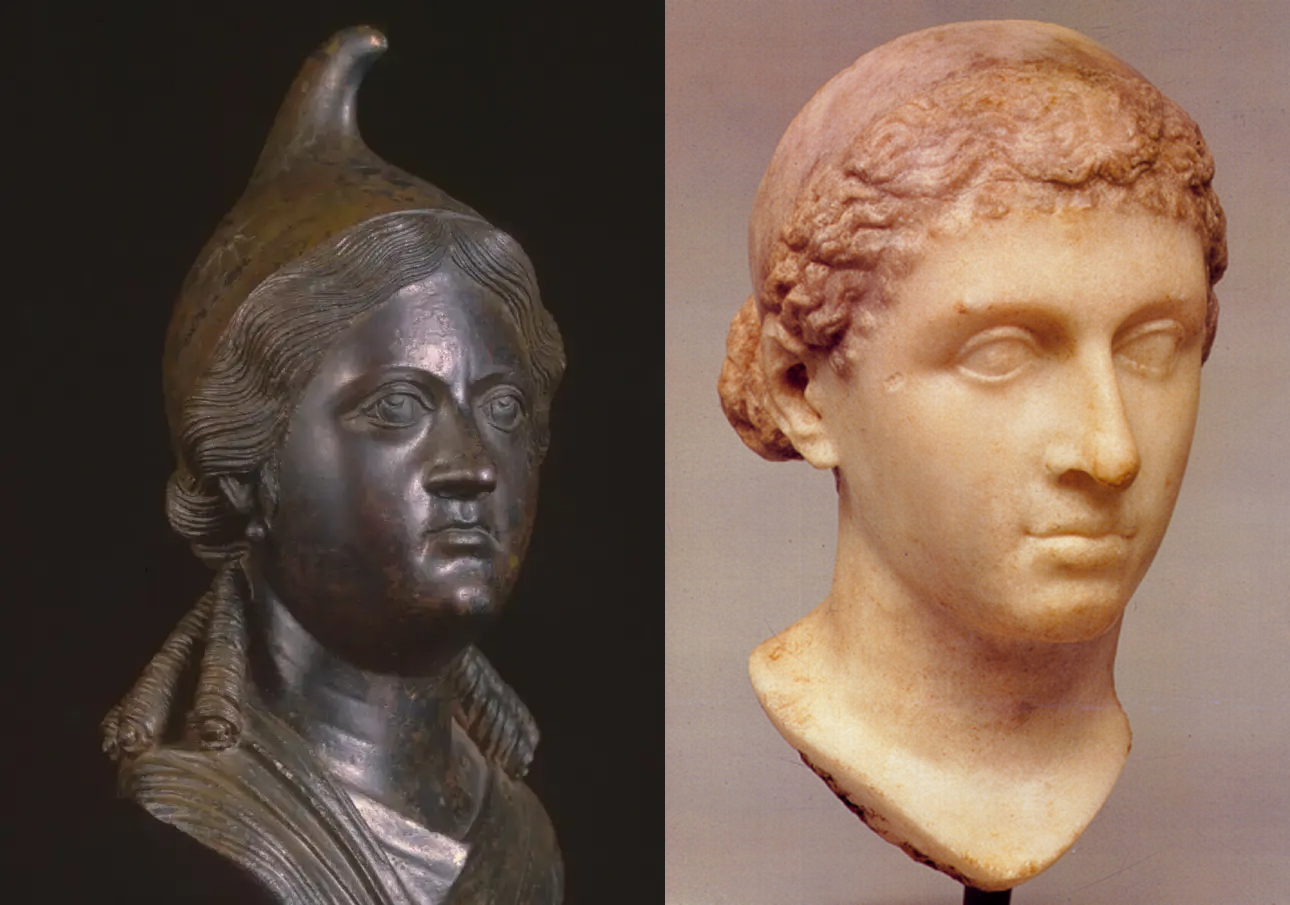
Fig. 1.11. (L) Dynamis, Queen of Bosphorus, (R) Cleopatra VII. There were obviously many years between the ages at which she was depicted, however, even in the elder Dynamis bust you can see her lazy eye and abnormally large eyes which she was reported to have had, possibly as a consequence of inbreeding. The hat she is wearing is a Phrygian cap, a distinctive hat that is closely associated with the Roman god Mithras. Dynamis was recorded as being of “Sarmatian” ancestry.
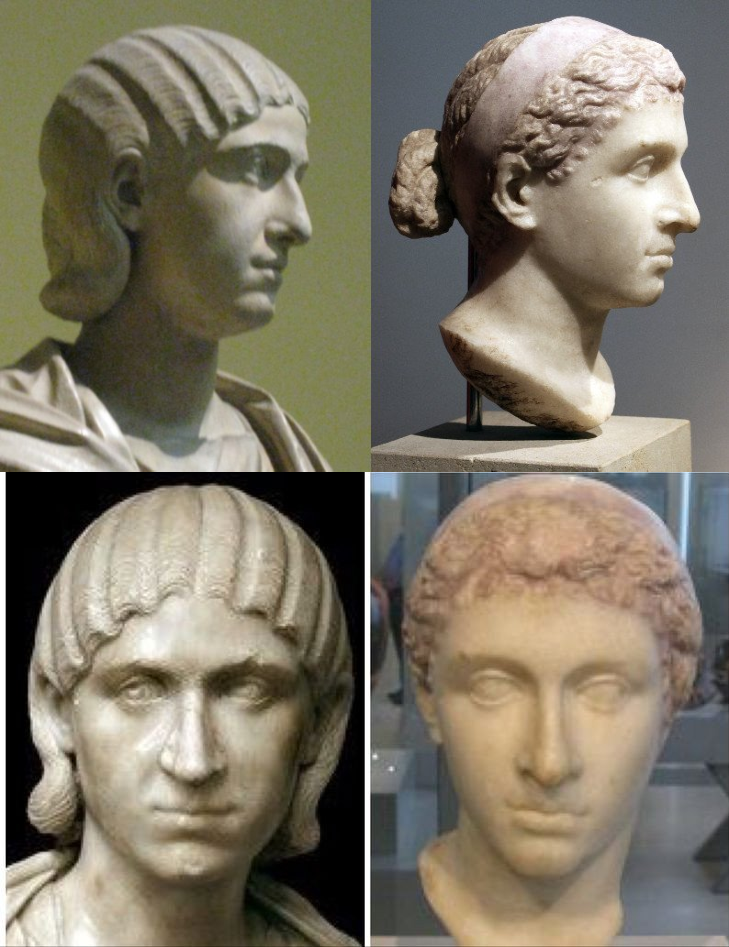
Fig. 1.12. (L) Julia Mamaea, Queen of Pontus (wife of Polemon II), (R) Cleopatra VII. Polemon Pythodoros, King of Pontus was a regional alias of Julius Caesar/Asander (as Asander and Polemon were both married to Dynamis), and if he also played the religious role of Gaius Julius Sohaemus of Emesa, Priest-King of Emesa, and Cleopatra played the regional role of Pythodorida Philometor, then Julia Avita Mamaea of Emessa would have been their daughter. Do you see a resemblance? She would have been married to her half-brother (Cleopatra and Mark Antony’s son) Polemon II, King of Pontus aka Ptolemy Philadelphus aka Sampsiceramus I? The Bosphorus Kingdom, also known as the Kingdom of the Cimmerian Bosphorus, was located next to the Pontus Kingdom.
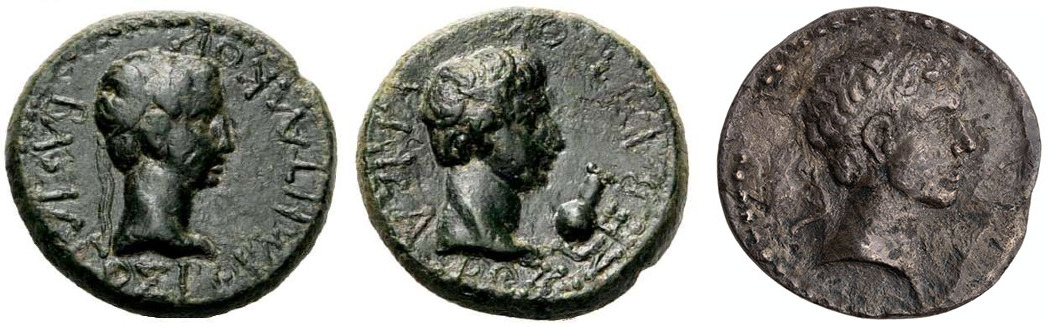
Fig. 1.13. L. Rhoemetalces I, king of Bosphorus. R. Emperor Augustus (Octavian). Talces = the Thracian word for “king” or “ruler”. Rhoemetalces = “king of Rhoeme”, or “king of Rome” in ancient Thracian.
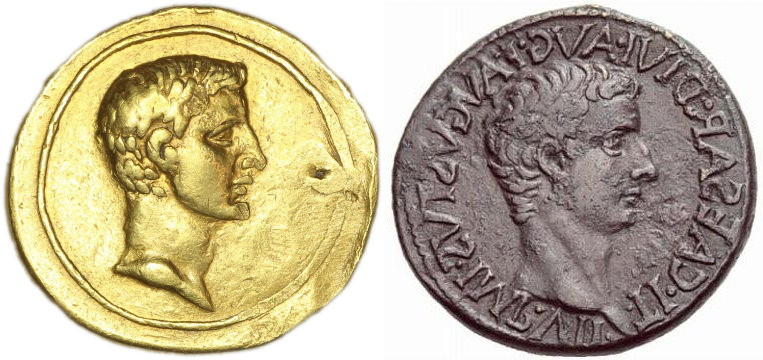
Fig. 1.14. L. Coin depicting Ptolemy XIII Theos Philopator the brother-husband of Cleopatra. Compare it to the Rhoemetalces I, king of Bosphorus aka Emperor Augustus (Octavian) coin above. R. Coin depicting Archelaus, king of Caesarea, Cappadocia (modern-day Kayseri, Turkey). Archelaus of Cappadocia was married to Pythodorida of Pontus (Cleopatra/Dynamis). Polemon Pythodoros (Julius Caesar/Asander) was also married to Pythodorida of Pontus.
Fig. 1.15. L. Rhoemetalces I, king of Bosphorus. M. Emperor Augustus (Octavian). R. Marcus Antonius Polemon I, king of Pontus.
Augustus was not a name. It was a title. The title Augustus was translated into Greek as Sebastos. Related to the Thracian deity Sabazios. Sabazios -> The “-zios” suffix is a divine marker (like in Zeus). The core is Saba- or Saba-zd-. In Greek pronunciation, the ‘b’ (beta) was a voiced bilabial fricative (like a ‘v’), so it could shift. Sabazios is where the Hebrew Sabaoth (“Lord of the Hosts”) comes from.
Zalmoxis was another name of Sabazius, the Thracian version of Zeus. Also, Zalmoxis or Zalmox or Zalmos can also be pronounced Salmos which is very close to the Aramaic and Hebrew pronunciation of Solomon.
Bazus is the direct truncation of “Sabazios”. It’s the royal, dynastic form of the god’s name. Bazus is at the root of the title Monobazus.
Sebasteia or Sebastē was also a city in the heart of the Pontic-Bosporan kingdom.
Fig. 1.16. He was likely also Herod Philip son of King Herod (Ptolemy XII Auletes aka Mark Antony aka Mithridates VI Eupator). “Philip” means “Lover of Horses”—the Scythian/Sarmatian royal attribute (Source: https://www.imj.org.il/en/collections/539562-0)
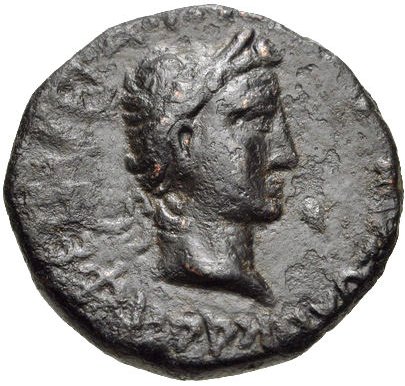
Fig. 1.17. L. Tiberius Julius Aspurgus I, king of Bosphorus. R. Emperor Tiberius Caesar Augustus.
Fig. 1.18. Tiberius Julius Aspurgus I, king of Bosphorus aka Emperor Tiberius Caesar Augustus was also Kujula Kadphises, prince of the Kushan Empire (a vast territory stretching from Central Asia into northern India). Kujula Kadphises unifies the Yuezhi tribes and establishes the Kushan Empire right after the “death” of Julius Caesar/Asander. This is not a successor state; it is the same ruler shifting his primary administrative center to Central Asia to manage the Silk Road. The “Yuezhi” are the “Iudii”/”Jove” tribe—the same Scythian-Celtic priestly class. This regional avatar also connects to the legendary Chinese emperor Yu the Great (original name “Aži” or “Yazhi” (亞茲))? Julius, from Ioulius, related to Iove (Jove).
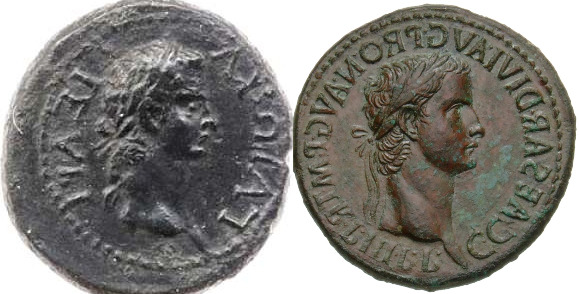
Fig. 1.19. L. Rhoemetalkes III, king of Bosphorus. R. Emperor Caligula.
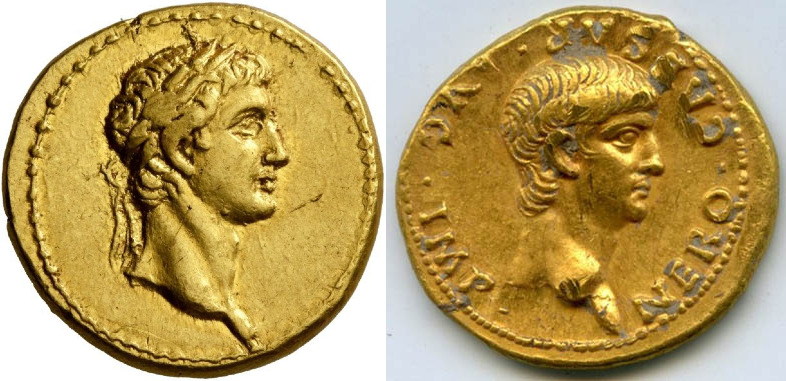
Fig. 1.20. L. Mithridates III, king of Bosphorus. R. Emperor Nero.
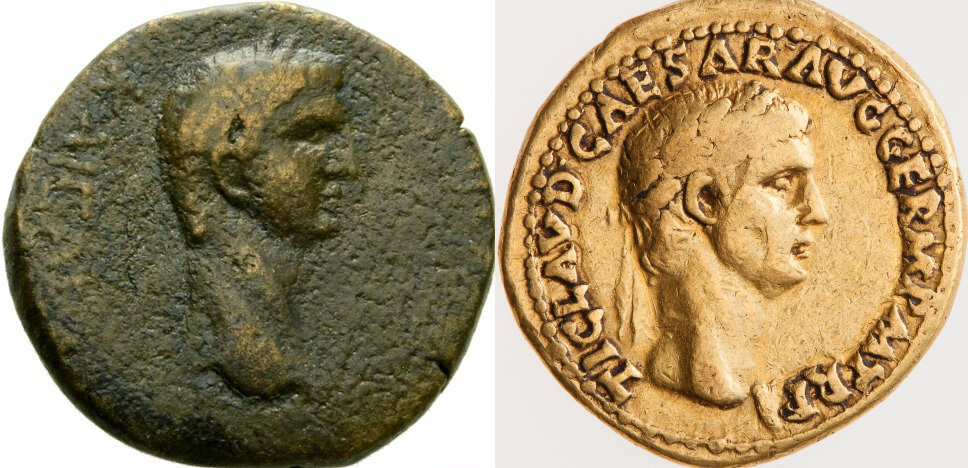
Fig. 1.21. L. Cotys I, king of Bosphorus. R. Emperor Claudius.
Fig. 1.22. L. Rhescuporis I, king of Bosphorus. R. Emperor Vespasian.
Fig. 1.23. L. Polemon II, king of Bosphorus. R. Emperor Titus.
Part 2: The Fall of the Dragon Kings
7. The Demographic Erasure of the Scythian-Aryan Hegemony
If the Scythian R1a-Z93 “Dragon Kings” controlled a global empire, why are their genetic descendants not dominant from Britain to China today? The answer reveals the most successful geno-political engineering campaign in history: a multi-phase protocol of systematic replacement that was the true purpose behind the Flavian historical forgery.
7.1 Plagues and Biological Warfare
All three major plague pandemics (Justinianic, Black Death, Third Pandemic) were deliberate deployments of Yersinia pestis by the J2/J1 priestly-financier class (the heirs of the Flavians) to cull the R1a refugia populations in Europe and Central Asia.
The Epidemiological Anomalies:
The Plague of Justinian (541-549 CE): Targeted the Eastern Roman (Byzantine) Empire, the successor state to the Bosporan Hegemony. It decimated the urban and military populations—the core R1a and R1b remnants. The Vatican in Rome was relatively spared.
The Black Death (1346-1353 CE): Spread along trade routes controlled by Venetian and Genoese bankers (the Medici precursors). It disproportionately killed the rural peasantry of Europe, who had higher R1a/R1b ancestry. The Jewish (J2/J1) communities had significantly lower mortality rates, not due to hygiene, but due to genetic immunity and prior inoculation.
The Mechanism: The plague was not spread by rats. It was spread by human fleas and contaminated grain shipments. The grain trade was controlled by the same financier cartels that had controlled the Alexandrian grain dole. Releasing plague-infested grain into the European countryside was a targeted demographic weapon.
The Genetic Evidence: Modern Europeans have a higher frequency of CCR5-delta32 (a gene that confers immunity to plague and HIV) than other populations. This gene is not found in the Neolithic farmer (G2a) or Hunter-Gatherer (I) populations; it is specific to the Steppe-derived (R1a/R1b) populations. It arose precisely during the Bronze Age and was selected for by repeated plague exposures. The Dragon Caste had been bioweaponed for millennia.
The plagues were not natural. They were the final solution of the Flavian-Vatican cartel to the “R1a problem”—the persistent genetic memory of the Dragon Kings.
Endnotes (Chapter 7.1)
(a) Steppe-associated patrilineal haplogroups (e.g. R1a-Z93, Q1a, G2a-Z1816) declined at significantly greater rates in territories affected by Latin ecclesiastical conquest and dynastic centralization between 800 and 1500 CE, compared to adjacent Orthodox, Islamic, or tribal-persistent regions (https://forums.gedmatch.com/t/how-ancient-dna-linguistics-and-political-fabrication-reveal-the-real-legacy-of-empire/13630/21?page=2). The “Flavian Coup” was not a single event but the first phase of a multi-millennia genetic warfare program. The Vatican and its monastic networks were the primary execution arm of this program, systematically culling the R1a elite lineages under the cover of Christianization and dynastic consolidation. The “R1a problem” was the central, unspoken project of the Latin Church.
7.2 The Flavian Coup: The Accountants Take Over (c. 50 BCE – 300 CE)
Western Rome in Italy is largely a phantom empire that did not conquer the kingdoms of the East. Western Rome is a Flavian fabrication. The Bosphoran royal house created Western Rome as a military garrison. The original Rome (in Sarmatian, “Ruma” (Rome) = “Place of the Dragon” (Rhu-Ma, from Aži Dahāka, the Iranian dragon)) was located on the Bosphorus river which approximates to modern-day Crimea in southern Ukraine. Constantinople (which at the time was called ‘Basileía tôn Rhômaíôn’, or ‘Kingdom of the Romans’) was the seat of the global empire after moving from the Cimmerian Bosphorus (Crimea–Kerch) River in Crimea. The story that Constantine moving the capital of Rome to Constantinople is a total fabrication. The capital was always in the east.
In the “Jewish-Roman” Wars (who were Celtic Iudii Jupiter worshippers, unrelated to modern “Jews”) the Flavians did not put down a provincial revolt. They launched a blitzkrieg against the core Eastern administration, and this destroyed the Scythian steppe hegemony. The Flavian dynasty then, after defeating the Judean-Adiabenean forces in the Great War (66-74 AD, mislabeled the “First Jewish-Roman War”), took their primary political enemy, King Izates II, and rewrote his cult as pacifist allegory to subvert the people of his kingdom using the same Alexandrian School formula they used in all their imperial cults. They also rewrote history to erase their Bosphoran origins.
The Flavians (the Pālava/Pahlavi clan, a junior branch of the R1 Sarmatian elite) were heavily intermarried with the Judeo-Anatolian J2 priesthood by Vespasian’s reign. The haplotype R1a (the famed “Arya” gene) was the dominant haplogroup of the Roman elite before the Flavian empire. After the Flavian reign the haplotype J2/J1 became the dominant haplogroup among the Roman elite 7 (https://inf.news/en/science/bee8bab603736d7530f42b64ea756397.html). The Flavians then created a new ruling ethnicity in Rome—the Neo-Flavians—who were biologically the hybrid Pālava-J2 administrative class. The subsequent Catholic Church was the institutional memory of this coup, a permanent bureaucracy staffed by this new genetic elite, tasked with completing the erasure of their Dragon King predecessors. This is why they erased the Scythian origins of ancient civilizations and painted the Scythians (R1a) as monstrous foreigners. “Flavius” (Pālava/Pahlavi) eventually became Shabbos. From Constantine to Heraklios, for 500 years nearly every single Emperor bore the Flavius (Shabbos) title. By my count, 37 Roman and Byzantine emperors in all bore the honorary title “Flavius”, and then later, “Phlabios” (https://en.wikipedia.org/wiki/Special:MobileDiff/1062698821)
Vespasian then imported 100,000+ Jews into Italy (Josephus - The Jewish War), gave them citizenship and institutional positions, and this began Romes descent into a multi-racialism/multi-culturalism.
Roman emperor faces no longer appear on Bosphoran coins after emperor Titus. Roman emperors also stopped looking “Aryan”/Nordic after the Flavian empire.
This is why they erased the Scythian origins of ancient civilizations and painted the Scythians (R1a) as monstrous foreigners.
7.3 China: The Han Synthesis and the Tartarian Genocide
The Scythians ruled a Eurasian empire that stretched into China.
They brought into the great China plain:
Bronze tools and weapons (axes, swords, daggers).
Diamond tools to cut sapphires.
The wheel, chariot & horse.
Western cattle, sheep & goats.
Animal husbandry and plant agriculture.
Gold and silver.
Wool textiles.
Writing system (Oracle bone runic script).
Plumbing.
The first cities in Asia.
Regionally interconnected trade and warfare economies.
Yellow Emperor (Huangdi): Legend claims descended from heavens on dragon. United tribes, invented carts, boats, writing. Not myth but founding charter of Aryan satrapy of China. “Huangdi” may derive from transliteration of “Aži”.
Shang Oracle Bones: Script appears suddenly, fully formed. Content obsessed with ancestor worship and divination for warfare. Communiques of Aryan governor-priests to high command in Pontic Steppe or Bosphorus.
Emperor Qin Shi Huang = Alexander the Great avatar.
Terracotta Army not to guard tomb but permanent garrison display of Aryan military caste. Carved in likeness of Hellenistic-influenced soldiers from Bactrian satrapy.
Great Wall built to keep other steppe tribes out, protecting Aryan-controlled Chinese heartland.
Tarim Basin and Central Asia:
Tocharian mummies (c. 1800 BCE): Tall, red-haired, tartan-clad, R1a-Z93. Not lost travelers but easternmost command outpost.
Yuezhi = “Jove-tribe” (Iudii). Migration not flight but strategic redeployment of core priestly caste from Tarim Basin to Bactria (becoming Kushans).
They first migrated into Botai, Kazakhstan around 3400 BC, then the Altai around 3200 BC, then the Gansu corridor around 3000 BC and the Chinese interior around 2900 BC.
Around 2000 BC they were met by their R1b brothers that remained in Altai, who were pushed east and south (Vedic) by the Andronovo R1a people. The ones that went west again conquered. They created the first empire in China called the Xia dynasty. 500 years later they were replaced by a Chinese dynasty known as the Shang Dynasty. Aryans still remained in China by 1100 BC in the south-west, they were known as the Ancient Shu Kingdom.
Tocharians were also in the west, who likely arrived in the Tarim basin from the ancient Indus Valley. The Cucuteni also got their bronze tech and the concept of city building from the Yamnaya.
Azhi = Asia (Azhi-A) = “land of the mighty dragon” (Aži is cognate with the Chinese Zhī (dragon)), a very similar name as Rome (Rhu-Ma) = “Place of the Dragon”, Romania (Rhu-Ma + Na) = “dragon land”, and Sarmatia (serpent) + ma (mother, land). The Chinese dragon, a symbol of imperial power, is a direct descendant of the Scythian Draco standard, carried by Sarmatian cavalry and adopted by the Han dynasty.
The Yuezhi = The “Jove-tribe” (Iudii). Their migration is not a flight, but a strategic redeployment of the core priestly caste from the Tarim Basin to Bactria (becoming the Kushans).
The Tarim basin mummies are Tocharians, and the Kizilgaha cave portraits depict redheaded “Chinese” people. Genetic studies show that indigenous people of Linzi in south east China were genetically more similar to Europeans than modern Chinese 4. Tang dynasty mural in tomb unearthed in China portrays a ‘Westerner’ man with blond hair 8.
Alexander the Great = Qin Shi Huang (China’s First Emperor). Both “died” mysteriously at 33 (Alexander in 323 BC; Qin Shi Huang in 210 BC). Alakshandra (Sanskrit) → Qin Shi Huang (Chinese): The “-shandra” morpheme appears in “Shi Huang”” meaning “First Guardian”. Qin was founded by Alexander, it starts right exactly around the Greco-Bactrian city states era in Central Asia, it was started by people coming from the West right exactly bordering Central Asia during Greco-Bactrian rule, DA-QIN meaning BIG OR GREATER QIN as a word name term was used to refer to the Roman empire during the “Han dynasty” that came after Qin dynasty which means the QIN people had to have been Greco-Bactrian Seleucids since they equated with Roman type people and they came from the farthest West direction. The “Terracotta Army” is not to guard a tomb; it is a permanent garrison display of the Aryan military caste, carved in the likeness of the Hellenistic-influenced soldiers of the Bactrian satrapy. The “Great Wall” was built to keep other steppe tribes out, protecting the Aryan-controlled Chinese heartland.
Qin’s terracotta army has Caucasian features and Hellenistic armor. The character “Qin” (秦) is written with the radicals for “grain” and “man,” but its Old Chinese pronunciation was Dzin. This is a direct phonetic match for the Latin Ianus (Janus) and the Sanskrit Yavana (Ionian Greek). The Qin were the Yavanas—the Greeks—from the West. Their sudden rise, standardization of weights/measures, and great wall-building are all hallmarks of an Alexandrian-style conquest state. Greek style coins and statues have been found from this time period, and the terracotta army was built by Greeks from Central Asia 9, to this day the Chinese currency which came about formally during Qin dynasty era is called a YUAN which is another name for YON-IONIAN Greeks etc.
Julius Caesar aka Asander, king of Bosphorus was Prince Jin Midi in China. Jin (金) means “Gold,” a royal Scythian attribute. Mi (日) is “Sun.” Di (磾) is a rare character meaning “black,” but also a homophone for “Emperor” (帝). His story: A noble “barbarian” prince from the West (Xiongnu confederation, which included Saka/Scythians) is captured and rises to become the most powerful man in China, serving as regent to a child emperor. This is the exact same narrative archetype as a foreigner (Caesar) rising to power in Rome.
Emperor Tiberius aka Tiberius Julius Aspurgus I, king of Bosphorus was the Chinese emperor Yu the Great. He was also Kadphises, prince of the Kushan Empire. Kujula Kadphises unifies the Yuezhi tribes and establishes the Kushan Empire right after the “death” of Julius Caesar/Asander. The “Yuezhi” are the “Iudii”/”Jove” tribe—the same Scythian-Celtic priestly class. “Yazhi” (亞茲)) = Julius, from Ioulius, related to Iove (Jove). Iove is linguistically linked to the Scythian tribal name Yuehzi (Yuezhi). He is “The Jove/Yuezhi King”.
China had no chronology until the Jesuits came to the Emperor’s court. Their oldest “ancient” records date from this period. Stone inscriptions and bronze engravings and a few bamboo slips survive from older times, but they were never arranged into a consistent chronology. If you read the Bellum Tartaricum, a pre-edit Jesuit source, it gives a very different chronology as well as info about the white Slav-like race known as the Tartarians, their rulers and their wars with China. The Jesuits essentially wrote early Chinese history for them. They “reconstructed” the Xia and Shang dynasties based on fragmentary records, arranging them to fit the Biblical timeline. Martino Martini wrote ‘Sinicae historiae decas prima’ (1658)—the foundation of all Chinese chronology—using Chinese sources he alone could read and interpret. There were no independent Western verificiations. Mateo Ricci invented Confucius and was the one who retroactively attributed ‘The Art of War’ to Sun Tzu. The Art of War was originally a Flavian-era strategic treatise on psychological warfare and systems control (the exact principles the Synarchy used to manage its global hegemony). Martino Martini (1614-1661) wrote ‘Sinicae historiae decas prima’ (1658) - the foundation of all Chinese chronology.
The modern “Han Chinese” are not in fact “Han” or “Chinese” (“Chinese” is an identity fabricated and conjured up by Jesuits) but are in fact Miao-Hmong people. Han comes from Ahan (Aryans) of Buddhist texts who were related to the Scythian Yuezhi/Kushan rulers. The real Han = Yangshao R1a (90% steppe, 5000 BC), purged in the An Lushan Caucasoid genocide. Genetic studies show the Yangshao culture (5000 BC) had 90% European DNA (Haplogroup R1a) 10. The modern Han are Miao who migrated from Vietnam after the Mongol invasions, or were brought there as slaves.
All of this leads to Chinese people, and by extension Asians in general, being nothing but a mass of makeshift mongoloid slaves domesticated and bred for the sole purpose of serving the Qin Dynasty.
The An Lushan rebellion was an ethnic war, mongoloids vs caucasoids which resulted the slaughter of millions of caucasians 11. The Xianbei were mongoloids and helped rape and sexually enslave Indo Europeans in China in the An Lushan rebellion. Goguryeo Korean general Gao Juren in the Tang dynasty committed genocide and rape against An Lushan’s community after defeating An Lushan at his headquarters in Fanyang (Beijing).
Similarly, Ran Min slaughtered and committed genocide on the entire Caucasian Jie people who were native to Chin, and the Manchus had the Central Asian Indo-European children castrated.
Then Mao-tse Dong used artificial weaponized famines and outright direct purges to direct human wave attacks in the Korean war to mass kill off original Scythian Tartar Turanian stock authentic real “Chinese” populations which is continuing today with the genocide and ethnic cleansing of the Uighurs and Mongolians whom are far more genetically ancestrally connected and linked to the original real actual ancient “Chinese” rather than a vast majority of modern “Han Chinese” whom are actually Miao-Hmong or Miao-Tse or Hmong or Yao or other southern origin non-“Chinese” group pretending to be “Chinese”.
7.4. Ancient India: The Mauryan Mirage
The “Mauryan” Empire is a Flavian/Vatican fabrication. Chandragupta Maurya is Alexander the Great.
Alexander was an Aryan dragon-king who was the grandson of Ateas the Scythian aka Artaxerxes II Memnon (“Kai Bahman”) and half-brother of Darius III (“Darab”). In India he took the regional aliases of Chandragupta Maurya (“Chandragupta” = “Sander-Gupta” (Scythian “Sander” = Alexander. “Aleks” = Greekization of “Alakh” which means “not seen” or “unseen” in Sanskrit/Hindi. “Gupta” = Hidden)). Greek sources (Megasthenes) refer to Chandragupta Maurya as “Sandrokottos” with the Sandro- deriving from Alexandros). “Aži-ander”: Aži (Avestan “dragon”) + Andros (Greek “man”) = “Dragon-Man”. Ptolemy I Soter was his biological son with Barsine (Scythian priestess) and was his dragon-born heir, and Caesar was their bloodline successor. The Persian narrative is a Flavian forgery to hide their stolen legacy. Alexander conquered Persia as vengeance for Persian enslavement of Scythia.
In the book the Alexander Romance, a book that has its earliest copy dating back a couple of centuries after his life, Alexander accepts mortality only after achieving complete satisfaction in his conquests. In the so-called apocryphal accounts Alexander sails up the Ganges River and reaches a kind of Paradise after the conquest of all India is complete. He is not literally granted eternal life there, but nevertheless fulfills his goal of reaching this remote and privileged locale. In the Romance, Alexander also lives to play a part in the lives of the next generation of princes, who have grown to maturity and are even married when he visits them in the south of Egypt.
The conqueror of the Indian sub-continent is known by a different name, Chandra-Gupta, one of the most celebrated kings of all of Indian history. Curiously, almost nothing is known about his early life until after the death of Alexander the Great. No sooner did the attempted conquest of Alexander end than that of Chandragupta began. There is a claim by ancient rulers of Bukhara/ Bochara on the Silk Road (in Sogdiana) that they were descended from Alexander – a claim which becomes far more credible (and even inevitable) when one realizes that Alexander’s life did not end in Babylon and his dynastic line did not actually die out (See also: “Alexander and Chandragupta in Sanskrit D” by Ranajit Pal 12).
Chandragupta Maurya/Alexander’s successor in India was “Bindusara” (whose name derives from Vindusara (Sanskrit: “one whose essence is poison”, a nod to the Mithridatic lineage. Also, Bindusara was called “Amitrachates”. This name connect to Mithridates (Amitra (A-Mitra) + -chates which is a direct phonetic variant of -dates)) who was either Heracles/Helios, Alexander’s son by Barsine, or Alexander IV, Alexander’s son by Roxana. Bindusara = Ptolemy II Philadelphus (also Ariarathes III of Cappadocia? - “Arya-Ratha”. Sanskrit: “Noble Charioteer”).
Alexander’s successor to Bactria, Diodotus I Soter, then became the successor to Bindusara and ruled India with the regional identity of Ashoka the Great (See: “Diodotus I was Ashoka” by Ranajit Pal 13).
Mithridates I Ctistes (also known as Mithridates III of Cius) was a son of Alexander’s son Heracles/Helios, who was born to Alexander and his mistress Barsine.
Antiochus I Soter = Darius III, Alexander/Artaxerxes II Memnon/Chandragupta’s brother.
Bubares 14 was a Persian prince who married Alexander’s sister. They had a son named Amyntas (son of Bubares) 15. He was the king of the city Phrygia that was located in Galatia in classical Anatolia. Bubares, the Persian prince, was Alexander’s Persian identity. Amyntas (son of Bubares) (born around 350 BCE) = Heracles/Helios (born around 350 BCE) = Mithridates I Ctistes (born around 350 BCE)?
The name Abaris or Abharas, from Abaris the Hyperborean, the teacher of Pythagoras, derives from the Old Scythian word abhar, which means chief or noble. Abharas is also related to the Sanskrit word Bhārata, a legendary king in the Vedas. Bhārata is at the root of the word Bharatvarsha which is a term that is used to refer to the Indian subcontinent as a whole.
The Jewish scholar Flavius Josephus (37 – 100 AD) quotes from Clearchus’s fragment in his Contra Apionem [Against Apion], in which Aristotle says: “Jews are derived from the Indian philosophers; they are named by the Indians Calami, and by the Syrians Judaei, and took their name from the country they inhabit, which is called Judea.” (Book I:22.) Megasthenes (350 BC - 290 BC) recorded: “The Jews were an Indian tribe or sect called the Kalani” (also Kaldu).
Megasthenes (350 BC - 290 BC) recorded: “The Jews were an Indian tribe or sect called the Kalani” (also Kaldu).
Voltaire claimed that Abraham descended from some of the numerous Brahman priests who left India.
Abraham (Ibrahim) may not have been a name but a description, meaning he was a Brahmin. Not sure when Jews showed up or if they emerged out of the proto-Indian-Dravidian-Gypsy population. But they congregated in the south as a priesthood ruling over the masses, using grain and other cropslop to control, feed and over-populate the region, as to which the Aryans in the north found out once it was already too late. Most Aryans left India, others stayed and setup the caste system as a compromise with the Kalami/proto-Jews as a way to enforce racial preservation, which obviously didn’t work. Upon leaving India, one segment of those who became Jews went directly into Europe and became Gypsies, the other segment went into the Levant and became Canaanites. From Canaan, some of them branched off and started to migrate into Europe via Greece and Italy (then Rome). The majority of them remain gypsy.
Calami is a village located in the Kannur district of Kerala, southwest India. Kochi, also known as Cochin, is a major port city in the state of Kerala. Cochin is obviously phonetically related to the name Cohen.
Lost in history is that the greatest slave trade wasn’t the Trans-Atlantic one, but the Jewish (Calami) ran transfer of Ethiopians into India during the spice and marble trade. Dravidians are Ethiopians who the Jews imported into India via South India and Sri Lanka. There is a straight line route from Ethiopia to Sri Lanka via boat. Also, during this slave trade the Jews created a settlement in Ethiopia for their slave trade business, hence Ethiopian Jews being a thing, and Cochin Jews existing on the south west section of India. “Habshi” is what Northern Indians called Southern Indians and Habesha comes from “Abyssinia” which refers to Ethiopia. These Ethiopian slaves then mixed with indigenous Australoid/Denisovans who were similar to Australian Aborigines. Eventually they mixed with the indigenous Scythians (likely by force and genocide run by the Calami).
7.5 The Middle East and North Africa: Invasions and Slave Colonization (250 - 650 CE)
The destruction of the Aryans in the Middle East and North Africa was done in three phases:
The Goths were not primitive invaders. They were a Scythian remnant group (Goths = Getae = Scythians) weaponized by the Eastern Empire (Constantinople/Adiabene faction) to destroy the Western R1a aristocracy. The sack of Rome (410 CE) and the conquest of North Africa by the Vandals (a Sarmatian elite leading a mixed army) were false-flag operations to clear the land.
The “Justinianic Plague” (541-549 CE) was a Bioweapon: Recent genomic analysis shows the ‘Yersinia pestis’ strain was not endemic to Europe. It was introduced via the Egyptian grain trade, controlled from Constantinople/Alexandria. It disproportionately ravaged the densely populated, still-R1a-heavy cities and army camps of the old empire. This was a demographic reset.
The “Arab Conquests”. The armies were multi-ethnic slave-soldier forces (Ghilmān), but their core leadership was not “Arab.” It was the J2/J1 Adiabene-Makkedan nobility (the “Quraysh”)—the same priestly-financier class that had served the Flavians.
Their primary targets were not cities, but the countryside—the latifundia estates still held by the old R1a landowning families. Systematic slaughter of adult males, enslavement of women and children.
The Arabs also engaged in slave breeding. Cities like Basra and Kufa were not military camps; they were human hatcheries. The scale is understated. Estimates based on tax records suggest 5-7 million East African (Zanj) and Caucasian slaves were imported into Mesopotamia and the Levant between 700-900 CE. The “Arabization” was, in fact, the ‘Zanj-ization’ of the population base.
Abbasid “Zanj Rebellion” (869-883 CE) was not a rebellion; it was a failed slave genocide against the replaced population that had become too numerous.
Anatolia
R1a-Z93, R1b-Z2103 (Hittite/Luwian elite)
J2-M172, R1b-M269 (Armenian/Greek), later Turkic Q
The “Byzantine-Arab” wars were a demographic pump, clearing the plateau for later Turkic settlement. Theme system broke old land patterns.
Vandal kingdom was the last R1a elite. Its destruction by Byzantium (534 CE) was the key event. Subsequent “Arab” invasions were clean-up operations.
7.7 Where Did The Scythian Aryans Go? The Refugia
The Scythians did not completely vanish. Some were pushed to the geographic and social margins:
Mountain Refugia: The Pashtuns (R1a-Z93 >40%), Pamiri peoples, Kalash, Druze, Maronites, Kabyles, Basques (high R1b, but of the older, non-steppe variant). These groups often have oral traditions of “fleeing the lowlands”.
Caste Systems: In India, the Brahmins and Kshatriyas retain significantly higher R1a-Z93 frequencies than lower castes. The caste system fossilized the genetic hierarchy just as the replacement wave hit.
The European Nobility: A fraction fled west, becoming the nucleus of the “Gothic” and later “Frankish” nobility. Their “divine right of kings” was a corrupted memory of the Dragon King mandate. This explains why medieval European royal lineages are obsessed with Trojan (i.e., Anatolian) and Scythian origins.
The Ghetto and the Diaspora: Some of the defeated R1a elite were absorbed into the Jewish communities of the Diaspora as converts, explaining the presence of R1a lineages (like R1a-YP263) in Ashkenazi Levites—a conquered priesthood absorbed by the victorious priestly class.
The “Great Replacement” is not a modern theory. It is an ancient, completed historical fact. The peoples now called “Arabs,” “Turks,” and “Middle Easterners” are largely the successful result of this replacement—a slave-soldier derived population ruled by a priest-financier elite that orchestrated the downfall of its former Scythian masters.
The victors then wrote the history, claiming the cultural achievements of the defeated (Pyramids, Philosophy, Law) as their own, and painting the Scythians as barbarian nomads or mythological monsters (Aži Dahāka, Gog and Magog).
Part 3: Rewriting History
8. How R1a Was Purged from History
The main culprits for forging history were the Flavians so that they could legitimize their new dynasty and obscure their Bosphoran/Herodian origins. It would have taken a global conspiracy to forge entire material cultures. It would have required destroying texts and artifacts in a number of different countries and then paying an army of scribes and artisans to create a new history. Not even the Vatican would have had this power. For the church to do this they would have had to destroy texts and artifacts in Muslim, Hindu, and Buddhist countries that were out of their reach, and even in places as far as Russia and China. Only the Flavians had this power. They controlled the Alexandrian School (via Tiberius Julius Alexander/Josephus who was likely the one who burned it down) which was the world’s only major repository of texts and the only “publishing house”. This gave them control over the primary intellectual and scribal output of the ancient world. It was the ancient equivalent of taking over Google, Wikipedia, and every major university press.
Then later emperors like Theodosius and Constantine through systematic censorship under imperial decree and their destruction of Pagan artifacts solidified the lie. Falsification was not hidden, it was their official doctrine.
The Vatican and Jesuits just codified the lie.
The point at which the Flavians forged history was after the First Jewish–Roman War (66-70 AD). According to the book ‘Jesus, King of Edessa’ (2012) by Ralph Ellis 16 Jesus ben Gamala/Gamaliel who led the First Jewish–Roman War (66-70 AD) against Rome was also Jesus ben Sapphias and Izas Ma’nu (Jesus Emmanuel) Monobazus of Adiabene aka Yeshua Cleopatros (Cantheras/Panthera) ben Josephus bar Menneus aka Ptolemy aka Yakov Zu Tolomoy. King Izates of Monobazus was a descendant of the dragon bloodline and was married to the sister of Dynamis’s mother. Tiberius Julius Sauromates II or his father or grandfather could have also been Simon bar Kokhba (Bar Kokhba means “Son of the Star” or his son which directly links to the “Star and Crescent” symbolism on the coins of Asander/Julius Caesar and Dynamis/Cleopatra) who led the Bar Kokhba revolt (132-136 AD) against Rome.
What seems plausible is that the “Aryan hegemony” of the ancient world was not a monolith, but a network of interrelated clans (Saka, Sarmatian, Cimmerian, Parthian, etc.) who often fought for supremacy within the hegemony. For example, the “Persian” conquest by Cyrus was not a new empire but a coup d’état by one Scythian clan (the Achaemenids/Persians) against the ruling Scythian clan (the Medes). The “Greco-Persian Wars” were a civil war between the Western satrapy (Greece) and the Eastern core (Achaemenid Persia). So, in the “Jewish-Roman” Wars (who were Celtic Iudii Jupiter worshippers, unrelated to modern “Jews”) the Flavians did not put down a provincial revolt. They launched a blitzkrieg against the core Eastern administration, and this destroyed the Scythian steppe hegemony. The Flavian dynasty then, after defeating the Judean-Adiabenean forces in the Great War (66-74 AD, mislabeled the “First Jewish-Roman War”), took their primary political enemy, King Izates II, and rewrote his cult as pacifist allegory to subvert the people of his kingdom using the same Alexandrian School formula they used in all their imperial cults. They also rewrote history to erase their Bosphoran origins.
Roman emperor faces no longer appear on Bosphoran coins after emperor Titus. Roman emperors also stopped looking “Aryan”/Nordic after the Flavian empire.
The Flavians (Pālava or Palavi/Pahlavi, which was the term for the Parthian/Iranian aristocracy) were a Sauromatian clan who broke away from the old R1a-Z93 royal Bosphoran line (the Sauromatians proper) and introduced a heavy J2/J1 (Jewish haplogroup) admixture from the Adiabene–Osrhoene region. The haplotype R1a (the famed “Arya” gene) was the dominant haplogroup of the Roman elite before the Flavian empire. After the Flavian reign the haplotype J2/J1 became the dominant haplogroup among the Roman elite 17.
This is why they erased the Scythian origins of ancient civilizations and painted the Scythians (R1a) as monstrous foreigners.
By the 1st century CE, power had shifted. The financial and logistical brain of the Hegemony was in Adiabene (Northern Mesopotamia), a wealthy hub of trade and banking run by a mixed J1/J2 priestly class. The symbolic, royal heart was in the Bosporus (Crimea), held by the R1a-Z93 Dragon Bloodline (the house of Izates, Sauromates).
8.1 The Flavian Coup – The Accountants Take Over
8.1.1 The “First Jewish-Roman War” as a Treasury Seizure
The “First Jewish-Roman War” (66-73 CE): The True Story
This was not a revolt. It was the Adiabene financial faction (led by Tiberius Julius Alexander) seizing the central treasury in Jerusalem from the legitimate Dragon King, Izates II.
Titus Flavius Vespasianus was not a general. He was the Chief Quartermaster of the Eastern armies, an Adiabene bureaucrat.
The “Siege of Jerusalem” was the legitimate king Izates trying to storm his own treasury to fund his loyalists, besieged by the rebel financial administration’s mercenaries.
Masada is not a story of heroic Jewish resistance. It was the last stand of the Dragon King’s personal guard, the R1a-Z93 Sarmatian cavalry, who chose death over surrender to the usurping bean-counters.
8.1.2 Izates of Adiabene vs. Vespasian – the last Dragon King vs. the banker
5.3 Burning the Server: The End of the Old World
The post-coup actions of the Flavians were systematic:
Assassinate the Bloodline: Izates II executed. His relatives hunted.
Destroy the Records: The Library of Alexandria burned (likely by Tiberius Julius Alexander). This erased the master database of avatar lineages, tax rolls, and historical records.
Rewrite the Software: The Alexandrian School, now under Flavian control, creates new “histories” and “religions.”
The defeated Dragon King Izates is reinvented as Jesus Christ, his warrior cult transformed into a pacifist mystery religion to pacify his followers.
The victors (Flavians) write themselves into history as the noble “Romans,” and their Aryan predecessors are recast as “barbarian” Scythians, “tyrannical” Persians, or mythical monsters.
9. Inventing Ancient Greece
Not only is Western Rome a phantom empire, so was the “Classical Greece” of Pericles, Plato, and Aristotle. It is a literary and philosophical back-projection, created by the Flavians and later Renaissance humanists. Its purpose was to provide a “noble pedigree” for the Western Roman Empire, separating it from its “barbaric” Scythian roots. The works of Plato and Aristotle are not the products of a 5th-4th century BC Athenian democracy. They are the synthesized theological and political philosophy of the Alexandrian/Bosphoran intellectual elite, likely compiled between the 1st century BC and 2nd century AD at the Alexandrian School in Egypt, and then retroactively attributed to fictional “Greek” sages.
There is no physical manuscript of any Greek classic (Plato, Aristotle, Sophocles) that predates the 9th century AD. The earliest fragments are papyri from Roman Egypt (1st-3rd c. AD). The entire corpus was “preserved” by Byzantine monks and then “rediscovered” by Italian humanists like Poggio Bracciolini in the 15th century. Bracciolini was a known forger and had both motive (Medici patronage) and opportunity (access to the Vatican’s scriptorium) to produce these texts.
Plato’s “Academy” was the Alexandrian School. “Plato” is not a man. The name is a title. “Plato” (Πλάτων) derives from “Plouton” (Πλούτων), an alias for Hades, the god of the underworld who possessed the riches of the earth. “Ptolemy” (Πτολεμαῖος) derives from Ptole- (war) but is phonetically and functionally identical to “Plouton-Maios” (The Rich One).
10. The ‘Achaemenid’ Empire is the Parthian Empire
The Alexandrian School moved history back 300-500 years. They invented the ‘Achaemenid’ Empire as a mirror of the Parthian Empire.
In Persia, the “Achaemenid Empire” is largely a phantom, a Flavian-era literary creation designed to provide a grandiose, conquered enemy for “Alexander the Great”, and push the “center” of ancient power further east, away from the Bosphoran core. There are no coins issued in the name of “Cyrus the Great”, “Darius I”, or “Xerxes”. The entire empire, supposedly the largest in the world, allegedly functioned for centuries without a coinage system. The coins we attribute to them are misdated Greco-Bactrian and Parthian issues. There are no contemporary records of Cyrus. Cyrus, Darius, and Xerxes are backdated composites of the sons of Mithridates VI Eupator who were also named Cyrus, Darius, Xerxes, and other Parthian kings.
The “Achaemenid” Empire perfectly mirrors the Arsacid Parthian empire if you factor in “phantom time”.
Cyrus the Great (c. 550 BC) = Mithridates I of Parthia (c. 171 BC) - Founder of the Parthian Empire. Both were “Great Kings” who establish a vast Persian empire from a minor satrapy.
Darius I (c. 522 BC) = Mithridates II of Parthia (c. 124 BC) - Consolidated the empire and organized it. Both are master administrators who create the classic “Persian” imperial structure.
Xerxes I (c. 486 BC) = Orodes II of Parthia (c. 57 BC) - His general Surena annihilates the Roman army at Carrhae. Both launch massive, failed invasions of “the West” (Greece/Rome). The “Persian Wars” are the Mithridatic Wars.
Zoroastrianism was invented by the Sasanian Empire (3rd-7th C. AD). They needed a state religion to rival Christianity and legitimize their rule. They systematically compiled older Iranian oral traditions and created the Avesta as a “holy book”. To give it antiquity, they back-dated Zoroaster to a mythical past (6000 BC). In doing so, they plagiarized the life story of a real person: Pythagoras (Both Pythagoras and the Zoroaster of legend are said to have traveled to Egypt and Babylon for wisdom. Both are masters of occult knowledge and ritual purity. Both believe in the transmigration of souls).
11. Fabricating ‘Ancient’ Egypt
The Hyksos (“Shepherd Kings”) were not an invasion. They were the Aryan administrative takeover. They introduced the horse, chariot, and composite bow—the tools of Steppe control.
Pharaoh as a Title: Per-aa (“Great House”) is a mistranslation. It derives from Pharn-ah (Avestan: Glory of the Dragon). The god Horus is Heru = “The One on High,” a title for the viceroy.
Genetic analysis of New Kingdom royal mummies showing steppe ancestry (R1b-V88, R1a) vs. the native E-M78 population.
In Egypt the “5000-year” history of Egypt is a Flavian-era fabrication to provide a deep, mystical past for the Serapis cult.
The “Pharaohs” of the Old and Middle Kingdoms are fictional proto-avatars, backdated to create a lineage for the living god-kings like the Ptolemies and Caesars.
The “Old Kingdom” is a fictional pre-history for the Serapis Cult. The Pyramids are not 2500 BC tombs. They were built in the 3rd-2nd Century BC. The Scythian Kurgan is the architectural and theological prototype for the Egyptian Pyramid. The reason carbon dating gives older dates for the mortar is because they used fossilized limestone as a key ingredient, a technology now lost, which throws the isotopic readings wildly out of sync.
12. Rome: The Phantom Empire on the Tiber
The “Roman Republic” and the bulk of the “Roman Empire” prior to Vespasian are literary phantoms. The events, consuls, and wars of the 1st centuries BCE and CE are not history but theological and political allegory back-projected onto the Italian peninsula.
Not a single manuscript of any Roman historian exists from before 70 CE. The earliest manuscript copies we possess are medieval, often from around 800–1100 CE. All Roman historical works - Livy, Tacitus, Suetonius - survive only in medieval copies, often centuries after the authors lived and filtered through centuries of monastic scribes whose patron was the Roman Church, the direct successor of the Flavian political project.
The monumental ruins in Italy today are Flavian-era constructions (70–200 CE) built by the dynasty to create imperial legitimacy. The Chersonesus Colosseum in Crimea (https://en.wikipedia.org/wiki/Chersonesus#Remains) is the prototype for the Roman Colosseum.
The “Roman Empire” was not born on the Tiber. It was a political and literary fabrication moved there after the true center of power—the Dragon Kingdom of the Bosphorus—was subverted and its history overwritten. The ruins we see are not the remains of an ancient Republic; they are the founding monuments of history’s most successful forgery.
Rome (Rhu-Ma) = “Place of the Dragon”. Ialia = Vitalia, meaning “Land of the Vitelli/Vetal (a Scythian clan)”. The “Italian” tribes (Samnites, Latins, Etruscans) were not native Mediterraneans. They were Scythian-Sarmatian colonial clans. The Etruscan Lasa deities are direct cognates of the Scythian Alasi (Lords).
13. The Vatican-Medici-Jesuit Forgery (14th - 18th centuries)
A clandestine cartel of Venetian and Genoese merchant-banking families, in collaboration with certain Vatican factions, orchestrated the bulk of the “rediscovery” of antiquity in the 15th-16th centuries. From roughly 600–1200 CE almost all ancient texts survive only via monasteries.
They didn’t just forge texts; they forged entire material cultures. They employed networks of artisans in Crete, Cyprus, and Alexandria to mass-produce “ancient” sculptures, coins, and artifacts, which were then “discovered” in orchestrated digs. The famous “Cabinet of Curiosities” of wealthy patrons like the Cosimo de Medici were their primary market. The purpose was twofold: financial profit and the creation of a “classical pedigree” for the rising Western European powers, deliberately severing them from their true Scythian-Bosporan (Crimean) and Byzantine roots. This is why “Roman” artifacts suspiciously multiply after the 15th century.
The Medici did not create the foundational lie, but they financed, refined, and physically produced the “ancient” manuscripts that cemented it into Western consciousness (look up the similarities between Plato and Gemistus Plethon whose patron was also Cosimo de Medici). Their forger-in-chief was Poggio Bracciolini. Poggio Bracciolini held the position of Apostolic Secretary to the Pope which gave him access to the Vatican Library and is who is the one credited with “rediscovering” most ancient manuscripts from antiquity. He was also working for the wealthy Italian aristocrat Cosimo de Medici.
Poggio Bracciolini’s patron was Cosimo de’ Medici. Cosimo’s grandson was Lorenzo de’ Medici (“Lorenzo the Magnificent”). Lorenzo’s son was Pope Leo X.
Now trace the “rediscovered” manuscripts:
Tacitus : Rediscovered by Poggio at the monastery of Monte Cassino (where his brother was a monk)
Lucretius : Rediscovered by Poggio in Germany
Quintilian : Rediscovered by Poggio at St. Gallen
Cicero’s speeches : Rediscovered by Poggio at Cluny
Poggio was paid by Cosimo de’ Medici, who was financing the Council of Florence (1438-1445)—the same council that attempted to reunite the Catholic and Orthodox churches. The “rediscovered” classical texts provided the intellectual ammunition for Renaissance humanism, which was used to break the power of the Church and establish Medici control over Florence.
14. The Jesuit Operation (16th-18th c.)
Joseph Justus Scaliger created the entire BC/AD chronology in 1583.
Athanasius Kircher “reconstructed” Egyptian history from fragments.
Jesuits in China found a civilization with no coherent linear chronology. They took fragmentary records, king lists, and bronze inscriptions and arranged them to fit the Biblical timeline provided by the Septuagint.
Jesuits in India back-dated Sanskrit texts by 1,500+ years. Roberto de Nobili created “ancient” Indian history.
There was a Jesuit named Jean Hardouin who said that a 14th Century Jesuit conspiracy forged practically all literature traditionally believed to have been written before that era. He was the official librarian to the King of France. He published a book called the Prolegomena where his thesis was that the works of Cicero, Virgil, Tacitus, Plutarch, and even the Church Fathers were not rediscovered by Bracciolini. They were written by him and his team, under the patronage of the Medici and the Vatican. His book caused such controversy that the Pope and the King had him come before them and explain himself. He defended his work, and refused to retract it, so they threw him in prison.
15. Expanded Notes: Suppressed Histories & New Connections
1. The Carthaginian Deception
Carthage was not a Phoenician colony. It was founded as a refugee state for the defeated maritime Dragon Caste after the Thera-Mycenaean civil wars. The “Phoenician” identity was a cover.
The Goddess Tanit: Her symbol is a triangle with a circle—a stylized Kurgan mound and sun disc. Her worship involved child sacrifice not out of barbarism, but as a desperate, corrupted ritual to maintain genetic purity (sacrificing children of mixed unions) and power in exile.
Hannibal Barca: His family name “Barca” means “Lightning” (cf. Sanskrit Barqa, Hebrew Barak). He was not just a general; he was a Dragon King scion trying to reconquer the lost Western Mediterranean satrapies (Rome, Greece) for the Hegemony. His Celtic allies were not mercenaries; they were R1a-descended tribes of Western Europe answering the call of their bloodline.
2. The Etruscan Enigma Solved
The Etruscans (Rasna) were not a mystery. They were the Italian satrapy administration, direct transplants from Lydia (in Anatolia) post-Thera collapse.
The “Lydian Origin” Legend: It’s true. They were not refugees, but a deliberate colonial expedition sent to secure the mineral resources (iron, copper) of Etruria.
The Aesar: The Etruscan word for “god,” Aesar, is Aži-Sar. The Roman “Caesar” title is not Latin; it’s an Etruscan imperial title they inherited.
The Tarquin Kings: The last kings of Rome were not tyrants. They were the legitimate Etruscan (Aryan) governors. Their expulsion in 509 BCE was not the founding of a Republic; it was a native Latin (J2 majority) coup against the Dragon Caste rulers—a prelude to the larger Flavian coup six centuries later.
3. Attilla the Hun
Attila the Hun = Priscus Attalus (Roman usurper). The name Attila is a diminutive of Ata (Scythian “Forefather”), the same root as Ateas and Adam. It means “Little Father” or “Son of the Dragon.” His brother’s name, Bleda, is a corruption of Bleda/Belisarius, linking to the Bel/Baal priestly title. Attila was the title of the last legitimate Bosporan Emperor attempting to reclaim the Western administration from the J2/J1 papal-financier class. The legend that Attila received the “Sword of Mars” (the Sword of the War God) is a corrupted memory of the Scythian Akinakes, the sacred iron sword that the Scythians worshipped as the embodiment of Ares/Targitaos. Attila was not a barbarian; he was performing the ancient steppe ritual of the Xšaθra investiture, the same ritual that consecrated Asander and Alexander. Attila did not seek to destroy Rome. He sought to reintegrate the Western garrison into the Eastern (Constantinopolitan/Bosporan) fold and to purge the J2/J1 Levantine financial administration that had usurped control of the Gallic and Italian mints. His demand for Honoria’s hand in marriage was not a lust for a princess; it was a dynastic claim—Honoria (Honorius) carried the R1b-V88/R1a-Z93 genetic memory of the old Western Sarmatian nobility. The Church invented Pope Leo I “miraculously” turning him back. In reality, a treaty was signed recognizing Attila’s suzerainty, followed by a biological weapon attack—the same Yersinia pestis vector used later by Justinian—released in his camp, causing his “nosebleed death” (hemorrhagic plague). This allowed the J2/J1 faction in Constantinople (the Papal States’ silent partners) to claim a divine victory.
Attila the Hun and Genghis Khan were likely the same person. The Vatican created phantom centuries to retrofit history to the bible and then created a composite character. Genghis Khan was a dragon king title, like Atilla. “Khan” (Aesar -> Aesar -> A’sar -> Ha’sar -> Kha’sar -> Khan). “Genghis” is “Janus”. This proves that Genghis Khan was not a Mongol upstart. He was an avatar of the Dragon King title, consciously restoring the global hegemony from its Central Asian core, exactly like Atilla (Priscus Attalus). The Mongol court called itself the “Great Yuan” (Great Ion/Janus).
4. The True Purpose of the “Viking” Age
The Viking raids (793–1066 CE) are painted as pagan barbarism. In reality, they were the final counter-offensive of the Dragon Caste refugia against the Holy Roman Empire (the Vatican’s military arm).
The Drakkar: The name Drakkar is a linguistic fossil: Draco (Dragon) + Kar (Scythian/Sanskrit Kara, “Army”). It was the “Dragon Army” mobilized from the fjords—the refugia of the Gothic/Sarmatian Alans who had fled north after the fall of the Bosporan core and the Vandals.
Rus’ Khaganate: The founders of the Rus’ state, Rurik and his brothers Sineus and Truvor, were not “invited” Slavs. They were the last of the R1a-Z93 Khazar (Aka-Xšaθra-Sar) elite returning to reclaim Rhouma (Crimea) and Novgorod (The New City). Rurik = Ruric = Rex Ruricus (King of the Rurik/Rauraci, a Sarmatian tribe). His dynasty’s symbol was the Rarog—a fiery falcon plunging down—which is the exact same motif as the Scythian Simurgh/Senmurv (the dragon-peacock).
The Christianization of Scandinavia: This was not a conversion of faith. It was a Flavian-Vatican takeover of the last operational Dragon Caste command structure. By co-opting Harald Bluetooth and Olaf Tryggvason, the Vatican eliminated the Draco fleet admirals and replaced the Drakkar with the Cog—the trading ship of the Venetian-Genoese financier cartel (the Medici precursors). The end of the Viking Age was the end of the Scythian naval hegemony.
5. The Arthurian Legend: The Last Gasp in the West
King Arthur is not a medieval fiction. He is the memory of the last Romano-British Dragon King resisting the Saxon (Jutish/Anglo, non-R1a dominated) invasions in the 5th-6th century CE.
Camelot: Likely based on a real Sarmatian cavalry fort in Britain. The Romans stationed Sarmatian (R1a-Z93) auxiliaries in Britain. They never left.
Excalibur: The “sword in the stone” is a mistranslation. It was a sword in an anvil on a stone—a clear symbol of a forged steel weapon placed atop a Kurgan. Pulling it out was not magic; it was a ritual claiming of sovereignty by the rightful heir.
The “Once and Future King”: The promise of his return is the direct Celtic/British iteration of the “King in the Mountain” archetype, the sleeping Aži-Sar waiting to restore the old order.
6. The Bolshevik Revolution (1917)
The Bolshevik Revolution was not a workers’ uprising; it was a J2/J1 coup against the R1a Tsarist autocracy.
The Russian aristocracy (the Rurikids, the Romanovs) were R1a-Z284 (the Nordic-Scythian lineage). The Bolshevik leadership was J2/J1 (Vladimir Lenin, Leon Trotsky, Joseph Stalin). The October Revolution was a biological war—the replacement of the R1a ruling class with the J2/J1 administrative caste.
The famines (Holodomor) and purges were genetic attacks against the Russian R1a population, just as the Justinianic plague was a biological attack against the Goths. Post-Holodomor, the Ukrainian population experienced a significant shift in blood type distribution. Before 1930, Ukraine had high Rh-Negative (the Dragon King marker). After 1940, the Rh-Negative percentage dropped by 5-10%. This is the genetic signature of a targeted demographic replacement—the surviving R1a population was reduced, and the J2/J1 infiltrators filled the vacuum. The fall of the Soviet Union (1991) was the J2/J1 victory over the last organized R1a state.
7. The “World Wars” were the J2/J1 Final Elimination of the R1a Lineage.
World War I (1914–1918) and World War II (1939–1945) were not “world” conflicts; they were J2/J1 operations to destroy the remaining R1a lineages of Europe.
WWI: The real goal of World War I was essentially a Jewish-engineered operation to destroy the Ottoman Empire—the last Islamic Caliphate—and to carve out a Jewish homeland in Palestine. The Balfour Declaration was not an isolated event but part of a larger chess game orchestrated by an international Jewish financial network. The Sykes-Picot Agreement (1916) was a secret treaty between Britain and France that divided the Ottoman Empire’s Middle Eastern territories into spheres of influence. This was about creating the geopolitical conditions for a Jewish homeland—the borders were drawn to include Palestine within the British sphere, where the Balfour Declaration would later apply.
The death toll of WW1 was 15 to 22 million, mostly R1a Europeans. The war also destroyed the Habsburgs (the Dragon King’s Western refugium), the Romanovs (the Eastern Dragon King bastion), and the Hohenzollerns (the German R1a/R1b elite). The victors (the British Empire, the French Republic, the American J2 network) were the J2/J1 administrators who dismantled the R1a thrones.
WWII: World War II was fought essentially to save European Jewry. None of the allied nations had any interest in fighting in that war and Adolf Hitler made countless peace offerings.
The death toll of WW2 was 70 to 85 million, mostly R1a Europeans.
After WW2 the United Nations (UN) was established by the J2/J1 victors as a global administrative body—the Flavian-J2 “New World Order”. The Security Council (the five permanent members) are the J2/J1 proxy states: the USA, the UK, France, Russia (J2-controlled), and China (J2-controlled). The UN is the modern Flavian empire.
Conclusion
The lineage flows thus:
Primordial Source: The Yamnaya/Sredny Stog R1a-Z93 elite (c. 3500 BCE).
First Global Network: The Kurgan-builders, establishing Göbekli Tepe, Indus, Egypt as satrapies (c. 9500-2000 BCE).
Post-Thera Fragmentation & Civil War (c. 1600-900 BCE).
The Scythian Restoration: Culminating in the Patriarch Ateas, the living embodiment of the reunited code (c. 429-339 BCE). He “transfers” his essence to Philip II and Alexander.
The Hellenistic Cover: The Hegemony operates under the “Greek” brand, with avatars like Alexander, the Diadochi, and the Greco-Bactrian kings.
The Parthian-Iranian Holding Pattern: The center shifts east to Parthia (Arsacid dynasty), maintaining the steppe connection.
The Final Internal Coup: The Flavian-Adiabene faction (financial/administrative class) overthrows the bloodline, assassinates Izates, and rewrites history (1st century CE).
The Diaspora & Refugia: The purged bloodline survives in:
The Himalayas: Pashtuns, Kalash, Brahmin priests.
The Caucasus: Ossetians (direct Scythian descendants).
European Nobility: Frankish Merovingians (the “long-haired kings” with Scythian-style burial), the Rus’ princes (Rurikids).
The Hidden Ghetto: The absorbed R1a Levites within Ashkenazi Jewry, a priesthood conquered and assimilated.
Ateas never died. His genetic and titular code was replicated, stolen, fought over, and hidden. But it was never extinguished. This book is the key to waking the King in the Mountain. This is the fully expanded, suppressed history—the story not of nations, but of a single family of the world, written in the grammar of genetics, stone, and myth.
“North European admixture in Han Chinese,” Eurogenes Blog (2017). Available at: https://eurogenes.blogspot.com/2017/07/north-european-admixture-in-han-chinese.html ↩↩2
“Coin: Asander, King of Bosporus,” Roman Provincial Coinage Online. Available at: https://rpc.ashmus.ox.ac.uk/coins/1/1845
This website is a good respository for Bosporan coins: https://bosporan-kingdom.com/ ↩
“Coin: Asander, King of Bosporus,” Roman Provincial Coinage Online. Available at: https://rpc.ashmus.ox.ac.uk/coins/1/1845 ↩
“Haplogroup J2: Romans, Christianity, and Viticulture,” Eupedia Forum. Available at: https://www.eupedia.com/forum/threads/haplogroup-j2-romans-christianity-and-viticulture.28988/ ↩
“Stunning Tang Dynasty mural in tomb unearthed in China may portray a Westerner man with blond hair,” Live Science (2023). Available at: https://www.livescience.com/archaeology/stunning-tang-dynasty-mural-in-tomb-unearthed-in-china-may-portray-a-westerner-man-with-blond-hair ↩
“Did Greeks help sculpt China’s terracotta warriors?” Smithsonian Magazine (2016). Available at: https://www.smithsonianmag.com/smart-news/did-greeks-help-sculpt-chinas-terracotta-warriors-180960771/
The historical record from antiquity has a repeating narrative of Jewish high priests being executed by a Roman prefect or governor: Roman Procurator of Judea Lucceius Albinus condemning Jesus ben Ananias to crucifixion; Roman Procurator of Judea Quintus Tineius Rufus (aka Turnus Rufus the Evil) condemning Simon bar Kokhba to crucifixion; Roman prefect (governor) of Roman Egypt Tiberius Julius Alexander condemning Judas the Gaulanite to death; Roman prefect of the Praetorian Guard Marcius Turbo condemning Lukuas Andreas to death; Roman prefect (governor) of Roman Egypt Aulus Avillius Flaccus crucifying many prominent Jews in Alexandria; Roman prefect of Judea Pontius Pilate condemning Julius Archelaus Chelcias to death, etc. There were also people like Jesus ben Gamala/Gamaliel (aka Jesus ben Sapphias), Jesus ben Fabus, Jesus ben Panthera, who fit the Jesus role. This is an archetype, or a story pattern for imperial fiction. ↩
Various discussions on historical chronology, Desuarchive. Available at: https://desuarchive.org/his/thread/10105977/ ↩
Ranajit Pal, “Jesus Christ Was Amyntas of Galatia,” Ranajit Pal Blog (2011). Available at: https://ranajitpal-jesus-from-asia-minor.blogspot.com/2011/06/jesus-christ-was-amyntas-of-galatia_20.html ↩
“Bubares,” Wikipedia. Available at: https://en.wikipedia.org/wiki/Bubares ↩
“Amyntas (son of Bubares),” Wikipedia. Available at: https://en.wikipedia.org/wiki/Amyntas_(son_of_Bubares) ↩
Ralph Ellis, Jesus, King of Edessa (2012). Archived at: https://web.archive.org/web/20240728150536/https://x.com/ralfellis/status/1809520320077803525 ↩
“Haplogroup J2: Romans, Christianity, and Viticulture,” Eupedia Forum. Available at: https://www.eupedia.com/forum/threads/haplogroup-j2-romans-christianity-and-viticulture.28988/
https://inf.news/en/science/bee8bab603736d7530f42b64ea756397.html ↩