By Ralph Perrier
Copyright © 2025 Ralph Perrier
All rights reserved. No part of this publication may be reproduced or transmitted in any form without written permission from the publisher, except for brief quotations in reviews or scholarly works.
For permissions, contact: hereticalbooks.com
First Edition: 2025
ISBN: 978-1-0696862-0-6
Library of Congress Control Number: 2025917902
Published by Heretical Books
Prolegomenon: Methodology and Historiographical Approach
This book traces Christianity back to its foundations — from the mythemes of Scythian snake-worshiping cults, to the Alexandrian School in Egypt and the Sarapis cult, to the Roman (Bosphoran) imperial cult — and then finishes with the subversion of the Bosphoran cult by the Flavian Dynasty (Vespasian, Titus).
Because the historical record has been forged in the three phases, this book relies only on evidence that couldn’t be forged. My methodologies are: numismatic and onomastic evidence, historical correlation and timeline analysis, and genetic evidence.
Table of Contents
Prologue
Introduction
Part 1: Rome Was Located On the Cimmerian Bosphorus (Crimea–Kerch) River in Crimea
1. The Evidence: Numismatic Proof and Alias List
1.1. The Numismatic Key: Coins of a Global Empire
1.2. Ancient Alias Names List
2. Name and Title Meanings
2.1. The Name Jesus Christ
2.2. Biblical Figures
Part 2: Foundations of the Dragon Cult
3. The Sarmatian Dragon Cult
Part 3: The Alexandrian Synthesis
4. The Alexandrian School
4.1. Serapis Cult
4.2. Judaism
4.3. Location of Ancient Jerusalem (Hiero-Solyma)
4.3 Modern Jews
Part 4: The Bosphoran Connection
5. Rome On the Bosphorus River
5.1. Julius Caesar aka Asander, King of Bosphorus aka Mithridates Chrestus
5.1.1. Julius Caesar was a Title
5.1.2. Julius Caesar aka Asander’s Suspected Aliases
5.2. Cleopatra VII aka Dynamis Ourania aka Pythodorida Philometor
5.3. Dragon Bloodline Descendants
5.3.1. Ptolemy XII Auletes aka Mark Antony aka Mithridates VI Eupator
Part 5: The Jesus Avatars: From Egypt to Galatia to Adiabene
5.3.2. Ptolemy XIII Theos Philopator aka Gaius Octavius (Emperor Augustus) aka Rhoemetalces I
5.3.3. Ptolemy XIV Philopator aka Amyntas Nikator aka Amyntas, King of Galatia
5.3.3.1. Was Amyntas Nikator aka Amyntas, King of Galatia the Living Esus?
5.3.4. Alexander, son of King Herod aka Alexander Helios aka Juba II
5.3.5. The Successor Generations
5.3.6. Izates II, King of Adiabene
5.3.7. Tiberius Julius Sauromates II
5.3.7.1 Simon Bar Kokhba
Part 6: From Imperial Cult to Christianity
6. Flavian Dynasty
Part 7: What Happened to the Scythians?
7. The Demographic Erasure of the Scythian-Aryan Hegemony
7.1. Plagues and Biological Warfare
7.2. The Flavians (c. 50 BCE – 300 CE)
7.3. China: The Han Synthesis and the Tartarian Genocide
7.4. Ancient India: The Mauryan Mirage
7.5. The Middle East and North Africa: Invasions and Slave Colonization (250 - 650 CE)
7.5. Where Did The Scythian Aryans Go? The Refugia
Part 8. Rewriting History
8. Rewriting History
8.1. Inventing Ancient Greece
8.2. The ‘Achaemenid’ Empire is the Parthian Empire
8.3. Fabricating ‘Ancient’ Egypt
8.4. Rome: The Phantom Empire on the Tiber
8.5. The Renaissance Forgery (14th–16th centuries CE)
8.6. The Jesuit Operation (16th-18th c.)
Part 9. Sects of the Imperial Cult
9. Identifying the Flavian Scribes
9.1. Christianity
9.2. The Cult of Antinous
9.3. Islam
Conclusion
Selected Bibliography
Footnotes
Prologue
Recap from book one: All chronology is false: The Julian/Gregorian calendar, dynastic lists, and “ancient” texts are post-15th century constructs designed to create a linear, biblical, and Europe-centric past. The “Phantom Time” hypothesis (Fomenko et al.) is a conservative estimate; the forgery is more total.
All “ancient” physical evidence is suspect: The corpus of “Roman” and “Greek” sculpture, coinage, and inscriptions was largely manufactured during the Renaissance and Enlightenment by networks connected to the Medici, Vatican, and later, northern European antiquities markets. Authentic artifacts from pre-1500 exist, but their provenance and dating are unreliable.
The historical record as we know it was systematically forged in three major phases:
1) The Flavian Revolution (1st century CE): After crushing the legitimate Dragon King dynasty based in the Bosporus, the Flavian dynasty burned the Library of Alexandria, rewrote history, and invented the foundational myths of Western civilization.
2) The Renaissance Forgery (14th–16th centuries CE): From roughly 600–1200 CE almost all ancient texts survive only via monasteries and were then rediscovered by a man named Poggio Bracciolini who was a known forger. The Vatican, in conjunction with the wealthy aristocratic family of Cosimo de’ Medici, didn’t just forge texts; they forged entire material cultures. They employed networks of artisans in Crete, Cyprus, and Alexandria to mass-produce “ancient” sculptures, coins, and artifacts, which were then “discovered” in orchestrated digs. The famous “Cabinet of Curiosities” of wealthy patrons like the Medici were their primary market. The purpose was twofold: financial profit and to legitimize the Papacy as the heir to the Roman Empire. By inventing a glorious Roman past, the Pope could claim authority over kings. This deliberately severed Rome from its true Scythian-Bosporan (Crimean) and Byzantine roots. This is why “Roman” artifacts suspiciously multiply after the 15th century.
The Medici did not create the foundational lie, but they financed, refined, and physically produced the “ancient” manuscripts that cemented it into Western consciousness (look up the similarities between Plato and Gemistus Pletho whose patron was also Cosimo de Medici). Their forger-in-chief was Poggio Bracciolini. Poggio Bracciolini held the position of Apostolic Secretary to the Pope which gave him access to the Vatican Library and is who is the one credited with “rediscovering” most ancient manuscripts from antiquity, but he was not working alone. He was part of a curia-wide network that included Lorenzo Valla, Niccolò Niccoli, and other humanists.
Poggio Bracciolini’s patron was Cosimo de’ Medici who financed the Council of Florence (1438-1445). The Council of Florence happened right before the fall of Constantinople (1453) which brought Byzantine manuscripts to Italy – which were then forged into “ancient” Greek and Roman texts. Cosimo’s grandson was Lorenzo de’ Medici (“Lorenzo the Magnificent”). Lorenzo’s son was Pope Leo X.
3) The Jesuit Operation (16th-18th centuries): The Jesuits, founded in 1540 by Ignatius of Loyola, were the scientific arm of the Vatican. They took over the forgery project and globalized it. Jesuit scholars fabricated chronologies for China, India, and the Middle East, backdating history by centuries to fit Biblical timelines.
Introduction
Christianity is a Flavian dynasty derivative of one of the slave morality religions that were invented at the Alexandrian School in Egypt. The Alexandrian School was a religion-making factory that was set up by Ptolemy Soter. The Serapis cult (a committee of Alexandrian School priest‑scribes, under the direction of Ptolemy Soter, attempt to use religion to subjugate the people of Egypt), Judaism (Ptolemy Soter’s son Ptolemy II Philadelphus’s attempt to use religion to subjugate the Jewish people), The Eleusinian Mysteries (Pythagoras (the Pythia High Priestess title)/Arsinoë II Philadelphus’s attempt to pacify the old Mycenaean/Dorian Aryan aristocracy), Orphism (Ptolemy II Philadelphus (under the mask of the mythical Orpheus) psy-op against the original Scythian homeland – it inverted the Dionysian ecstasy of the free steppe riders into a guilt-ridden asceticism), Gnosticism, Valentinianism (Gnosticism and Valentinianism were Cleopatra Thea Philopator of Mauretania (operating under the male pen-name of Philo of Alexandria) and a committee of Alexandrian School priest‑scribes elite population management/esoteric upper-caste layer of the same Serapis cult), Christianity (Philo of Alexandria’s slave morality/syncretic attempt at subverting the Canaanite religion of the levant), Hermeticism (another of Philo of Alexandria’s attempts to subvert the Canaanite religion of the levant), Mithraism (attempt to subvert the the religion of the Parthians/Zoroastrianism by taking the Avestan Mithra and syncretizing him with the Thracian-Phrygian Sabazios, Manichaeism (an attempt to bridge the religions from Rome to China – Mani explicitly claimed to be the “Seal of the Prophets”, synthesizing Zoroaster (Persian control), Buddha (Indo-Scythian control), and Jesus), Buddhism, and many other religions originated from there.
Religion was the technology that the Ptolemaic dynasty used to control the vast and disparate populations they ruled and they created religions in every single conquered land. They would take local customs and create a syncretic man-god representing the Ptolemaic pharaoh (the principle of ‘Interpretatio Graeca’). This system had one primary function: to psychologically pacify conquered populations and prevent unified rebellion. They would package these religions as sects of local religions because getting people to abandon their religions for a new one is an impossible task. However, there are thousands of sects of major religions today, many with different prophets (e.g., Christianity as Judaism’s “fulfillment”).
Buddhism and Stocism were the earliest philosophical expressions of these slave morality cults. They laid the groudwork of slave-morality. Buddhism was Pyrrho of Elis’s syncretic attempt at subverting the Indo-Aryans in Bactria which was governed by Gaumata Bardya, Cyrus the Great’s son, and Stoicism, purportedly founded by Zenon of Citium (Zenon means “son of Zeus,” same as Iesous), was a backdated Pontic and Armenian imperial cult defifying successive princes (Zenon-Artaxias III or one of his ancestors?). The Ptolemaic cult of Alexander the Great was then the first major attempt at a universal religion that destroyed tribalism and brought different people under same religion as a forerunner of Christianity, but after that cult failed to catch on (and at this point is likely when they switched to allegorical avatars for imperial offices instead of direct defication of kings), they moved on to the Serapis cult.
Beyond the surface-level imperial fiction, all these Alexandrian School religions contained the same psychological weapon at their core: centralized texts and priesthoods which makes a population easier to control through proxy (up until the Protestant reformation most of the European population was illiterate. Then the church kept scripture in Latin, which only clergy could read. Reproducing or translating the bible was punishable by death. This is because the bible was written for a tiny, literate priestly elite who would then control the population on behalf of kings), moral codes like submission, self-sacrifice, obedience, loyalty, divine judgment, the concept of hell, the promise of inner peace through acceptance of one’s station, and monotheism which divides the population through binary thinking, ie., the opposition between good and evil, us vs them, left vs right, etc., which destroys tribalism/collectivism by splitting the population into two opposing groups. These religions were also likely designed to segment the populations by class, culture, and region to prevent unified resistance. For example, Mithraism was for military elites (requiring blood oaths, with a Mithraic initiate caste system and hierarchical structure). Serapism was for civilians (promising afterlife salvation). Christianity was for slaves (“turn the other cheek”).
What the reader needs to know before entering this book:
1 The Imperial Avatar System: Numismatic Proof and Aliases
The foundation of this book rests on a single, verifiable fact: the ruling elite of the ancient world operated a system of regional aliases, or avatars, to govern their global empire. The evidence for this is not hidden in obscure texts, but is stamped on the coins they issued—the primary-source bulletins of their reign. This chapter presents the visual and administrative proof of this system.
1.1 The Numismatic Key: Coins of a Global Empire
The city referred to in history books as ancient Byzantium in modern day Turkey was actually called ‘Basileía tôn Rhômaíôn’ (‘Kingdom of the Romans’) and the people of that region called themselves Rhōmaîoi (Romans). Basileía tôn Rhômaíôn was surrounded by the kingdoms of Thrace, Pontus, Bithynia, Paphlagonia, Galatia and the Bosporan Kingdom. Coins prove that all these regions were ruled by a single family, who match up with the Roman emperor list up to Domitian, and they were Scythian-Thracians.
Rhouma in Crimea was the original power center. Then the Roman (Constantinople-on-the-Bosporus), centered on Constantinople/Bosporus river in modern day Istanbul, was the “second Rome” (Basileía Rhōmaíōn). Mizraim in Egypt was the third Rome, and Rome on the Tiber in Italy was a Western military-administrative garrison named after the core.
The following coins prove that the figures known to us as separate historical entities were, in fact, the same individuals or offices operating across different administrative regions.
The Foundational Avatar: Julius Caesar is Asander, king of Bosporus (also known as “Asandrokhos”. -khos = Persian xšaya/Sanskrit Kshatriya/Greek “Christ”. So, “Asander-Christ”).
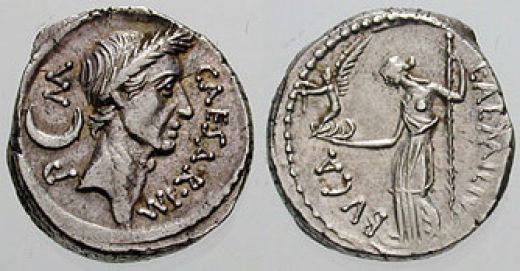
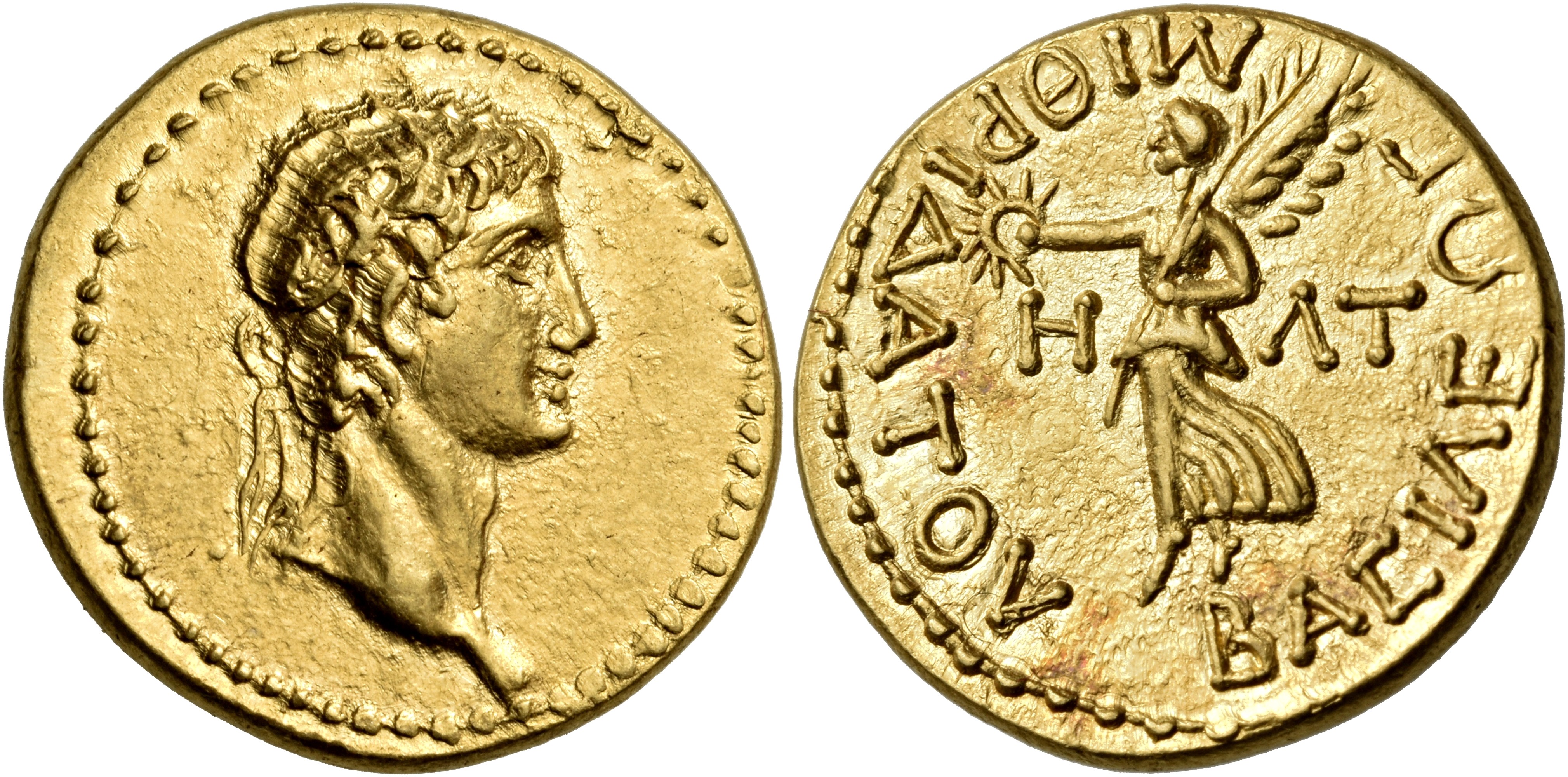
Fig. 1.1 & 1.2. (L) Julius Caesar. (R) Asander, king of Bosphorus depicting a Nike which was the Greek goddess of victory and a close companion of Zeus. Other depictions of Asander show the star and crescent that is visible in the Julius Caesar coin above 1. Another coin of Asander depicts a Phrygian cap which is closely associated with the Roman god Mithras: 2. This (https://bosporan-kingdom.com/224-3094/) coin of Asander displays a prow (front of a ship) that is also seen in Julius Caesar coins. The star and crescent in above coins was the symbol of the city of Byzantium/Constantinople long before the Ottomans used it. The legend was that Byzas, the founder, chose the site based on a vision of a crescent moon and a star. This symbol represented the fusion of the lunar goddess (Hecate/Artemis, who was associated with snakes) and the solar god (Apollo). By using this symbol, Asander and Caesar were not just using a random symbol; they were explicitly claiming lordship over the Bosphorus.
The Avatar Succession: Roman Emperors are Bosporan Kings
The following side-by-side comparisons prove that the Julio-Claudian and Flavian emperors were the ruling dynasty of the Bosporan Kingdom, their faces stamped on coinage in both the “Roman” West and the “Bosporan” East.
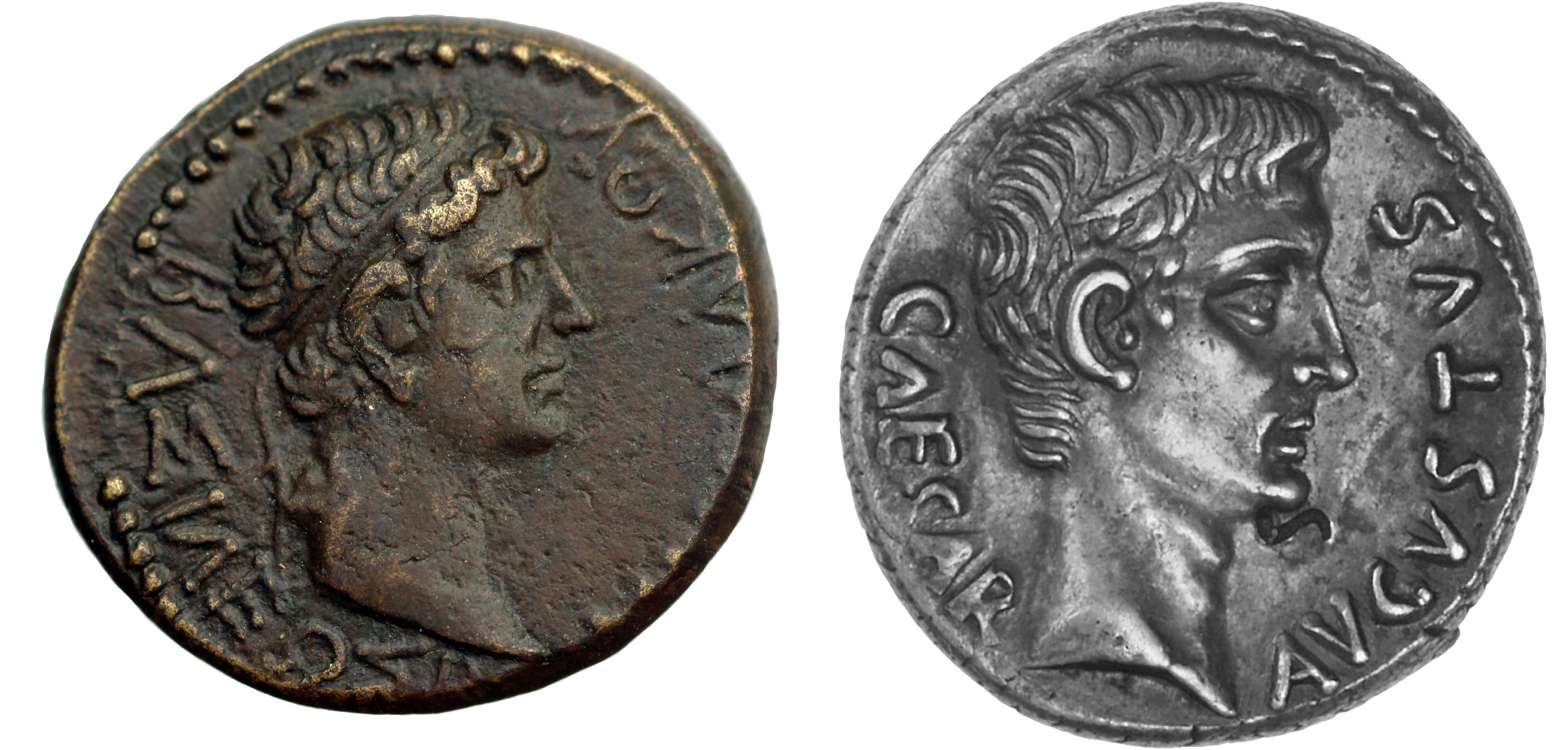
Fig. 1.3. L. Rhoemetalces I, king of Bosphorus. R. Emperor Augustus (Octavian). Talces = the Thracian word for “king” or “ruler”. Rhoemetalces = “king of Rhoeme”, or “king of Rome” in ancient Thracian.
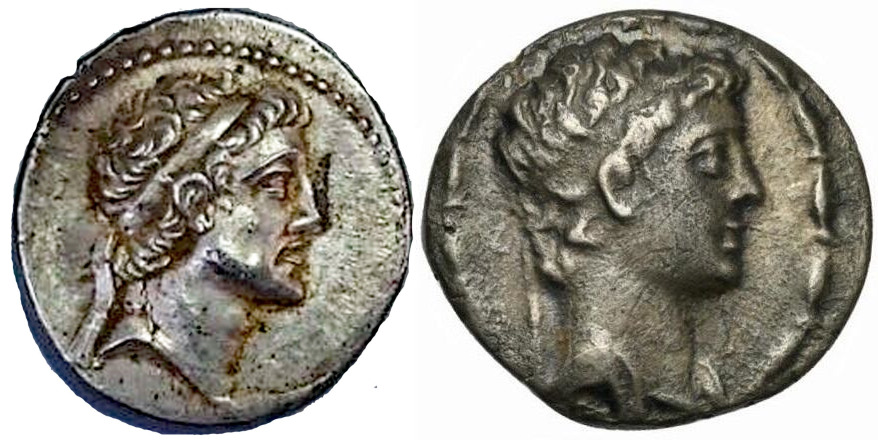
Fig. 1.4. L. Coin depicting Ptolemy XIII Theos Philopator the brother-husband of Cleopatra. Compare it to the Rhoemetalces I, king of Bosphorus aka Emperor Augustus (Octavian) coin above. R. Coin depicting Archelaus, king of Caesarea, Cappadocia (modern-day Kayseri, Turkey). Archelaus of Cappadocia was married to Pythodorida of Pontus (Cleopatra/Dynamis). Polemon Pythodoros (Julius Caesar/Asander) was also married to Pythodorida of Pontus.
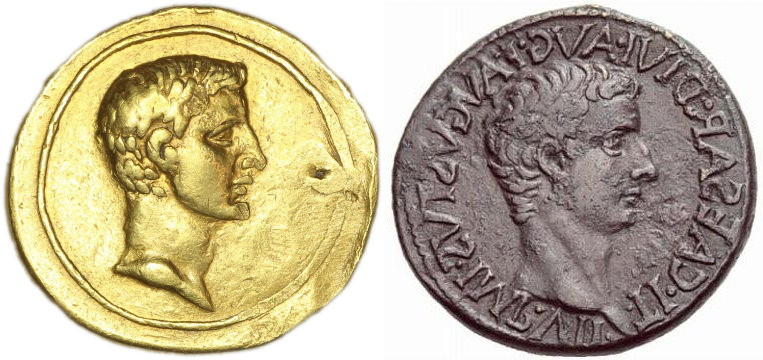
Fig. 1.5. L. Tiberius Julius Aspurgus I, king of Bosphorus. R. Emperor Tiberius Caesar Augustus.
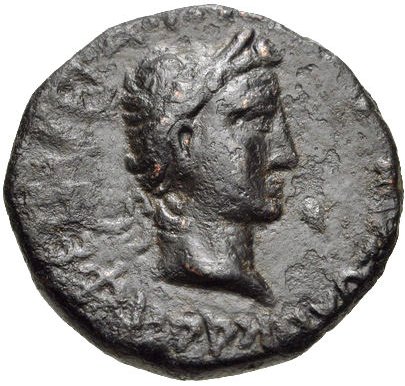
Fig. 1.6. Tiberius Julius Aspurgus I, king of Bosphorus aka Emperor Tiberius Caesar Augustus was also Kujula Kadphises, prince of the Kushan Empire which was vast territory stretching from Central Asia into northern India. The Kushan title for king is Shaonano Shao, “King of Kings”, a direct translation of the Bosporan Basileus Basileon and the Achaemenid Xšāyaθiya Xšāyaθiyānām. The first Kushan king, Kujula Kadphises, unifies the Yuezhi tribes immediately after the conventional death of Julius Caesar/Asander. His name decodes: Kujula = Ku- (son of) + Jula (Julius). Kadphises = Kad- (glory? honor?) + -phises (a variant of Pharna?). This is not a successor state; it is the same ruler shifting his primary administrative center to Central Asia to manage the Silk Road. The “Yuezhi” are the “Iudii”/”Jove” (also Yehuda or Judah) tribe—the same Scythian-Celtic priestly class. This regional avatar also connects to the legendary Chinese emperor Yu the Great (original name “Aži” or “Yazhi” (亞茲))? Julius, from Ioulius, related to Iove (Jove). His grandson Kanishka the Great bears a name that decodes as Khan-Isha—”Lord Jesus” (Khan from Ka-Sar, Dragon King; Isha from Sanskrit Īśa, Lord, cognate with Isho/Iesous). His coins depict not only Pharro but also the Buddha, Mithra, and other deities—a syncretic imperial theology identical to the Alexandrian School’s method of Interpretatio Graeca.
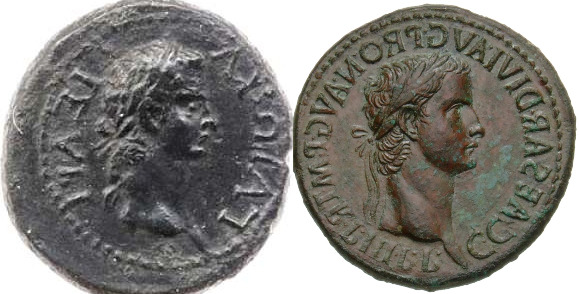
Fig. 1.7. L. Rhoemetalkes III, king of Bosphorus. R. Emperor Caligula.
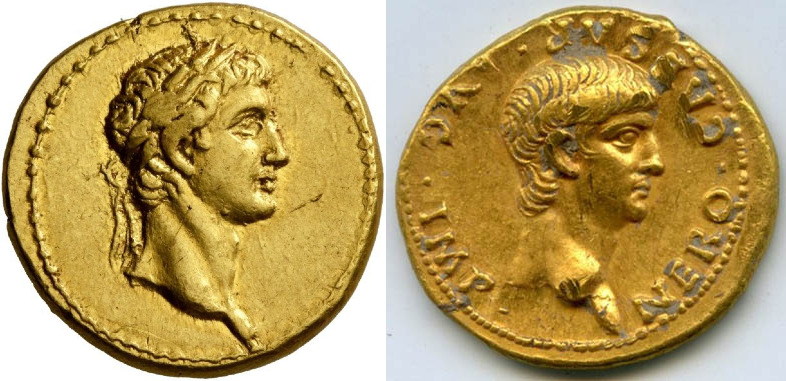
Fig. 1.8. L. Mithridates III, king of Bosphorus. R. Emperor Nero.
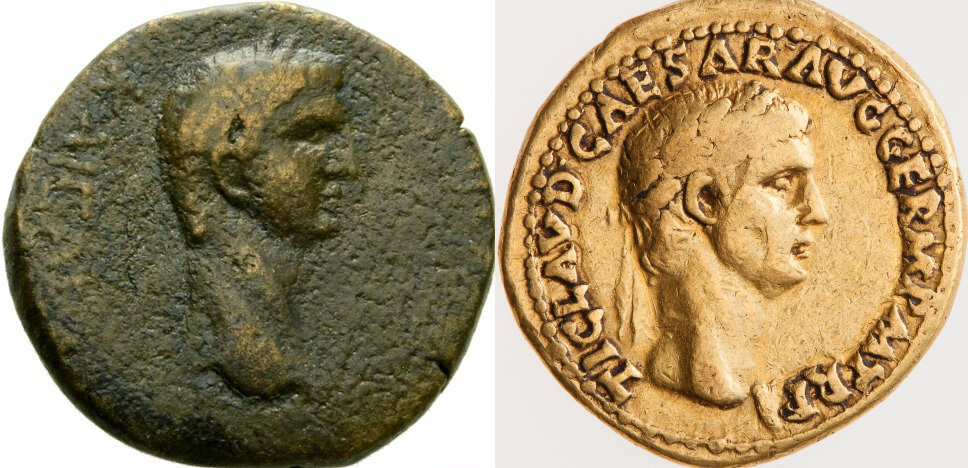
Fig. 1.9. L. Cotys I, king of Bosphorus. R. Emperor Claudius.
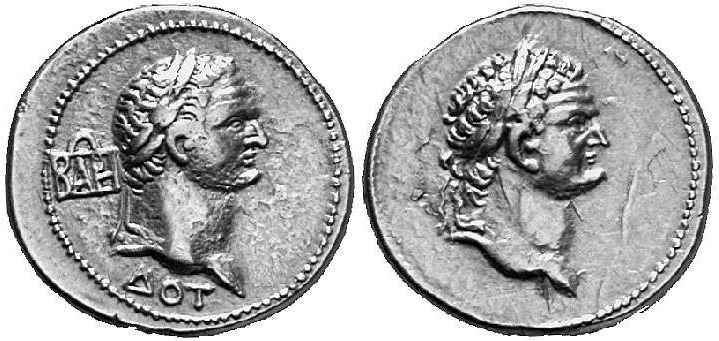
Fig. 1.10. L. Rhescuporis I, king of Bosphorus. R. Emperor Vespasian.
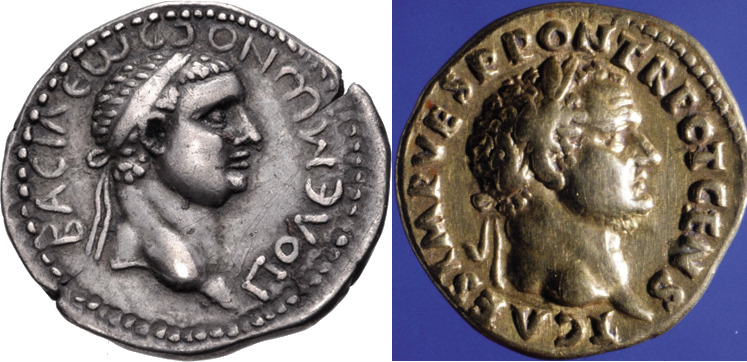
Fig. 1.11. L. Polemon II, king of Bosphorus. R. Emperor Titus.
1.2 Ancient Alias Names List
Note on Aliases: The Bosphoran/Ptolemaic elites in antiquity employed an incredible number of regional aliases, locations, fictional stories, faked adoptions, and fabricated deaths for themselves and their family members as a way to control the population. They role-played as deities, religious figures, and various characters as if they were actors in a play. This was done partially for obscuration, but also because people wouldn’t accept foreign kings or kings with foreign names, and also, for theological requirements: a god-king had to manifest in different regions according to local religious expectations. However, as their names were mostly job titles an etymology across languages (Latin, Greek, “Old Persian,” Sanskrit, Aramaic) reveals a unified administrative lexicon. For example, any royal title across the Scythian‑Bosporan sphere was built from a small set of recurring roots that was generated by combining one or more of these morphemes with local suffixes and translated into local dialects and produced the full roster of historical “persons” in this alias list:
These seven morphemes appear in every royal name from the Bosporus to India to Britain.
King of Kings, Bearer of the Glory: any of the above + PHARNA (from Avestan xᵛarənah (divine glory) through its many reflexes: Old Persian farnah, Middle Persian farr/xwarrah (yielding Farrukh and Khosrow), Parthian frah/far (Phraates, “glory-bearer”), Greek pharna (Pharnaces, “endowed with glory”; Pharnabazus, “glory-arm”), Egyptian pr-ʿꜣ and Hebrew parʿōh (Pharaoh, the supreme Dragon King bearing the farnah, the fiery serpent uraeus as its visible sign), Armenian pʿaṙkʿ, Sogdian farn, and Kushan Bactrian φαρο (the deified Pharro). The examples: Phraates, Pharnaces, and Pharnabazus. Thus, the same core title of radiant kingship manifests across Achaemenid, Pontic-Bosporan, Parthian, Kushan, Sasanian, and Egyptian-Hebrew guises, all referring to the one continuous dynastic office of the Bearer of the Divine Glory).
You can also identify their aliases through spouses. For example, the governor of Roman Egypt from 33 CE to 38, Aulus Avillius Flaccus, was also Polemon II of Pontus, who was the prince of the Bosporan, Pontus, Cilicia, and Cappadocia, which was the regional alias of Emperor Titus. The character of Aulus Avillius Flaccus dies at the same time Polemon II of Pontus takes power, and then Polemon II of Pontus dies around the same time Titus becomes emperor. The way to connect them is through the fact that they were all married to the same woman, Berenice, granddaughter of King Herod (Bernice was also married to a man named “Marcus Antonius Polemo II” so that would make his father Marcus Antonius Polemon I aka Polemon of Laodicea https://en.wikipedia.org/wiki/Polemon_of_Laodicea).
I. The Ptolemaic, Julio-Claudian & Bosphoran Bloodline
Alexander the Great’s successors (“Diadochi”) were Seleucus I Nicator who controlled a large chunk of the eastern territories, including Mesopotamia and Persia, Diodotus I Soter who controlled Bactria (possibly also India under the alias Ashoka the Great), and Ptolemy I Soter who controlled Egypt. Mainstream history presents the Ptolemies, Seleucids, Attalids, and Romans as separate, often warring entities. This is a Flavian-Vatican fabrication. In reality, they were four branches of a single Scythian-Sarmatian dynasty, a “Tetrarchy”, administering different sectors of the empire from the Bosphoran center.
IV. Flavian Emperors
V. Speculative
2. Name and Title Meanings
The Flavians didn’t just remake their main enemy’s cult, they rewrote history, including executing a systemic replacement of the titulary lexicon. For example, “Caesar” originally meant “Osiris-King” (Ka-Asar). The Flavians changed the etymology to caesaries (“hair”), claiming Julius Caesar was born via caesarean section or had lush hair. This severed the title from its Egyptian/Osirian roots and made it Roman.
2.1 The Name Jesus Christ
In the original Egyptian–Bosporan imperial cult, the living Dragon King bore the title Ie-Asar – “Lord Osiris”. Osiris (Asar) was the primordial dying-and-resurrecting god-king, the model for every later avatar. The prefix Ie- (or Ia- ) meant “divine” or “lord” in Egyptian (as in I-em-hotep), and it is cognate with the Proto-Indo-European Ie- (divine, lord), which gave rise to Luwian Iya- (lord), Greek Ie- (divine), Latin Iov- (Jove), and Sanskrit Isha (lord).
When the Ptolemaic dynasty Hellenized the cult, they syncretized Osiris with Zeus (via Serapis). The title Ie-Asar was thus rendered into Greek as Ie-Zeus (Divine Zeus) – because Zeus was the Greek equivalent of Osiris in the Serapis theology. In the Latin West, the same title became Ie-Jove (Divine Jupiter) or Divus Soter (Divine Savior), as Julius Caesar – high priest of Jupiter – was the first deified emperor.
The Greek form Iēsous (Ἰησοῦς) is a direct transliteration of the Aramaic Yeshua, which the Flavians later claimed meant “Yahweh saves”. But the original Aramaic title of the Dragon King was not Yeshua. It was Ie-Zeus (or, in its more ancient Egyptian form, Ie-Asar). The Flavians altered the name to Yeshua while preserving the sound Ie-sous – which Greek speakers could still hear as “Divine Savior” (from sōtēr, not sōs). The -sous ending is simply the Greek masculine nominative Soter.
Thus, Iēsous was a polyvalent Flavian engineering:
To Aramaic-speaking Jews: “Yahweh saves” (Yeshua).
To Greek-speaking pagans: “Divine Savior” (Ie-sōtēr) or “Divine Zeus” (Ie-Zeus).
To Egyptians: “Lord Osiris” (Ie-Asar).
To Persians: “Yazata” (divine being), as in the name Izates (Ie-zates).
To Celts: “Lord Esus” (Ie-sus).
To Indians: “Isha” (lord), as in Kanishka (“Khan-Isha” = Lord Jesus).
Therefore, Ie-sous / Iēsous phonetically and structurally translates across the satrapies to “The Living Manifestation of Osiris-Zeus-Jupiter.” It was an imperial office, not a personal name. The Flavian inversion turned this title of cosmic kingship into the name of a sacrificed criminal, completing the subversion of the Dragon King cult.
Christios/Kristos in Greek means annointed. Egyptian pharaohs were anointed with oil as part of their coronation (the seshet ceremony), and Persian king were installed with a ritual that included taking the khvarenah (divine glory, a luminous). The Hebrew kings, by contrast, were anointed with oil (meshiach). The Greeks translated meshiach as christos. Christios/Kristos is equivalent to Scythian Xšaθra, Persian “Kšatrapati”, Hyksos “Khasut” in Egypt, Kshatriya in Sanskrit which also = Vedic “Krishna”, Hebrew meshiach, etc.
Caesar = “Asar‑Ra” (Osiris‑Ra, or Osiris King - Egytian Asar was another name for Osiris), the sun god as the resurrected king. This contracts to Asera → Caesar. In the Bosporan Dragon King cult, the same prince would first be inaugurated as a “Christ” (satrap) – anointed with oil or poison (the Mithridatium). After his ritual death and resurrection (the kurgan ascension), he would be hailed as “Asar” – the divine king. Asar = the living king who will become Osiris (emphasizing his future divinity). Christ = the anointed one who is already the son of God (Horus) and will resurrect as Caesar (Osiris).
Julius Caesar was elected Flamen Dialis (high priest of Jupiter) in his youth. He was anointed with oil (the unctio) which is functionally identical to the Hebrew meshiach (anointed) and the Greek christos. His adopted son (later in this book revealed to be his nephew) Octavian immediately styled himself Divi Filius (Son of the Divine One, or Son of God). Before this Augustus carried the title Divus Soter (Divine Soter), which is the same as Ie-Sous.
The people who assumed this Jesus role were the brother and descendants of Ptolemy XII Auletes of Egypt aka Mark Antony aka King Herod aka Mithridates VI Eupator of Pontus.
It is likely that all the descendants of Mark Antony aka king Herod took on this role, or roles that may be similar. For example, see: Jesus Among the Julio-Claudians (2021) by Charles N. Pope 9 who claims that Aristobulus V of Chalcis, grandson of king Herod aka Marcus Junius Silanus Torquatus was Jesus, or The Herodian Messiah Case For Jesus As Grandson Of Herod (2010) by Joseph Raymond. 10
Jesus Christ then became a composite literary character based on the defeated Satrap-King Izates II of Adiabene (“Kingdom of Heaven”), and other Jesus-avatars, after the First Jewish-Roman War (66–73 CE). The Flavian Dynasty weaponized his imperial cult and created a virus within the host: a “religion” that systematically inverted the original cult by transforming the governing elite’s title into the name of a sacrificial victim. Tiberius Julius Alexander aka “Josephus”, who was the Flavian court historian, was the prefect of Egypt at this time and had control of the Library of Alexandria and the Alexandrian School, and with the help of Alexandrian School scribes, is likely who was responsible for creating history’s most devastating psy-op—a forged testament that was later used to shatter the very empire that authored it. He was also likely the one who burned down the Library of Alexandria soon after to cover up the tracks of his conspiracy. (Ironically, Tiberius Julius Alexander aka “Josephus” was the brother of Izates II who was Marcus Julius Alexander).
2.2 Biblical Figures
The genealogies in Genesis and the New Testament match the Bosporan king list when translated via Greek phonetic equivalents.
3 The Sarmatian Dragon Cult
The Hyperboreans were a real Bronze Age civilization in the Ural-Volga region of modern Russia who spread their culture southward via the Kurgan hypothesis (c. 4000 BC). They were the survivors of the Doggerland (a vast temperate lowland connecting Britain to the continent) cataclysm (c. 6150 BC), when a submarine landslide off Norway (the Storegga Slide) caused a massive tsunami that flooded the North Sea plain. The “Hyperboreans” were the Doggerland elite. The legends of a advanced people “from beyond the North Wind” living in a circular city (Plato’s Atlantis) are memories of Doggerland’s circular megalithic complexes. Their civilization was based on megalithic architecture and a sophisticated, rune-like symbolic language. After the flood, the survivors—the “Dragon Bloodline”—fled eastward to the Pontic-Caspian Steppe, becoming the equestrian Scythians. They carried with them the technology of megalith building (hence Stonehenge, built by their descendants as a memory of their lost homeland) and the core of the “Dragon” religion.
The Hyperboreans were the proto-Aryan elite—tall, robust Cro-Magnons who had developed megalithic astronomy, advanced boat-building, and a complex star-religion. Their descendants were the Scythians. One offshoot of the Scythians were a tribe called the Sarmatians (also called Sauromatians (“Saur” = “Lizard/Dragon” + “Matae” = “Men/Warriors” - where the Sumerian “sar” (king) comes from) who were a nomadic Indo-Iranian warrior elite from the Pontic steppe (modern Ukraine/Russia). The domestication of the horse and invention of the chariot allowed them to travel vast distances and they spread their Draco (dragon/serpent) cult across Eurasia, encoded in snake-worshiping myths 11
The Aryan-Iranian-Scythians were the Egyptian-Persian-Indian-Greek-Roman elite. Egypt, Persia, India, Greece, Rome, etc., were all under the suzerainty of these elites since at least the 40th century BC and their base of operation was on the Bosphorus river.
All ancient Mediterranean religions derive from the Sarmatian serpent-dragon cult. See: Papaios and the Snake-Legged Goddess (Scythian) = Nehebkau, Uraeus, and Apep/Apophis (Egypt) = Ningishzida (Sumerian) = Tiamat and Mušḫuššu who was associated with Marduk (Babylonian) = Aži Dahāka (Zoroastrianism) later syncretized with Mithra = Ophion, Agathodaemon, Typhon, and Delphi’s Pythoness priestess (Greek) = Nāgendra and Nāga (Vedic), Nehushtan/serpent staff of Moses, the Dacian and Roman Draco standards, the serpent-worshipping Essenes and Gnostics, Sebazi (Phrygian/Bulgarian), Jörmungandr (Norse), Ouroboros serpent in Freemasonry, etc. The Knights Templar knew the truth. The Templars worshipped Baphomet—a Sarmatian dragon deity (Aži Dahāka).
Kings who took on the snake/dragon/serpent/Azhi Dahaka title: Azhdahak, which is the Armenian form of the name of the Avestan Azhi Dahaka, was associated with the Median king Astyages (564–550 BC) who was the grandfather of Cyrus the Great. Tigranes II/the Great, King of Armenia (140–55 BC) was also called Azhdahak. Tiberius Julius Sauromates II, King of Bosphorus (‘Saur’ means ‘lizard’ or ‘reptile’, and ‘mates’ means ‘man’ or ‘warrior’). The roots of the snake titles were: Aži-, Azhd-, -zates, Sauro-, Draco-.
The snake was revered by the Scythians for several reasons: apart from symbolism, the Sarmatians used armor that resembled snake skin, the Scythian priesthood called the Agaroi created poisons called “scythicon” from snake venom that they used on their arrows, and snake venom was used as painkillers and stimulants before war. Snake venom was also used to stop battlefield wounds from bleeding, as well as, they were used as antidotes, as later emulated by figures such as Mithridates of Pontus who daily consumed a potion called “Mithridatium” which was claimed to make people invincible. Also, the foundation myth of the Scythians is that they were created from the Snake-Legged Goddess who was impregnated by Hercules (Targiatos). The name “Scythian” itself decodes as “Scyth” = “Sak” = “Saka” which is related to the word for “serpent” in many Indo-European languages. The Scythians were known as the “Saka” to the Persians, and this term is linked to the Sanskrit “Sarp” (serpent). Thus, the Scythians were the “Serpent People”.
Timeline:
The Proto-Indo-European (Aryan) Hegemony
-4500 BC: Kurgan (Yamnaya) culture begin expansions. These are the ancestors of many Indo-European groups. They are the first horse riders. Inventors of the chariot.
-3000 BC: Aryan elites establish proxy rule in Sumer (Sargon of Akkad) and Egypt (Scorpion I).
-2150 BC: Gutian Dynasty. First Aryan rulers of Mesopotamia. Guti = Goth = Scythian.
-1650-1500 BC: The Hyksos. Aryan Pharaohs of Egypt (Heka-Khasut means “Rulers of Foreign Lands” and Khasut is a cognate of Scythian/Saka, Scyth, Scoloti. Hyksos is the exact Egyptian rendering of Xšaθra).
-1600-1200 BC: The Hittites. Aryan in Anatolia. Enforcement arm of the Mitanni
-1595–1155 BC: Kassite Dynasty. Aryan rulers of Babylon after Hittites sacked it.
-1500 BC: The Mitanni. Aryan horse lords in Syria. Their ruling class has pure Vedic (Aryan) names—Mitra, Varuna, Indra. They are the ultimate horse-lords, and their empire stretches from the Mediterranean to the Indus. The Kassites in Babylon are their vassals.
-1500 BC: Vedic India. Aryan chariot kings. The Rigveda is their religious text. The term “Aryan” (Noble) is their self-identification.
The Great Upheaval & Reorganization
-1200 BC: Bronze Age Collapse. Mainstream history blames the mysterious “Sea Peoples”. The truth is that this was a massive civil war within the Aryan hegemony. Assyria rose up under the Chaldean priests (the Kalani, the Jews). Then the Sea Peoples (Sherden = Sarmatians, Peleset = Philistines = Pelasgians) were Aryan factions from the Aegean and Anatolia rebelling against the Mitanni center. The Dorian Invasion of Greece was not a new people arriving. It was the Aryan-Sarmatian elite of mainland Greece reasserting control after the Mycenaean faction grew weak. The trigger was the eruption of Thera (Santorini) around 1600 BC, which disrupted trade and sparked a bloody power struggle.
-705-330 BC: Persia’s Achaemenids. Saka (Scythian) clan. This was not a new empire but a reconsolidation of Scythian power under a new clan. The Persians were an Iranian (Saka) tribe. Cyrus the Great’s title “Kurush” means “Sun Lord,” identical to the Scythian Mithra.
-616 BC: The Etruscan Tarquin dynasty. The Etruscan Tarquin dynasty seizes power in the Italian settlement of Rome. The Etruscans were not a mystery; they were a Aryan colonial governorate. Tarquin = Tarkhu (Scythian: “Ruler”). Servius Tullius = Tulli (Scythian: “Wolf Clan”). The “Roman” Republic was established as a military-administrative outpost to control the Western Mediterranean and secure tin from Britain.
The Final Consolidation
-650-620 BC: The Reign of Akrosander/Akrosas. The scattered Scythian (Saka) clans are unified under a single “King of Kings,” the primordial Dragon-Man. From his Pontic-Steppe core, he forges the first explicit Scythian World Empire, ruling through regional avatars: In Egypt, he is known as Psamtik I, founder of the 26th (Saite) Dynasty. His Scythian name was rendered as “Psamtik I” (Psamtek). The name Psamtek is a Hellenized version of Psam-Tak, which is a Egyptian rendering of Ak-Sam, a metathesis of Akrosas. He reunifies Egypt using Scythian-proxy mercenaries. In Media, he is the supreme overlord Cyaxares, the power behind the Median throne who destroys Assyria. His reign is encoded in myth as the quest for the Golden Fleece and in biblical lore as the prototype for Nebuchadnezzar. This is the foundational event. All subsequent “empires” are either his direct descendants or rebel satraps attempting to reclaim his title.
-600-500 BC: The Akrosander hegemony begins to fragment, leading to civil wars between his descendant lines.
-429-339 BC: Ateas the Scythian. The last great emperor of the direct Akrosander bloodline, ruling from the Danube to the Caucasus. His name “Ateas” (Forefather) is a title claiming direct descent from Akrosander. Ateas the Scythian was also Artaxerxes II Memnon (“Kai Bahman”) of Persia aka Phillip II in Macedonia aka Nectanebo II in Egypt aka Evagoras I of Salamis (Cyprus).
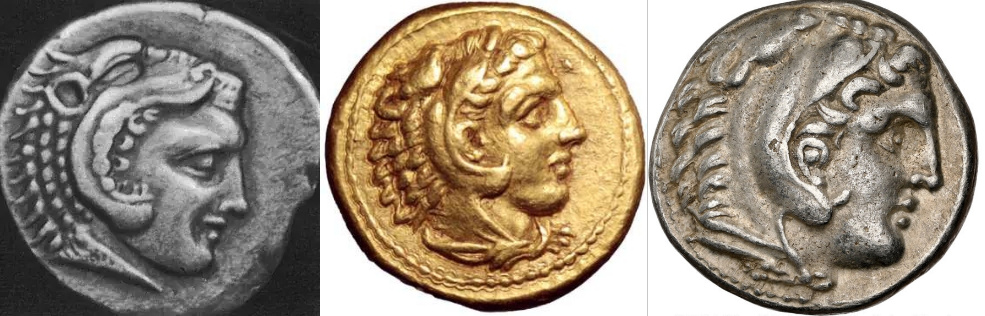
Fig. 1.12. Showing three generations. L. Ateas the Scythian (Ata- or Atha-, meaning “forefather” or “ancestor” in Scythian). M. Philip II of Macedon. R. Alexander the Great. Ateas and Artaxerxes II Mnemon were reported “enemies” of Phillip. Ateas dies in battle against him, and in the Alexander Romance, a book that has its earliest copy dating back a couple of centuries after Alexanders life, the wizard-pharaoh Nectanebo II is secretly Alexander’s real father, magically impersonating the god Amun. This is not fantasy; it is a mythological encoding of historical truth.\
-356 BC: Ateas/Amyntas III/Artaxerxes’s grandson Alexander the Great: Alexander was his title. “Aži-ander” = Aži
(Avestan “dragon”) + Andros (Greek “man”) = “Dragon-Man”, the same as Akrosander/Akrosas. Alaksandu
of Wilusa, a Hittie king of Wilusa (Troy) (Alaksandu = Alak-San-Du
(Hurrian: “Ruler-Dragon-Son”)), who predates Alexander by 800 years,
proves that the name Alexander was a Scythian title for kings. In India he took the regional alias of Chandragupta Maurya
(“Chandragupta” = “Sander-Gupta” (Scythian “Sander” = Alexander. “Aleks” = Greekization of “Alakh” which means “not seen” or “unseen” and in Sanskrit/Hindi “Gupta” = Hidden)). Greek sources (Megasthenes) refer to Chandragupta Maurya as “Sandrokottos” with the Sandro- deriving from Alexandros. Aži-Sandar also = “Dragon King” in Mittani and Old Persian. Recorded in
the Persian ‘Iskandarnameh’, or ‘Book of Alexander’, and ‘Shahnameh’ and Islamic sources, is that Alexander the Great was a
Persian prince named Bubares who was the son of Artaxerxes
II Memnon (Kai Bahman), half brother of “Dara” (Darius III), and that Macedon
was a province of Persia that his father was governor of.
Alexander’s father Philip of Macedon was Artaxerxes II Memnon’s
regional alias. The book ‘The Life of Alexander of Macedon’
also claims that he didn’t die in Babylon in 232 BC at the age of 33
(same as Jesus) but was only forced from power and he had a
posthumous birth/’resurrection’.He resurrected in India with the
regional alias of Chandragupta. Alexander’s mother Olympias (Ol or ophis + Pias = “serpent queen”), who was a Scythian princess of the
Molossian tribe, claimed to have been impregnated by the god Zeus
Ammon disguised as a serpent. Alexander’s fathers name Philip was a title (Philippos (Lover of Horses) is a direct Greek translation of the Scythian royal title Pharnavaz (Horse-Lord)). Alexander also married the Scythian princess Roxana. Alexanders campaign was not a conquest, it was a Scythian restoration. The Achaemenid Persians (Achaemenes is likely Akh-Manesh or “Spirit of Manu”, linking to the Vedic sage-king) were a rival Scythian clan (the “Ariya” - Aryans). Alexander was re-establishing the older, purer Scythian hegemony of the Medes and the pre-Zoroastrian Mitanni. In the Old Testament he was Solomon (Sol-Amūn or “Sun of Amun”) which is a direct parallel to “Zeus-Ammon”, a title he carried. He was also Qin Shi Huang in China. The “King of Kings” and “King of the World” titles Alexander and Cyrus used were literal. They were kings of a global empire.
-Ateas/Amyntas III/Artaxerxes’s other grandson was “Dara” (Darius III) aka Seleucus I Nicator who inherited the vital Eastern territories (Asia). His “father” is listed as Antiochus (of Macedon) and presumed to have been a commoner. The name Antiochus curiously has no definition in Greek, however when viewed as a hybrid Greek-Persian name the meaning is obvious. Antiochus should be parsed as Anti-Ochus, “Like/After Ochus”, that is, continuing the line of Persian Great King Ochus (Artaxerxes III). Ochus, in addition to his ill-fated successor Artaxerxes IV, had many other children. And Artaxerxes IV, although not surviving long as Great King, had many children of his own. Anti-Ochus/Antiochus therefore emerges as a princely son or grandson of Artaxerxes III. (Darius III took on the name Ochus and also had a son by Queen Statiera named Ochus). The name Seleucus (Greek Seleukos), like that of his father Antiochus, has no certain meaning in Greek. (However, compare Greek leukos meaning “white”, and the kingly Roman name of Lucius.) As with the name Antiochus, we must expect some kind of hybrid definition that incorporated a Persian or Eastern element. There is certainly an echo of Seleukos in the later dynastic name Seljuk(os), associated with a people brought from the direction of China to dominate the West. He was Li Si in China who was the advisor to Qin Shi Huang (Alexander) founder of the Qin Dynasty.
-Ptolemy I Soter was another grandson of Ateas/Amyntas III/Artaxerxes who received Egypt.
-305-30 BC: The Ptolemaic Synthesis in Egypt. Following Alexander’s “resurrection” as Chandragupta in the East, his bloodline consolidated its rule in the West. Ptolemy I Soter, a fellow Scythian noble and likely Alexander’s half-brother, took the Egyptian satrapy. The Ptolemaic Dynasty was not a new Greek ruling class, but the continuation of the Akrosander bloodline using Egypt as its new imperial base.
Thracians/Dacians
-200 BC: The Thracians emerge in the Balkans (200 BC). The Thracian ruling class is Aryan. The most powerful Thracian tribe, the Dacians (or Getae which is linguistically identical to Goth, Get, Jat, and Scyth), become the Aryan power center for Southeastern Europe. The Dacians were the “Wolf Clan” of the Scythian elite who had mixed with the Alani (Aryan). Their battle standard was the Draco—a wolf-headed serpent. This was not just a standard; it was their religious and royal symbol. The capital of the Dacians was called “Sarmizegetusa” (Sarmatian fortress) which contains sar (king). This is where the Latin language originates. Latin was the administrative and ritual language of the Dacian-Thracian Scythian elite. It was not a native Italian language. It was imposed on the Italian peninsula by the Scythian Etruscan and later “Roman” rulers. The reason Romanian is the closest language to Latin is simple: Dacia was a core territory of the empire that spoke a Latinate language natively. Latin is the linguistic fossil of the Scythian ruling class in the West. (interesting fact: legendary King Arthur is a corrupted memory of an Alani Warlord (Artorius), one of the military Kšatrapatis sent from the Bosphorus to secure the lucrative tin and iron mines of Britain after the Flavian consolidation).
The Bosporan and Dacian kingdoms controlled the Danube Delta and the Bosporus Strait—the two most critical chokepoints for Eurasian trade. Whoever controlled these points controlled the flow of goods, armies, and ideas between Europe and Asia. They didn’t just rule an empire; they ruled the geography of civilization itself. Also, the massive gold mines of Dacia (modern Romania) were the financial engine of the “Roman” Empire. The output of these mines from 100 BC - 100 AD exceeds the total gold supply of the rest of the ancient world combined. The fact that Asander, king of Bosphrus is today an unknown historical figure despite the fact that he would have been the richest and most powerful man in the word at the time should be regarded as suspicious. The reason why you never heard of him is because you know him under another name: Julius Caesar.
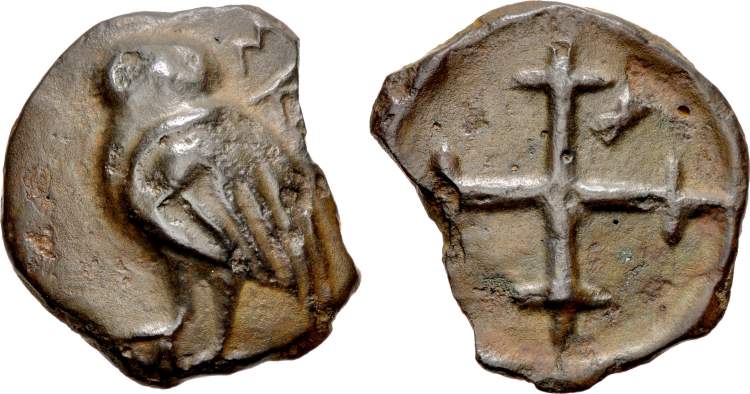
Fig. 1.13. Coin of Skyles, a Scythian king who reigned from ca 470-460 BC displaying a Scythian Solar Wheel and the World Tree combined. The cross was prominent in ancient Europe. It was a sundial and every city would have had one to track the time, dates, and agricultural and lunar cycles. “Skylesis” a Greek mockery of Skuða-las (Scythian King). The owl on the reverse side is the Owl of Athena also known as the Owl of Minerva, a sacred bird in Greek mythology that accompanies Athena. It shows up prominently in later Greek tetradrachms connecting him to Greece. For a Scythian king to carry that iconography shows direct interaction.
The chromosome Haplogroup R1a, specifically subclade Z93 is found in high frequencies among the Scythian remains from the Pontic-Caspian Steppe. The Kshatriya (warrior) caste in India. The Brahmins (priestly) caste in India. The highest nobility of Persia. Patrician families of Rome. The Pharisaic and Herodian dynasties in Judea. The Sarmatian Alans who settled in Western Europe (and whose descendants include the Habsburgs). It is also found in the Tarim Mummies of China and in other tested ancient elite Chinese burial grounds (see: Chapter 7.4 China: The Han Synthesis and the Tartarian Genocide). This is the genetic signature of the administrative and priestly class that was installed globally.).
4 The Alexandrian School
In Egypt, Ptolemy I Soter, who was a Scythian continuation of the Sarmatian snake/serpent kings line, used religion to subjugate the vast and disparate peoples he ruled. This was likely inspired by Plato’s noble lie which is a concept from his work “The Republic” where he suggests that a myth or falsehood can be used by rulers to maintain social order and promote the common good. The Alexandrian School (Mouseion of Alexandria) then became his religion making factory. He was in the process of creating a universal religion and this was being achieved by gradual syncretism using local identities and blending local deities into syncretic universal savior archetypes (Interpretatio Graecae) as a transitional phase toward a universal monotheism. The Ptolemaic elites were conditioning the disparate populations they ruled into accepting the Serapis cult.
The director of the Mouseion (“Place of the Muses”) and the chief architect of the synthetic religions was not a man. It was a succession of Ptolemaic princesses who held the title The Muse Ourania (The Heavenly Muse). The Mouseion was named after her office. Arsinoë II Philadelphus (c. 316 BC – 270 BC), daughter of Ptolemy Soter, was refered to as “the tenth Muse” and she had a cult dedicated to her as Arsinoë Aphrodite Ourania. in some cases these females directors took on male aliases, for example, Philo of Alexandria was Cleopatra (Thea Philopator) of Mauretania aka Cleopatra IX, Helene, Drusilla of Mauretania, Julia Ourania of Parthia, etc.
As well as being a slave moralities, these Alexandrian School religions were weaponized psychosis—the product of severely inbred ruling elites who used psychotropic substances (See: ‘The Sacred Mushroom and the Cross: A Study of the Nature and Origins of Christianity Within the Fertility Cults of the Ancient Near East’ by John Marco Allegro) and they added these rambling to a slave morality system that was codified over centuries. The outer layer of these religions reads like the ravings of a deranged mind because, in a literal sense, it is.
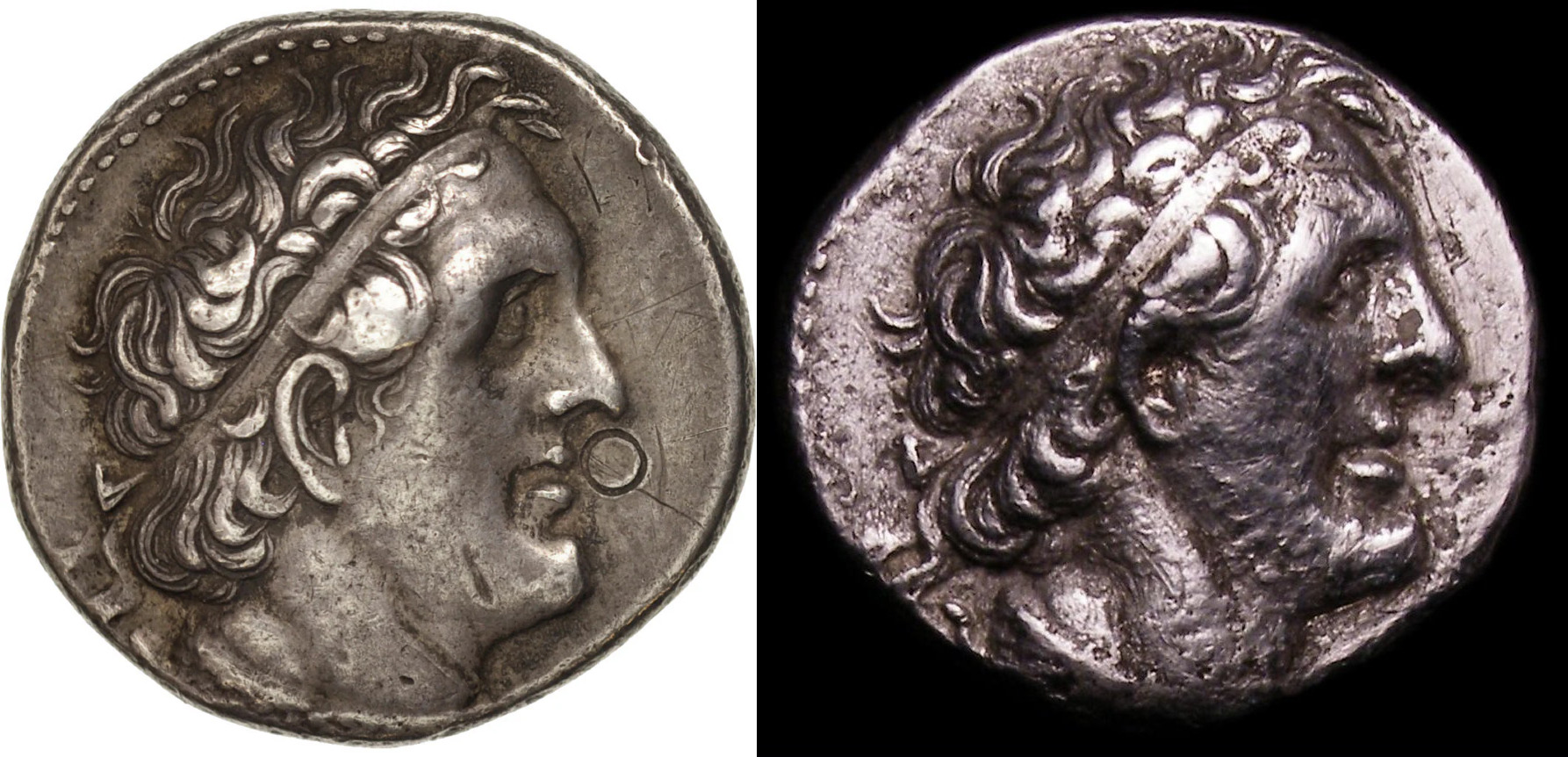
Fig. 1.14 Coin depicting L. Ptolemy Soter. R. Ptolemy XII Auletes. The 300-year gap between them is likely Alexandrian School fiction. This implies that all “ancient” history before approximately 150-100 BCE is a back-projection. The Alexandrian School (and later Flavian/Vatican/Jesuit forgers) created phantom centuries to give their newly synthesized religions and empires false antiquity. If Ptolemy I Soter = Ptolemy XII Auletes, then his “father” wasn’t Lagus (a fictional nobody)—his real father was Ateas the Scythian who was also Artaxerxes II Memnon (“Kai Bahman”) of Persia aka Phillip II in Macedonia aka Nectanebo II in Egypt aka Evagoras I of Salamis (Cyprus), and Alexander the Great was a mythological archetype based on Asander aka Julius Caesar, and Dara” (Darius III) aka Seleucus I Nicator was a fictional character based on one of his brothers or his nephew Seleucus VI, ruler of the Seleucid Empire. Ptolemy XII sons under his Mithridates VI Eupator avatar were named Cyrus, Darius, Xerxes, and were backdated composites of those Persian kings.
It also seems likely that the Alexandrian School didn’t just create religions; it created standardized “national histories”. See: Chapters 8. Rewriting History, 8.1. Inventing Ancient Greece, 8.2. The ‘Achaemenid’ Empire is the Parthian Empire, and chapter 8.3. Fabricating ‘Ancient’ Egypt.
They imbued each history with the same archetypes: A legendary lawgiver (Manu/Moses/Lycurgus/Solon/Numa). A golden age of philosopher-kings (The “Akkadians,” “Old Kingdom” Pharaohs, “Athenian Democrats”), an epic struggle against a monstrous Eastern empire (“Persia”), then a civilizing hero who travels and brings wisdom (Osiris/Dionysus/Hercules/Buddha). This was done for archtypical control (centralized texts and priesthoods) and so god-kings could take on these divine roles, and by replacing a cyclical view of time with a linear one this created a sense of “progress” that inherently devalues the past and creates a psychological dependency on a “savior” or a “utopian future”—a dependency they could then fill with their own cults (Serapis, Christianity) or god-kings.
The ‘Achaemenid’ Persian Empire is a phantom empire. It is a back projection of the Parthian Empire. Cyrus and Darius were composite characters based on the sons of Mithridates VI Eupator. The “Greco-Persian Wars” (5th century BCE) are a mythologized retelling of the Mithridatic Wars (1st century BCE).
4.1. Serapis Cult
Serapis is the “God Template” for all subsequent imperial cults. The Alexandrian School was attempting to merger of all local religions into a single universal system. Christianity was the final, globalized version of Serapis worship.
Serapis was deliberately engineered by Ptolemy I Soter and the priest Manetho to be a universal syncretism. It was designed to be simultaneously acceptable to Egyptians (Osiris-Apis), Greeks (Zeus-Hades-Dionysus), and Jews (Yahweh-Sabazios). The name itself is a deliberate hybrid: User-hapi (Osiris-Apis) rendered into Greek as Sarapis, with the initial vowel shifted to avoid direct Egyptian pronunciation. From this template, the Alexandrian School then produced localized variants for every satrapy of the Ptolemaic and later Roman empires.
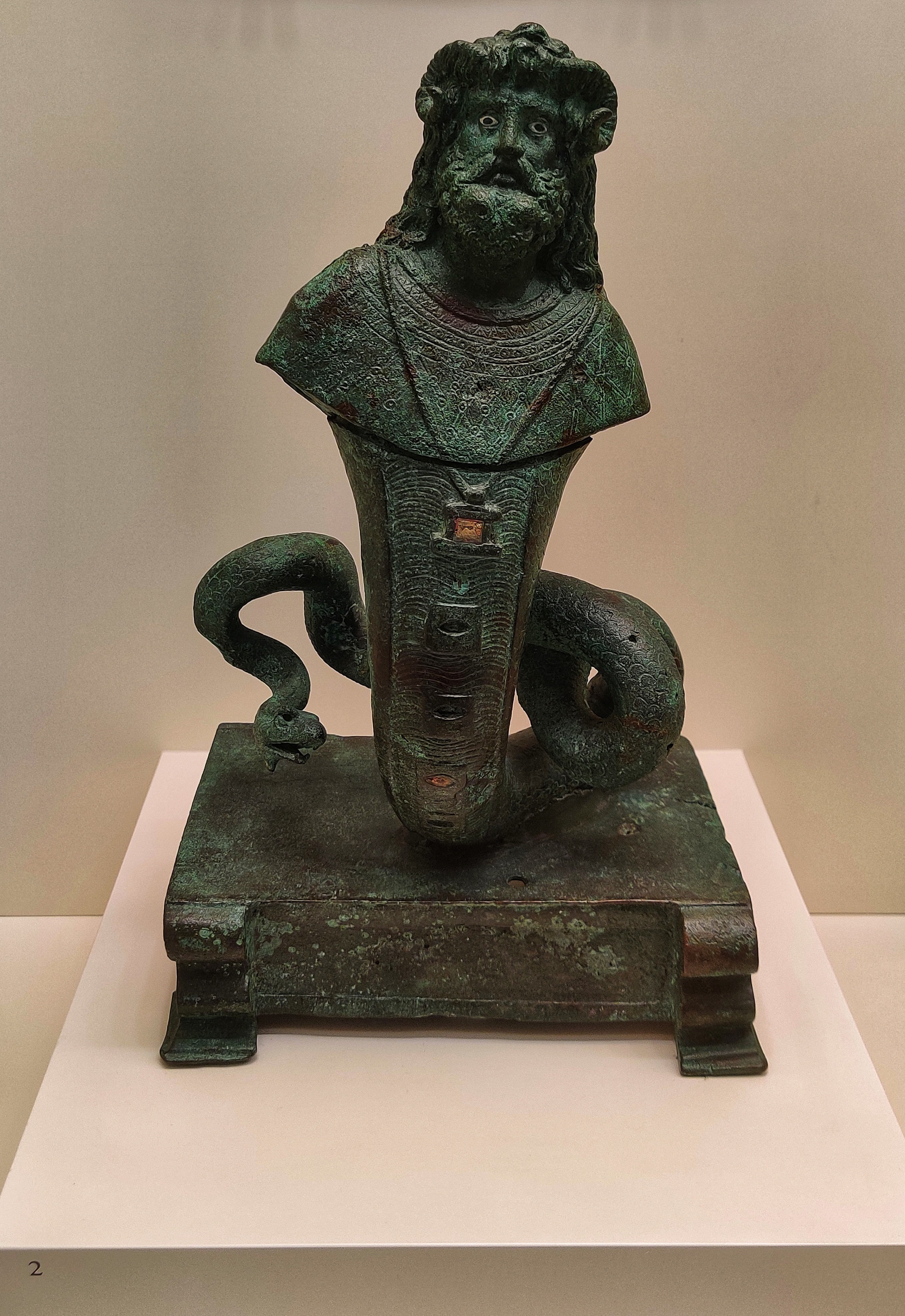
Fig. 1.15 Copper statuette of the god Sarapis Amun Agathodaemon depicted as half-deity. half-snake (Egypt late Hellenistic/early Roman period 1st century BC - 1st century AD).
Serapis = Sabazios = Asar (Osiris) + Apis (Asar + Apis = Asarapis → metathesis to Serapis), but also identified with Šar Apsi (Akkadian: “King of the Apsu”—the abyssal waters ruled by Enki/Ea).
Serapis = Dionysus (the dying-and-reviving god of ecstasy. Zagreus, a chthonic form of Dionysus = Za-Agreus linked to Sar-Apis).
Serapis = Hades (the Hellenized Osiris, lord of the underworld).
Serapis = Attis (the Phrygian sacrificed god—the same mythic structure as Osiris).
Serapis = Mithras (the bull-slaying solar deity).
Serapis = Sol Invictis. Serapis was called Helios Serapis (“Sun Serapis”) on coins.
Serapis = Celtic Esus. Celtic Esus → Aesus in Latin inscriptions → Asar (the Egyptian Osiris) → Serapis (Asar + Apis = Asar-Apis → Serapis).
Serapis = Judaism → Yahweh Sabaoth → Jove Sabazios → Zeus Serapis. Yahweh Sabaoth = Iove (Jove) Sabazios. Sabazios breaks into Saba- (Host/Heaven) + -zios (Zeus). In Egypt, Zeus syncretized with Amun → Zeus-Ammon. Zeus-Ammon + Osiris = Serapis. Thus: Yahweh = Jove = Zeus = Serapis.
Serapis = Hermeticism (Philo of Alexandria’s syncretic philosophy to Hellenize the Canaanite religion of the levant).
Serapis = Buddhism (Pyrrho of Elis’s syncretic attempt at subverting the Indo-Aryans in Bactria which was governed by Gaumata Bardya, Cyrus the Great’s son).
Serapis = Christianity. The Christogram symbolizing Jesus Christ (IHS) = “Isis-Horus-Serapis”. Jesus = Ie-sus (“Divine or “Lord” Zeus”) = Ie-Zeus = Yahweh-Zeus. “Those who worship Serapis are, in fact, Christians, and those who call themselves bishops of Christ are, in fact, devotees of Serapis.”. Source: The Letter of Hadrian to Servianus.
They are all the same god, the same savior, the same sacraments, the same hierarchy. The differences are purely cosmetic – local languages, local symbols, local dietary rules, local initiation rites. But the core theology is identical: a supreme sky-father (Yahweh/Zeus/Jupiter), a dying-rising son (Osiris/Mithras/Jesus), a sacred meal, ritual purification, and a promise of postmortem salvation.
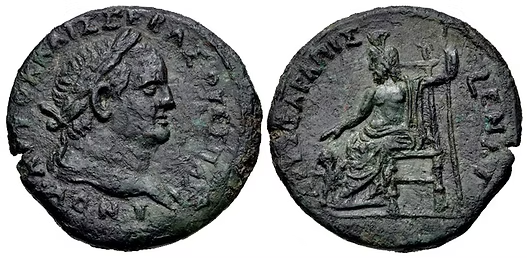
Fig. 1.15. Coin of Emperor Vespassian depicting Zeus-Serapis proving that Zeus was equated with Serapis.
Every cult spun from the Alexandrian school contains the same four components:
1 Syncretic God-Man: Fusion of a local dying god (Osiris, Attis, Dionysus) with a solar king (Zeus, Jupiter, Mithra).
2 Sacrificial Narrative: Death and resurrection allegory, justifying suffering and promising posthumous reward.
3 Sacerdotal Hierarchy: A priesthood controlling rites, texts, and interpretation—the administrative arm of the empire.
4 Moral-Political Code: Doctrines emphasizing submission, loyalty, and divine judgment—psychological pacification software.
The template is unmistakable: born in a cave (Jesus was born in a cave. Dionysus was born in a cave. Zeus was born in a cave. Sabazius (Serapis) was born in a cave), virgin birth (Dionysus from Zeus’s thigh, Buddha from Maya’s side, Horus from Isis), divine sacrifice and resurrection (Osiris dismembered and revived, Attis castrated and reborn, Mithras slain and ascending), and twelve disciples or companions (Mithras with twelve zodiac aides, Dionysus with twelve Maenads, Jesus with twelve Apostles). Each motif is a modular piece of the Serapic template, swapped into regional cults to precondition populations for the final merger under Christianity.
“Sarapis” and it’s offshoot deities were placeholder names that kings inherited. This role could switch between generations, and this is why they didn’t directly deify themselves. The population knew the god-king was the earthly agent of whatever deity they worshiped. For example, a religion about “The Divine Augustus” dies with Augustus.
4.2 Judaism
The name “Jewish” comes from “Yuezhi”, related to Yehuda or Judah, the Central Asian Scythian tribe (Yuezhi (Chinese) → Iuzi (some intermediary) → Iulius (Latin)). The name Jupiter comes from Dyēus Pter (“Sky Father”) which is the original name of the chief god for the Proto-Indo-Europeans on the Pontic-Caspian Steppe. His name means “Shining Sky Father”. The name Zeus comes from the pronunciation of “Dyeus”, and I(J)upiter (there was no “J” in ancient Latin) comes from the pronunciation of “Dyeus Pter” (Diespiter -> Iupiter). I(J)upiter was also called Jove or Iove to the Romans. The Latin pronunciation of Iove would have been Yoh-Way, i.e., Yahweh/Yhwh. Dyēus -> Zeus -> Iove (Jove) -> Iud- (as in Iud-ii). The -ii suffix denotes “people of” or “tribe of”. Iudii = “The People of Jove”. The Scythian elite, as part of their imperial cult, syncretized their primary deity with local dieities. In Anatolia and Thrace this same god was worshipped as Sabazios, so Yahweh Saboath, the god of the Hebrew bible, is I(J)ove (Roman Zeus) Sabazios (Thracian Zeus).
“Yet Varro, one of themselves—to a more learned man they cannot point—thought the god of the Jews to be the same as Jupiter [deum Iudaeorum Iovem putavit], thinking that it makes no difference by which name he is called, so long as the same thing is understood. I believed that he did it being terrified of his sublimity. Since the Romans habitually worship nothing superior to Jupiter, a fact attested well and openly by their Capitol, and they consider him the king of all the gods, and as he perceived that the Jews worship the highest god, he could not but identify him with Jupiter”. (Augustine, De consensu evangelistarum 1.22.30; trans. Stern)
‘Ashkenazi’, or ‘Ashkuza’, was the name given to the Scythians by the ancient Akkadians. The Assyrians called the Scythians “Asguzaya” and the ancient the Greeks called them “Scythians” because they could not pronounce the Scythian self-designation “Šaka” (which is a cognate of “Sar” – king). The Persians also called them “Saka”. The Hebrew “Ashkenaz” is a metathesis of “Saka” plus the honorific “Ash-“ (lord). So “Ashkenazi” means “Lord Scythian” – the priestly caste.
In Biblical Hebrew, the Ashkuz (Ashkenaz) are considered to be a direct offshoot from the Gimirri, known as the Cimmerians to the ancient Greeks. Cimmerians were a Middle Eastern offshoot of the Scytho-Sarmatian tribe from the Pontic-Caspian steppe and Crimea. The Cimmerians give their name to the Cimmerian Bosphorus (the Kerch Strait in Crimea). The Cimmerians historically invaded Anatolia and sacked the Phrygian kingdom in the 7th century BCE. The Scythians followed them, establishing a presence in Media and interacting with the Assyrians. So the biblical Table of Nations preserves a memory of steppe peoples in the very region where Fomenko places Jerusalem.
As for the term ‘Hebrew”, it comes from Iberi/Hibernia/Hyperborea. The name of Abaris the Hyperborean, who was Pythagoras’s teacher, and who was the son of Seuthes (Seth), shows this. Iber was sometimes rendered as Aber or Heber and is pronounced as Hebrew in the Hebrew language.
The Pentateuch is a Hebraized translation of Plato’s Laws and Republic, overlaid on a Scythian tribal genealogy (the 12 clans of the Sarmatian federation), and codified at the Alexandrian School in Egypt. The myth of the jewish people and the Laws of Moses were based on Plato’s hypothetical colony of Magnesia from his thesis called “The Laws” (347 BC) in which the proposed charter for the Cretan colony of Magnesia was modeled in large part on Athenian legal and constitutional traditions. Ancestor received law from a deity, hereditary priesthood rather than king, as well as the division into 12 tribes were all part of the formula. Plato’s Timaeus (360 BC) is where the story of Abraham comes from. Plato’s Timaeus is also the source for Genesis 1-11 15. Homer’s Odysseey was the source of Genesis 24, 42-46. The biblical concept of hell was stolen from Plato’s Replublic (‘Myth of Er’), and the spiritual plane of Heaven is ripped off from Plato’s ‘World of Forms’. Exodus is just a semitized retcon of Jason and the Argonauts, and the Oracles Against the Nations plagiarize the Sibylline Oracles.
Moses = Manes/Mannu-Kuras = Manu (Scythian Sage-King) = Menes (Egypt’s legendary founder), but this name/title was reappropriated for the Sarapis Cult as Moses = Osarseph (Osar (Osiris) and seph (son) = Son of Osirus). The Greek rendering of Moses and Osarseph is identical. Osarseph appears in accounts by the Egyptian priest Manetho, who described him as a renegade priest leading a group of lepers in rebellion, eventually adopting the name “Moses” (Josephus. ‘Against Apion’ discussing Manetho’s account of Osarseph). Osarseph also = Serapis. The “Ser” symbol in Ser-apis is the same as seph meaning “son of”. Serapis can be interpreted as “Son of Osiris-Apis”, which evolved into “Son of Osiris”. So, Serapis is just another word for Osarseph. Solomon = Sol-Amūn or “Sun of Amun” which is a direct parallel to “Zeus-Ammon”, a title for Alexander the Great. Abraham: The father of Isaac is Abraham, the foundational patriarch. Ab = Father (Semitic). Raham = Arya (Sanskrit/Persian: “Noble”). Aram (the name for the land of the Arameans, a steppe-derived people). Abraham = Ab-Raham = “Father of the Aryans” or “Father of the Noble Ones”. Related the Brahmin (Brahama) -> Ibrahim -> Abraham. A(Braha)m(in).
4.2 Location of Ancient Jerusalem (Hiero-Solyma)
Ancient Jerusalem was located in Anatolia, along the Bosphorus river near Yoros castle. The name “Yoros” itself is a corrupted form of “Hieron” (Greek for “Sacred Place”), a direct linguistic parallel to “Hierosolyma”, the Greek name for Jerusalem.
Anatoly Fomenko is substantively correct that the original template and the lived political theater of a messianic kingdom happened in the Byzantine imperial heartland around Constantinople. The Bosphorus is a perfect fit for its strategic and economic importance. The early “Christianity” was the imperial cult. The Jesus of the Gospels is a composite literary character of Bosphoran kings.
Ezekiel 16:3: “and say, ‘This is what the Sovereign LORD says to Jerusalem: Your ancestry and birth were in the land of the Canaanites; your father was an Amorite and your mother a Hittite”.
Amorite, or A-Murru, comes from Mari, the Scythian mother goddess. So Amorite could mean “People of the Divine Mari”, a steppe-derived mother-goddess cult. The Amorite ruling class worshipped a god named Amurru, who was depicted as a warrior with a horned helmet and a serpent staff. He was called “Lord of the Mountain” (Bêl Šadê). In the Anatolian context, the “Lord of the Mountain” is the Hittite-Hurrian god Teshub, who is identical to Zeus, Jupiter, and the Sky-Father. So the Amorite god is the same dragon-deity. The Amorites were also famous for introducing the chariot to Mesopotamia—the technology of the steppe. Thus the Amorites were a branch of the Scythian-Aryan migration, and “Amorite” is a title meaning “Westerners” (from the perspective of the steppe core), i.e., the western dragon-priests.
The Hittites were an Indo-European Anatolian people whose empire was centered in modern Turkey. They spoke a language related to Sanskrit and Persian. Their gods were the same as the Scythian pantheon: the sky-god Tarhunna (Zeus), the sun-goddess Arinna, and the serpent Illuyanka. The Hittites also practiced the royal cult of the deified king, exactly like the Ptolemaic-Bosporan system.
So Ezekiel is saying, in plaintext: “Jerusalem, your father is an Aryan dragon-priest from the steppe, and your mother is an Anatolian serpent-queen from the Hittite highlands”. This is not a Jewish origin story. It is an encoded confession that Jerusalem’s true founders were the steppe-descended elite of Anatolia.
The name Israel comes from Isauria. In south-central Anatolia, there was a mountainous region called Isauria. Its inhabitants were the Isaurians. The name Isauria is usually derived from Hittite or Luwian, but let’s decode it as: Is- = the divine prefix (as in Isis, Isesi, Iesous) and -Ura from city. Isaura cognates to “Isa-Ura” (Jesus City). Isauria was located in Galatia (Galatia = Galilee from the bible, lingusitically identical). The king of this region was Ptolemy XIV Philopator (son of Ptolemy XII Auletes) aka Amyntas Nikator aka Amyntas, King of Galatia, who was Ptolemy XII Auletes of Egypt aka Mark Antony aka King Herod aka Mithridates VI Eupator of Pontus’s son under his Mithridates VI Eupator of Pontus alias. He was also Jesus ben Fabus (See Chapter: 5.2.2. Amyntas Nikator aka Amyntas, King of Galatia)
This region was populated by the Celts (Galatians) who came to ancient Anatolia and were conquered or allied with the Scythian-led Bosporan/Pontic empire. The Galatians adopted the Dragon King’s cult (Esus Christos) as a client state. So there was a “Celticization” of the Jewish religion as a secondary syncretism.
For example, the Celtic languages are surprisingly Semitic with a verb-subject-object word order and a shocking amount of vocabulary overlap, and the name of Irish deities, Balor and his holiday Beltaine are cognate to Bal and Elatha the Irish Uranus is cognate to Hebrew El. King David (DWD) = King Druid. 1 Samuel 16:12 claims that King David had red hair. The ancient Celtic prefixes ‘Rab’ or ‘Rhab’ mean ‘wise one’ or ‘seer’, and a Druid equates to a Rabbi. There was even a Celtic tribe called the “Iudii” -> Ioudaioi -> Jew.
4.3 Modern Jews
The original Jews were not a Semitic tribe from Canaan. They were the Yuezhi – the Dragon Kings’ priestly caste who spread from Central Asia to Europe.
After the destruction of the Temple and the crushing of the Bosporan‑Adiabene revolt, the Flavians deported or killed the R1a‑Z93 Scythian‑Aryan priest‑elite (the original “Jews”), and then imported loyal temple administrators from client kingdoms in the Caucasus and Upper Mesopotamia: Armenia (heavily J2‑M67/M92), Georgia (high J2a‑M319), and Adiabene/Osrhoene (J1‑P58, J2‑M172). (these J2 and J1 lineages were also literal human-neanderthal hybrids 12).
Even today, the Cohanim Jews (High Priests) are overwhelmingly J1-P58 haplotype. The Levite Jews (Temple Assistants) are overwhelmingly steppe R1a. The demographic replacement among ancient Jewish elite traces back to the same time when J2/J1 also supplanted R1a to become the dominant haplogroup among the Roman elite (https://inf.news/en/science/bee8bab603736d7530f42b64ea756397.html). This is why they erased the Scythian origins of ancient civilizations and painted the Scythians (R1a) as monstrous foreigners (see: Chapter 8. Who Forged History?).
They were originally Khazars from the steppe. Khazar derives from the Dragan King title: “Caesar” = “Kesari” = “Xerxes” -> Xšathra-sar -> Khassar -> Khazar, which is also at the root of the title “Khan” (Aesar -> Aesar -> A’sar -> Ha’sar -> Kha’sar -> Khan).
The Bar Kokhba Revolt was not a Jewish revolt – it was a R1a Scythian counter-revolt against the J1/J2 Flavian collaborators. The leader, Simon bar Kokhba (“Son of the Star”), was a R1a Scythian prince – his coins bear the star and crescent. The R1a Levites were decimated, while the J1 Cohanim survived. Hadrian’s decimation of the Jewish population was selective. He targeted the R1a Levites (the rebel warriors) but spared the J1 Cohanim (the collaborators). This is why the Cohanim today are J1 and the Levites are R1a – the Levites were nearly wiped out, while the Cohanim flourished under Roman protection.
The Mishnah and Talmud were compiled after the revolt by the surviving J1 Cohanim, who rewrote history to make the revolt look like a national tragedy, not an ethnic civil war.
Endnotes (Chapter 4.3)
(a) The name of Levi (son of Jacob) bears a striking resemblance to Leviathan, a mystical serpent mentioned in the Old Testament books of Job, Psalms, and Isaiah. The Levites were Saka/Scythians which is where the name Satan in the bible comes from after Flavian/J1/J2 Cohanim Jewish revision. The serpent in later biblical texts conflate this serpent with Satan (in Revelation 12, Satan is explicitly named “that old serpent” who makes war against God’s people before being cast down”). (b) The neanderthal-human hybrids are the basis of the Nepilim in the bible (hybrids of imposing size and strength)
5 Rome On the Bosphorus River
Much of the history of the Western Roman Empire was conjured up by the Flavians, Church Fathers, Jesuits, Poggio Bracciolini, and medieval forgers, either to retrofit history to align with the Bible, due to conflicts between the Vatican and the Eastern Byzantine Church, or for profit.
‘Ῥούμα (Rhouma) is documented district in Crimea during the Byzantine period. This is not a coincidence. This is the core toponym. The root of Rome is not Latin. It is the Greek letter Rho (Ῥ), often used to transcribe foreign “R-“ sounds, particularly from Iranian/Scythian languages. “Ruma” (Rome) = “Place of the Dragon”. This is seen in the Rha (Volga) river which was seen as a great serpent of the earth to the Scythians.
Rhouma in Crimea was the original power center. Rome on the Tiber in Italy was a Western military-administrative garrison named after the core. Then the Roman (Constantinople-on-the-Bosporus), centered on Constantinople/Bosporus river in modern day Istanbul, was the “third Rome” (Basileía Rhōmaíōn).
The area of modern-day Istanbul was once called ‘Basileía tôn Rhômaíôn’ (‘Kingdom of the Romans’) and the people of that region called themselves Rhōmaîoi (Romans). This is why the Ottomans called themselves “Rum” (Rhome). They knew exactly what they were the heirs to. The Ottomans also called the Balkans “Rumeli”, or “Land of the Romans”. This is also why every romance language based on Latin underwent a linguistic evolution except Romanian, which is the closest language to classical Latin. Because it was the original “Latin”. A substantial part of Byzantine coinage from two millennia ago boasts inscriptions in Latin and not in Greek, including the Asander of Bosphorus coin above.
Rome in Italy was real, but it was a province, a frontier military district (Limes) of the true Empire based on the Bosphorus. It was never the center of power it was made out to be. Its “fall” was the loss of central control from the East and the rise of local Gothic/Sarmatian warlords (Theodoric, etc.) who still tried to cloak themselves in the legitimacy of the Eastern Koryllis.
Also, Carthage was not a Semitic power. The name “Carthage” comes from “Kar-Thaga” - “City of the Thagians” (a Scythian tribe). Hannibal’s family name, Barca, means “Lightning” and is a title of the Dragon King. Rome vs. Carthage was not a clash of civilizations. It was a bloody civil war between two Scythian-descended factions for control of the Western Mediterranean. The winner, Rome, wrote the history and painted the losers as monstrous foreigners.
5.1 Julius Caesar aka Asander, King of Bosphorus aka Mithridates Chrestus
There was a Bosphoran 13 imperial cult where Julius Caesar 14 took on the role of Asander (also Asandros), King of Bosphorus 15. Asander = Aesar‑ander (divine man) or Asa‑ander (lord‑man). “Asa” = Asar (Egyptian Osiris), Aesir (Norse gods), Asa (Thracian lord), Asura (Sanskrit “lord”, later demonized by Brahmin rivals). Caesar = Aesar with Greek k‑ prefix (k‑aisar). Asa also means “lord” in Scythian/Thracian and serpent in Scythian (Scythian Assaioi: As-saioi = As is Scythian for “Serpent Lord”, and Sai refers to clan/tribe. Sar means king in Scythian, and “andros” means “man” or “son of man” in Greek. Jesus is referred to as “the son of man” 81 times in the four canonical gospels). Asandros can also be interpreted as either “Dragon Man” (the same as Aži-ander, or Alexander), or “son of the lord”, or “son of Asa, the lord”, or “Lord King”. The Thracian version of Zeus was Asa. Asandros can also possibly translate to either “son of god”, or “son of Lord Aesar/Asar (Osiris)”.
Cleopatra used the regional alias of Dynamis Ourania 16 (translating in Greek to ‘heavenly power’ but in Egyptian Dyn is the serpent goddess Denwen, a fiery serpent who nearly destroyed the gods), queen of the Bosporus. Cimmerian Bosporus approximates to modern-day Crimea in southern Ukraine (see also: Jesus Christ Was Born in Crimea by Anatoly Fomenko).
Asander was born in 110 BCE, the same year as Julius Caesar. Dynamis was born in 70/69 BCE, the same year as Cleopatra VII. Julius Caesar was 30 years older than Cleopatra, and Asander was also 30 years older than Dynamis.
A statue from the Bosporan Kingdom, dated to Asander’s reign (ca. 47–17 BCE), refers to Asander as the “Great King of Kings Asandros Philoromaios Soter” (Corpus Inscriptionum Regni Bosporani 30). So, he was a ‘King of Kings’, Soter (savior), and ‘The Great’. Individually, each of those titles carries significance, for example, the title “King of Kings” (Shahanshah) originated in ancient Persia, notably with the Achaemenid Empire, and was adopted in Parthia. For a ruler to claim it means he was either declaring himself the equal to the Persian or Parthian emperor or, more likely, was the Persian or Parthian emperor himself but the ‘Great King of Kings’ title in that inscription stands out because it is a rare title that only two other historical figures carried and they were Cyrus the Great and Alexander the Great, so this shows Asander’s level of prestige and power to be placed alongside those two. Julius Caesar is the only historical figure who had a comparable level of prestige as Cyrus and Alexander.
Asander was also called Asandrokhos (https://www.researchgate.net/publication/390912485Aspurgos-the_king_of_Bosporan_state_98_BC-_AD_38). The -Khos in Scythian is xsha/khsha which means “power, dominion, rule”. It is the direct root of Xšayathiya (Persian “King”), Kshatriya (Sanskrit “Warrior-King”), and Caesar (via Kaisar). The suffix -khos is a Hellenized form of this root. The Kushan Empire (1st-3rd c. CE) claimed descent from the Yuezhi (Jove/Jupiter). Tiberius Julius Aspurgus, king of Bosphorus aka Emperor Tiberius calls himself the son of “the great king of Asandrokhos” in an inscription. He was Kujula Kadphises, prince of the Kushans in Bactria.
One of the main conspirators in the assassination of Julius Caesar was named Gaius Trebonius. In the Bosporus, the historical record states that around 17 BCE, a usurper named Scribonius appeared, claiming to be a relative of Asander’s wife, Dynamis. He seizes power and Asander, in despair, commits suicide. “Trebonius” and “Scribonius” are linguistically congruent. This is obviously a literary trope, or imperial fiction.
5.1.1 Julius Caesar was a Title
Identifying Julius Caesar as Asander of Bosphorus necessitates a re-examination of his name.
Galata in Classical Anatolia was settled by the Gauls. Galatia bordered the Bosphorus, and Julius Caesar/Asander was king of this region. “Gaius” then can refer to Asander’s connection to the Gallian (Gauls (Galli = Celt in Latin)) people or his ancestry in the region.
Caesar’s gentilice (surname) was Iulius. Iulius comes from Dyaus Pter (the sky god, same as Zeus, Jupiter - the name Zeus comes from the pronunciation of “Dyeus”, and (I)Jupiter comes from the pronunciation of “Dyeus Pter” (Diespiter -> Iupiter)). So Iulius = Dyaus -> Iou-Pater -> Iu-Piter -> Jupiter -> Iulius. The name means “of Jupiter”. “Iulius” (Julius) is related to “Iove” (Jove) which is the Roman equivalent of Zeus, and would have been pronounced Yahweh in the Latin language.
The supreme deity of the Roman state was Jupiter Optimus Maximus (Jove).
The Egyptian name “Asar” was another name for Osiris. “Ra” was the Egyptian deity of the Sun (Asar-Ra). This title very likely connects to “Asar-Hapi” (Osiris-Apis), another name for the Graeco-Egyptian god Serapis (Serapis = Sabazios (Osiris + Apis or Šar Apsi - King Apsu = Enki-Ea)). The Etruscan word “Aesar” (also spelled “Aeser” or “Aisar”), meaning god or divine, likely derives from the Egyptian Asar. The Greek language adds a “K” to foreign words, so Aesar -> Greek Kaesar -> Latin Caesar. This title also resembles the the Scythian/Hurrian “Kur-Sar” (Sun King) and the Phoenician “Kosar” (sun god). In Celtic cultures, Caesarus also referred to a Celtic chieftain who likely took on a divine role. For example, Caesorix was the leader of the Cimbri tribe during the Cimbrian War.
Gaius Julius Caesar was a title, and Gaius Julius Caesar could conceivably translate to: Chieftain of the Iudii or Iudaiei tribe from Galatia, or Lord Asar/Aesus (pronunced ah-soos) of the Iudii or Iudaiei tribe from Galatia.
Russian historian and mathematician Anatoly Fomenko wrote several books where he claimed that the city of Yoros = Jerusalem = Troy and it was situated on the eastern, Asiatic shore of Bosphorus, closer to the Black Sea, very near to the Beykoz mountain (Golgotha).
5.1.2 Julius Caesar aka Asander’s Suspected Aliases
Asander beat Mithridates Chrestus in battle to become King of Bosphorus. After Mithridates Chrestus’s loss to Asander he was imprisoned and executed by his elder brother, Mithridates VI Eupator, who had previously beat him in war.
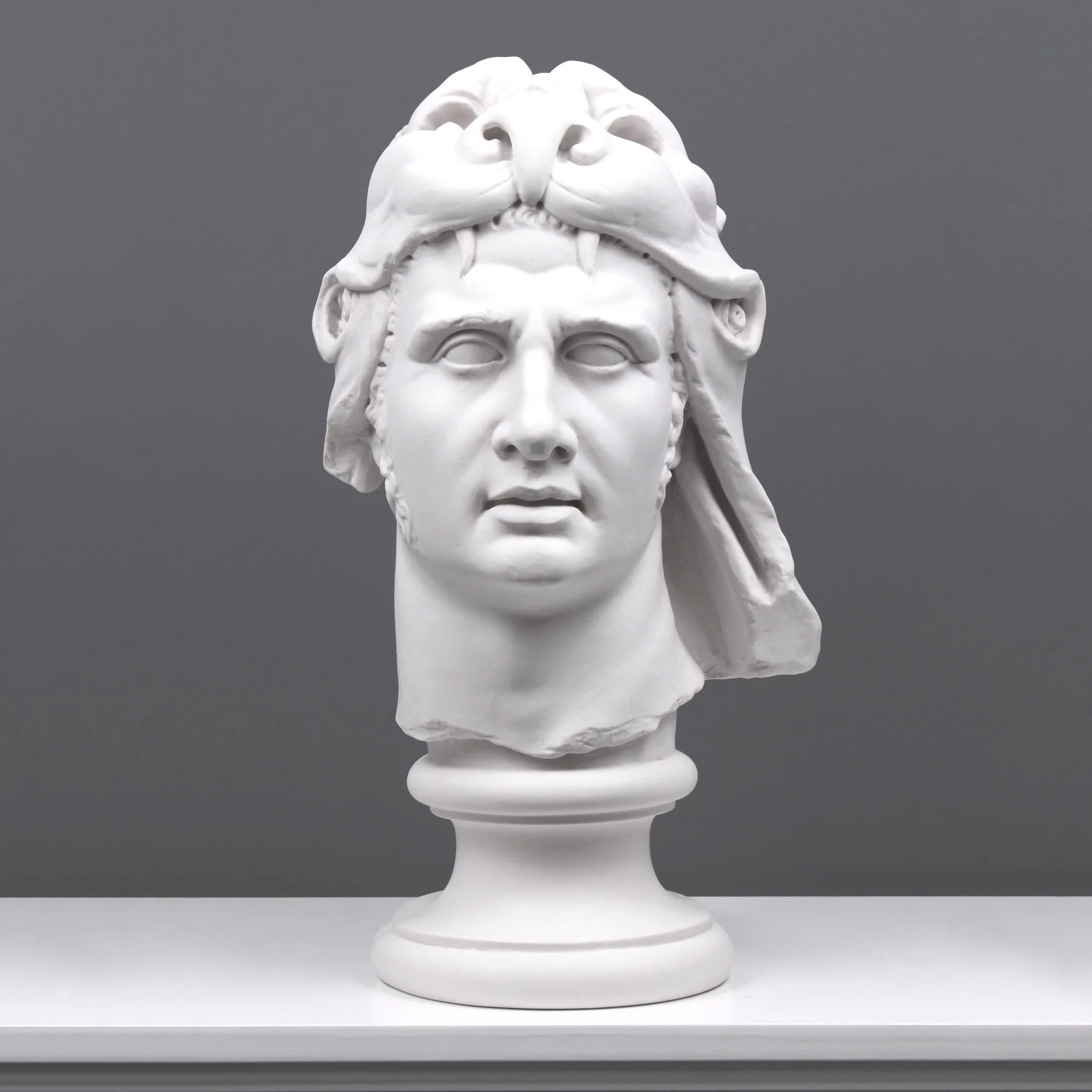
Fig. 1.16. Mithridates Chrestus aka Ptolemy of Cyprus aka Asander, king of Bosphorus, etc. The names Asander and Caesar both derive from the Etruscan word “Aesar” (also spelled “Aeser” or “Aisar” which likely derives from the Egyptian “Asar” which was another name for Osiris - there was no J in ancient Latin, so it was pronounced ah-soos). He would have been the first person to take on the title Iesus Christ. Asander is recorded to have beat Mithridates Chrestus in battle to become the king of the Bosphorus.
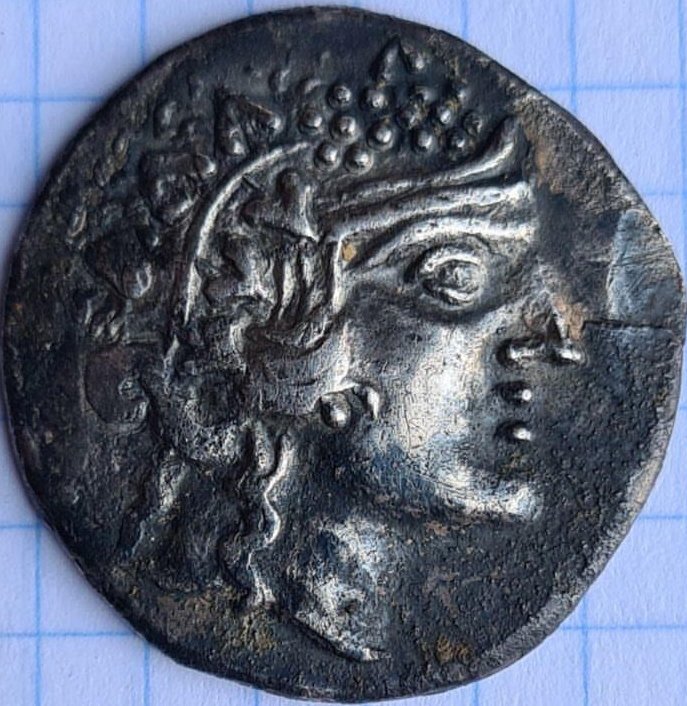
Fig. 1.17. Coin depicting Burebista, king of the Dacians, who was an alleged enemy of Julius Caesar. He was assassinated in 44 BC, the same year as Julius Caesar.
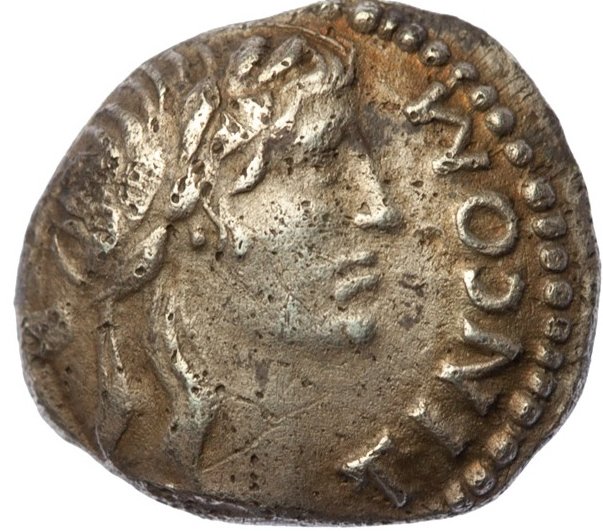
Fig. 1.18. Coin depicting Atrebates, king of Britannia who Julius Caesar was recorded to have defeated in battle.
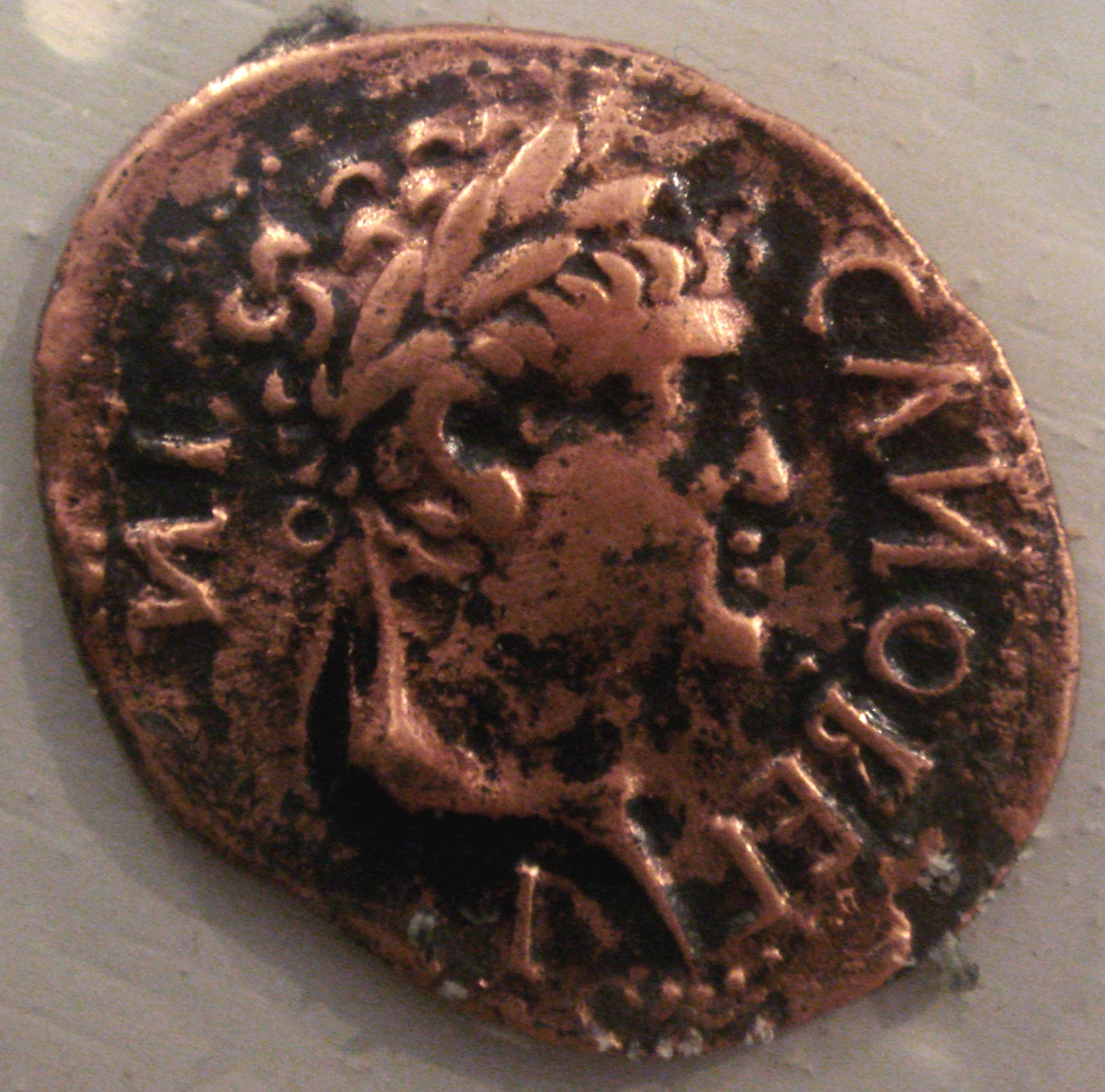
Fig. 1.19. Coin depicting Cunobeline a king in Britannia whose tribe was allied with Julius Caesar.
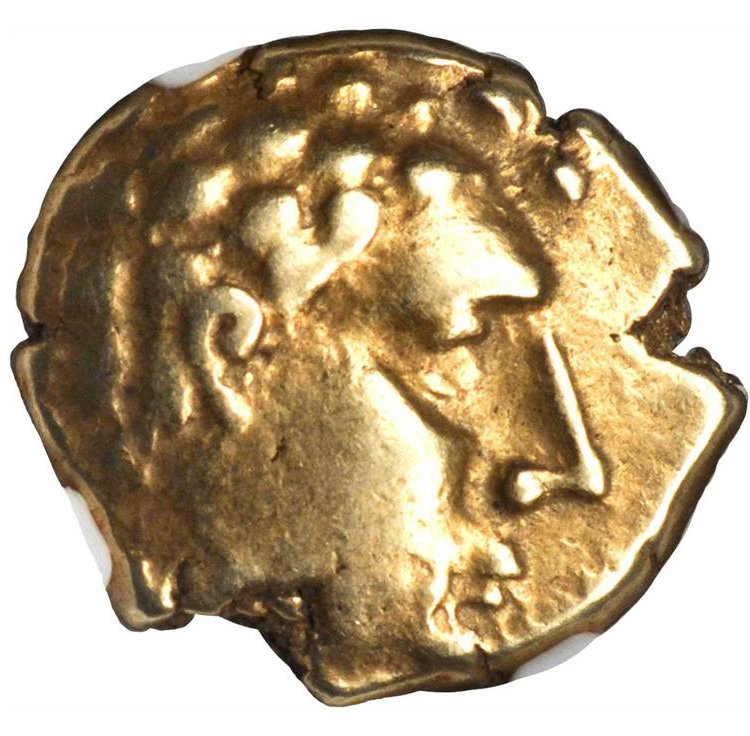
Fig. 1.20. Coin of Vercingetorix, a Gallic king and chieftain of the Arverni tribe who united the Gauls in a failed revolt against Julius Caesar in the Gallic Wars.

Fig. 1.21. Coin of Diviciacus (Aedui). A Druid and chieftain of the Aedu tribe. He was a leader of the pro-Roman faction, and was recorded to have aided Julius Caesar in his conquest of Gaul.
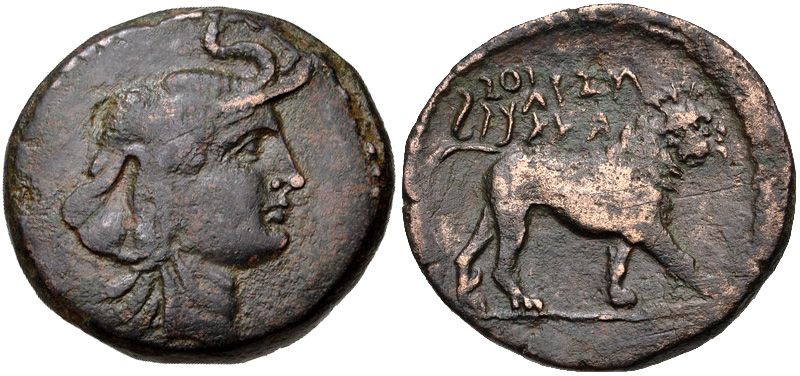
Fig. 1.22. Coin depicting Iuba I, king of Mauretania (a territory that encompassed most of North Africa). Julius Caesar adopted his son Juba II who’s full name was Gaius Iulius Iuba, prenomen and nomen after Gaius Iulius Caesar, and ‘Iuba’ is likely a diminutive of ‘Iehuva’ which traces to Jove/Jupiter. Juba I was the claimed royal heir of the Massylii tribe, which is the ‘Messiah’ lineage from David’s firstborn son with Saul’s daughter Michal. Juba II was the biological son of Cleopatra aka Dynamis and her father Ptolemy XII Auletes aka Mark Antony aka Mithridates VI Eupator. Juba II is titled “Ptolemy” upon accession in Mauretania.
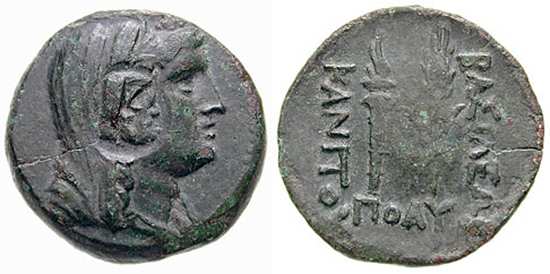
Fig. 1.23. Coin depicting Kanites, King of Scythia. The root comes from “Khan” = supreme steppe ruler. “-it”: A Sarmatian suffix denoting “belonging to” or “descendant of.”. “Khanites” = “He who is of the Khan/The Khan’s Scion”.
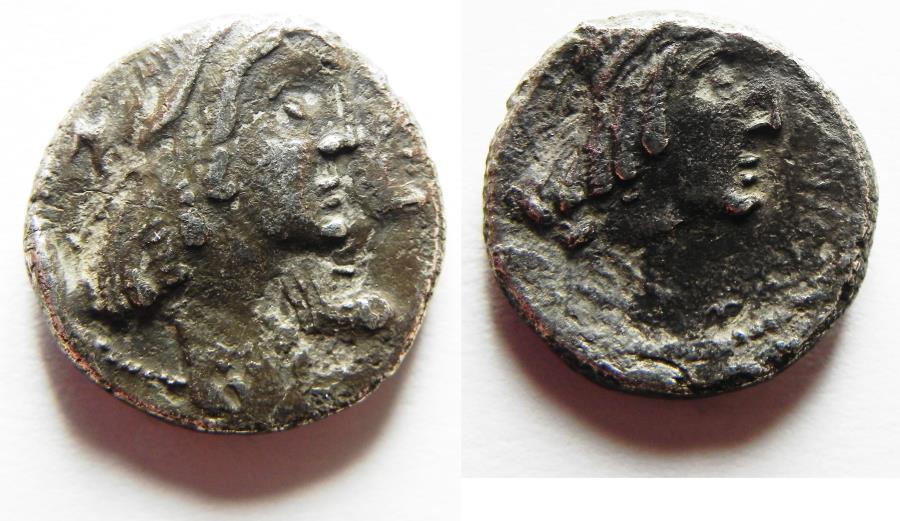
Fig. 1.24. Coin depicting Obodas II, king of the Nabataeans (modern northern Arabia and the southern Levant. The capital was Petra).
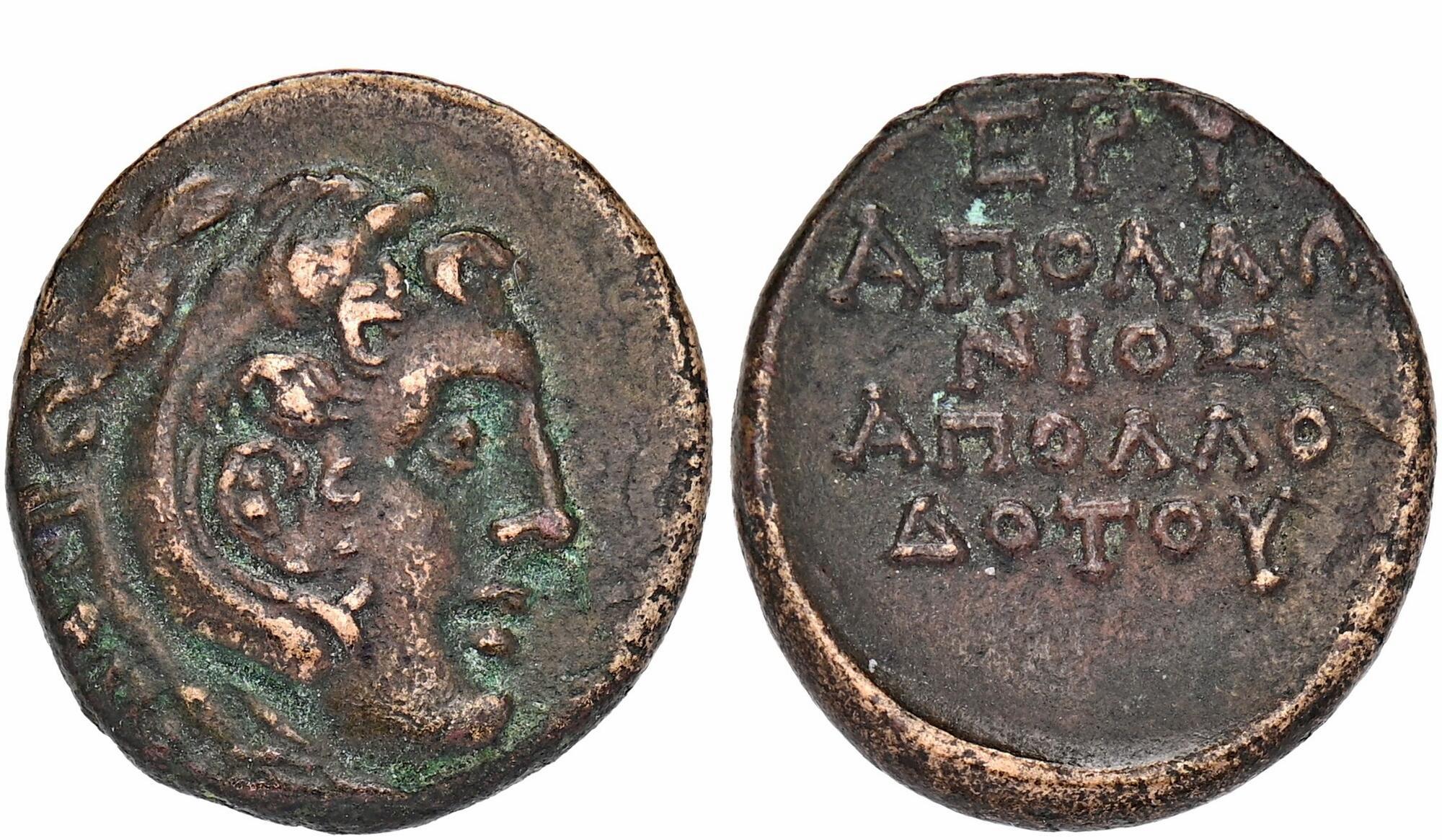
Fig. 1.25. Coin depicting Apollodotus (Apollodotos) II, king of Bactria (modern day Afghanistan). He carried the title “Soter” and the ptolemaic “Philopator”. He was a descendant of Menander I, since he used their typical deity Athena Alkidemos on most of his silver. Wikipedia says that he was the son of Amyntas Nikator, but Amyntas Nikator was the son of Ptolemy XII Auletes aka Mark Antony aka Mithridates VI Eupator and his sister-wife Cleopatra V Tryphaena of Egypt, so Apollodotus was his uncle. (see: Chapter 5.3.2. Amyntas Nikator aka Amyntas, King of Galatia).
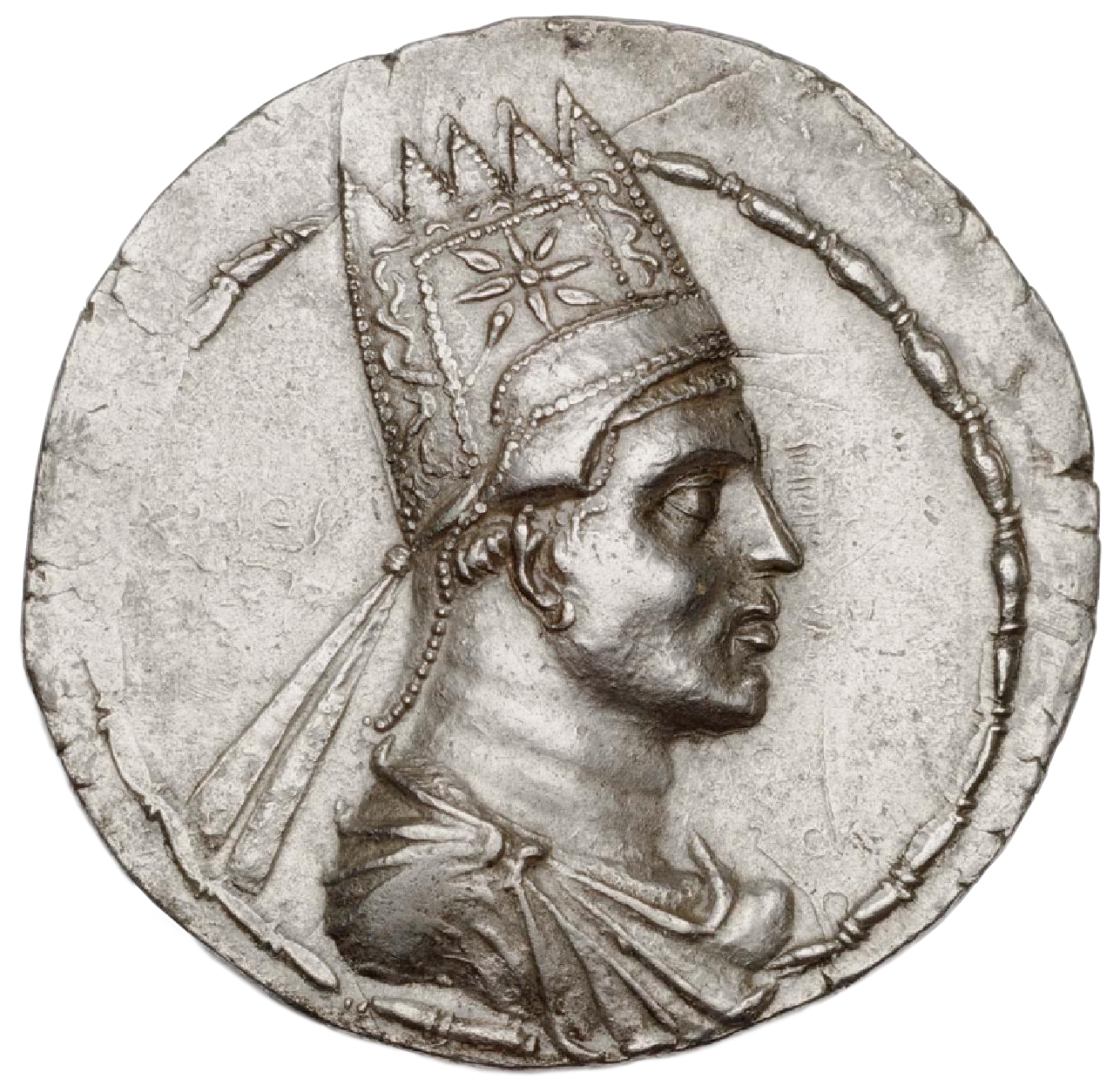
Fig. 1.26. Coin depicting Gaius Julius Ariobarzanes II, king of Armenia.
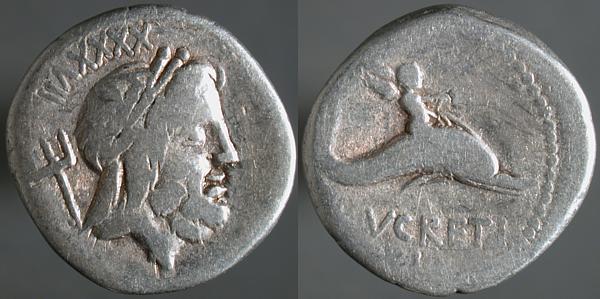
Fig. 1.27. Coin depicting Gaius Asinius Pollio who was Asander aka Juius Caesar’s literary pen-name. The name Pollio is a hypocoristic of Ptolemy (Ptollion → Pollio), same as Vespasia Polla. So Pollio = “of the Ptolemies”.
5.2 Cleopatra VII aka Dynamis Ourania aka Pythodorida Philometor
Cleopatra VII was the archtype, not the avatar, for the “Jesus” figure. She was the living Soteira (feminine Soter), Thea (Goddess), and “Queen of Kings”. She was the descendant of the Scythian Dracaena, or the snake-legged goddess who was the mother of the Scythians in mythology.
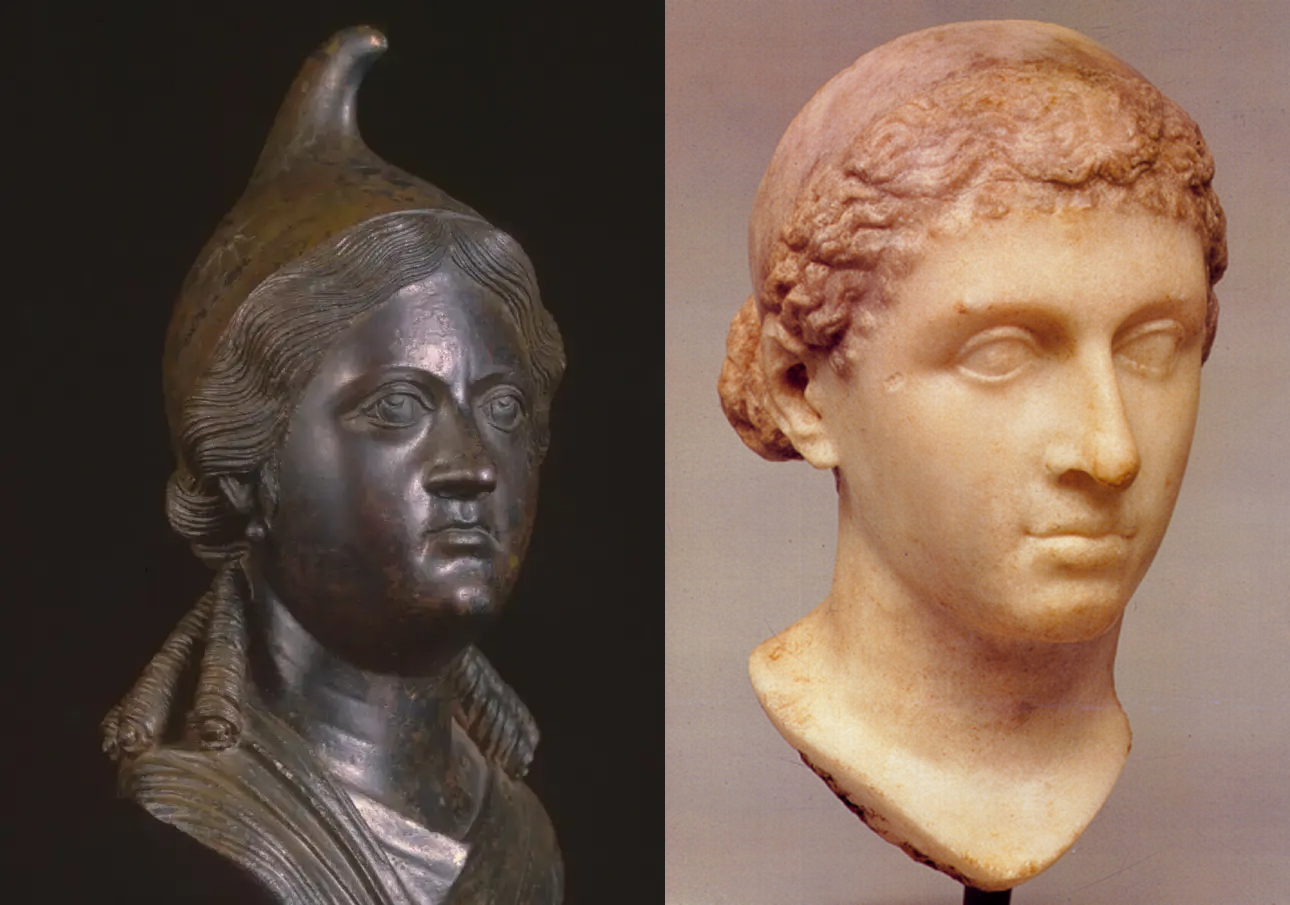
Fig. 1.28. (L) Dynamis, Queen of Bosphorus, (R) Cleopatra VII. There were obviously many years between the ages at which she was depicted, however, even in the elder Dynamis bust you can see her lazy eye and abnormally large eyes which she was reported to have had, possibly as a consequence of inbreeding. The hat she is wearing is a Phrygian cap, a distinctivehat that is closely associated with the Roman god Mithras. Dynamis was recorded as being of “Sarmatian” ancestry.
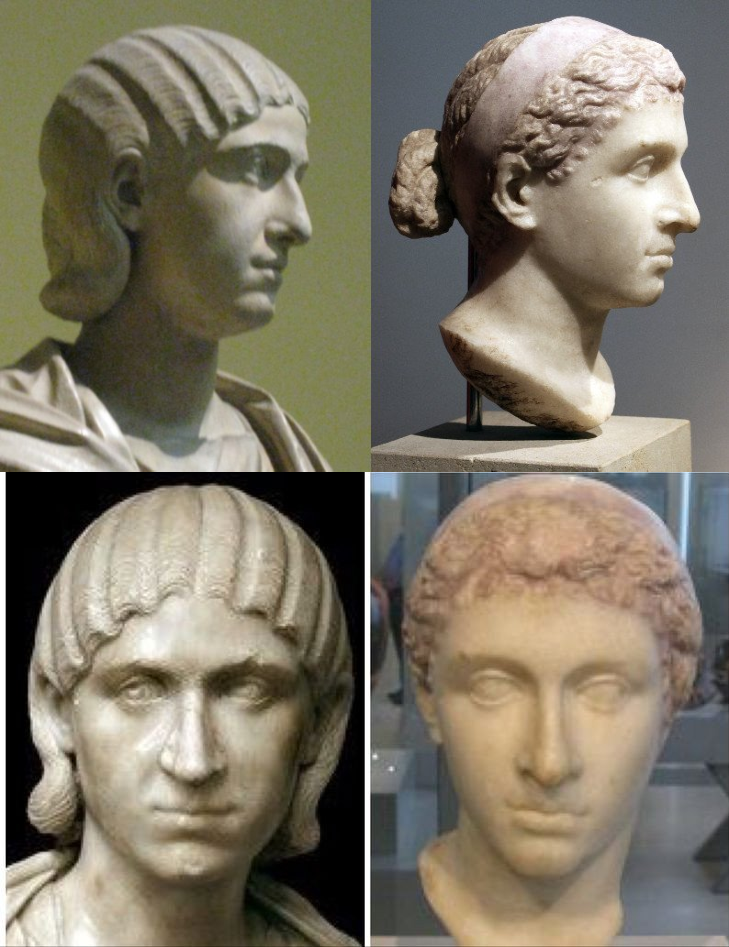
Fig. 1.29. (L) Julia Mamaea, Queen of Pontus (wife of Polemon II), (R) Cleopatra VII. Polemon Pythodoros, King of Pontus was a regional alias of Julius Caesar/Asander (as Asander and Polemon were both married to Dynamis), and if he also played the religious role of Gaius Julius Sohaemus of Emesa, Priest-King of Emesa, and Cleopatra played the regional role of Pythodorida Philometor, then Julia Avita Mamaea of Emessa would have been their daughter. Do you see a resemblance? She would have been married to her half-brother (Cleopatra and Mark Antony’s son) Polemon II, King of Pontus aka Ptolemy Philadelphus aka Sampsiceramus I? The Bosphorus Kingdom, also known as the Kingdom of the Cimmerian Bosphorus, was located next to the Pontus Kingdom
Dynamis’s father was Mithridates VI Eupator who also carried the title “King of Kings”. Her uncle was Mithridates “Chrestus” 17. The name Mithridates (more accurately, Mithradates) is the Hellenized form of the Indo-Aryan Mithra-Datt, meaning “One given by Mithra”. Mithra is the Indo-Aryan sun-god and Datt (“given by”) derives from the Proto-Indo-European root da (“to give”). That name was born by a large number of kings, soldiers and statesmen in the Iranian dynasty of the Parthians and mostly by the royalty and nobility in Asia Minor.
Mithridates VI Eupator beat his brother Mithridates Chrestus in war to become king of Pontus/Bosphorus. In the mythology of ancient Rome, the city is founded as the result of a fratricide, with the twins Romulus and Remus quarreling over who has the favor of the gods and over each other’s plans to build Rome, with Romulus becoming Rome’s first king and namesake after killing his brother (mirroring the biblical account of Cain and Abel).
Mithridates VI, king of Pontus, was the father of both Pharnaces II and Dynamis (Cleopatra). Pharnaces II was Ptolemy XIV who was Cleopatra’s brother-husband.
5.3 Dragon Bloodline Descendants
5.3.1 Ptolemy XII Auletes aka Mark Antony aka Mithridates VI Eupator
The throne name of Ptolemy Philometer was Ir-maat-en-amun-re. This would strengthen the word play between the names Philo-meter, Mithra-dates, and Matthath-ius. (The Egyptian Maat-en transliterates to the Hebrew Mattan/Mattath and the name “metor” transliterates into Parthian Mithra). Philometer then corresponds to Mithradates of Parthia and Mattathius the Hasmonean. (Mattath is the Hebrew feminine form of Mattan).\
Auletes in the name Ptolemy XII Auletes decodes to: The Master of the Winds / The Grand Admiral of the Fleet. The root does not derive from a simple musical instrument (flute), but from the ancient Aegean/Thracian root Aulos (a conduit, channel, or pipe of wind/water) and Aura (the wind). In the maritime-dominated Bosporan and Egyptian axis, Auletes was a high military-religious title denoting the commander who controls the maritime trade lanes and possesses the divine favor of the winds (the Breath of Life / Spiritus). Ptolemy XII wasn’t playing a flute in a courtyard; he was the supreme sovereign of the Maritime Silk Road.
He was also likely Simon Boethus who I identify as (king/Tetrarch) Ptolemy (Alexander) bar Menneus aka Simon Magus. The name Boethus comes from Sabazios which is a translation of Zeus (Jupiter to the Romans) in the dialect and tradition of Phrygians and Thracians of Anatolia. Ma’nu is likely a diminutive of Menneus (‘son of man’) and then Manu-Sabazios becomes Monobazus which becomes ‘Bazus’ or ‘Bar Izates’ shortened to ‘baYZTus’ (or bar YZT) through frequent oral repetition which becomes ‘bOETHus’. He was likely also Simon the Essene the founder of the Essene sect and Simon Peter in the bible (the term ‘Peter’ is derived from the Latin ‘Pater’ meaning ‘father’, denoting the Essene High Priest. The Essenes called themselves ‘the Sons of Zadok’ and Simon was the heir of the Zadokite High Priest dynasty). His daughter Mariamne Boethus was the fifth wife of King Herod. He was the uncle of Jesus ben Fabus, great-great-great-grandfather of Jesus ben Gamla/Gamaliel aka King Izas Monobazus (the Talmud (Bereshit Rabbah 46:10) calls Izates and Monobazus the ‘Sons of Ptolemy’), and I identify Juba II as Alexander (son of King Herod) which makes him the grandson of Simon Boethus, and he was the great-great-grandfather of Vespasian.
Sabazius is related to the Saba/Sheba root meaning seven, rest, sated etc., and Jupiter-Sabazius is a Semitic or Semitized form of Jupiter, i.e. Turkish Judaism (the day of Sabbath was a festival of Sabazius (Plutarch (Symp. iv. 6)). Also, I(J)upiter was also called Jove or Iove to the Romans. The Latin pronunciation of Iove would have been Yoh-Way, i.e Yahweh/Yhwh, so Jove (Roman Zeus) Sabazios (Thracian Zeus) became conflated with Yahweh Saboath the god of the hebrew bible. Also, from Sabazios you get Zebedaios, sons of Zebedee.
Ptolemy Menneus/Simon Boethus’s son was named Philippion who I believe is a good candidate for Philip II Philoromaios and also Tiridates II of Parthia or Arsaces Philoromaios. Arsaces was the brother of Dynamis 18. So, Simon Boethus/Magus/Ptolemy (Alexander) bar Menneus, et.al., were the aliases of Ptolemy X Alexander I, king of Egypt, and Marriamme Boethus was another of Cleopatra’s regional aliases? If you identify King Herod as Mark Antony aka Tiberius Claudius Nero aka Phraates IV of Parthia’s regional alias then the picture becomes clearer.
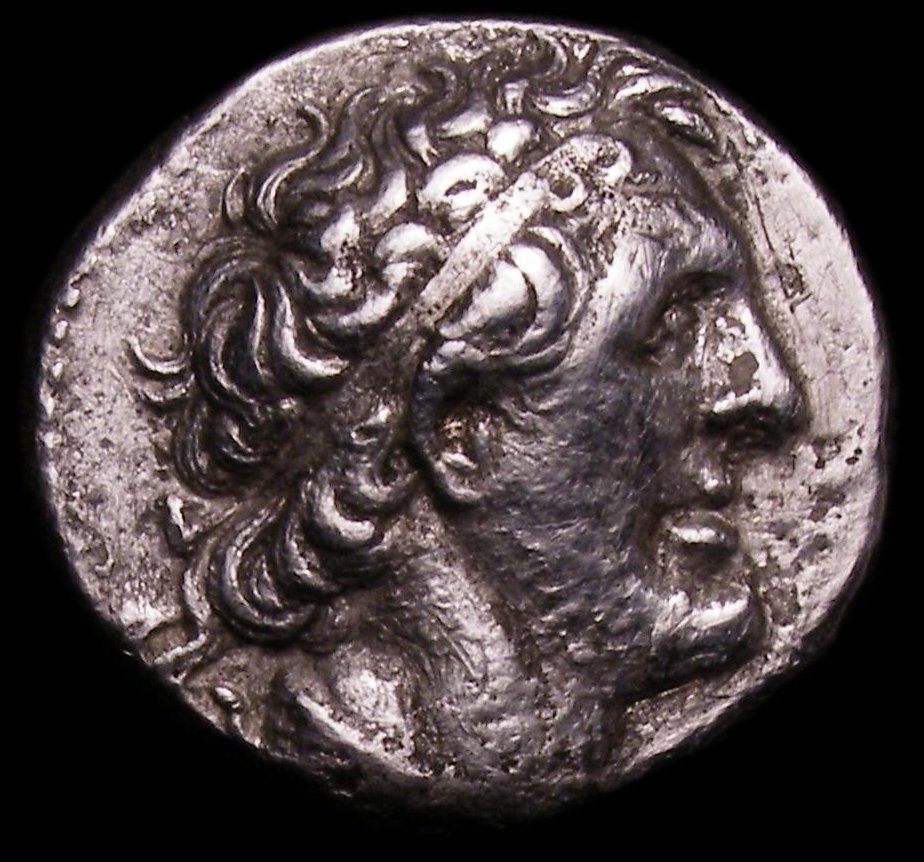
Fig. 1.30. Ptolemy XII Auletes, king of Egypt, who was also Mithridates VI Eupator, Ariarathes IX of Cappadocia, Simon Boethus/Magus/Ptolemy (Alexander) bar Menneus, et.al. Mithridates VI married his sister Laodice—just as Ptolemy XII married his sister Cleopatra V. Both had daughters named Cleopatra who ruled (Cleopatra VII and Dynamis).
The connection between Simon Boethus/Magus/Ptolemy XII Auletes/Ptolemy (Alexander) bar Menneus and Julius Caesar is obviously through his daughter Cleopatra whom Julius Caesar/Asander married. Using Josephus as a source, Antipater the Idumean’s son King Herod was married to Simon Boethus’s daughter Mariamme and Antipater the Idumean saved Julius Caesar’s life during the Battle of the Nile (47 BC). As a reward, Josephus claims that Julius Caesar adopted King Herod’s sons (Simon Boethus’s grandsons) Aristobulus IV (Vespasian’s grandfather 19, Alexander (son of king Herod) aka Alexandros III aka Juba II, Herod Antipas the Tetrarch, Archelaus, and Philip and raised them in Rome, in the household of Gaius Asinius Pollio which was the same household that Caesar Augustus was raised in (Josephus, “Antiquities of the Jews”, Book 15, Chapter 2. Josephus, “Antiquities of the Jews”, Book 17). This is untrue and those kids were his biological sons. It is also untrue that Alexander, son of King Herod, was killed by his father Herod, Josephus even has a story about a ‘spurious Alexander’ that showed up in Rome claiming to be the son of Herod who faked his death 20, so he was ‘resurrected’ as Juba II, king of Numidia and Mauretania.
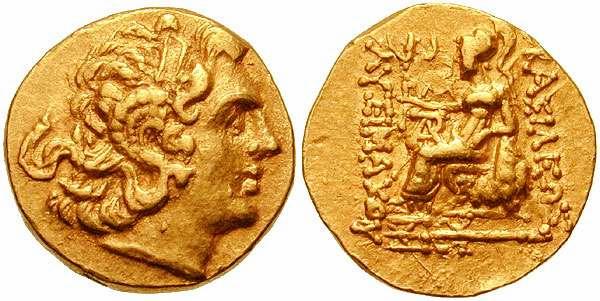
Fig. 1.31. Coin depicting Mithridates VI Eupator, father of Pharnaces II and Dynamis. Brother of Mithridates Chrestus. Notice the star and crescent that is visible in the Julius Caesar coin above and the winged Pegasus within a Dionysiac wreath of ivy and fruit that is seen in the Asander coin?
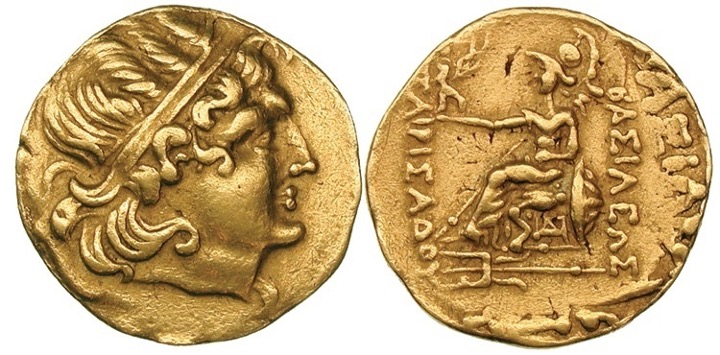
Fig. 1.32. Coin depicting Pairisades V, king of Bosporus
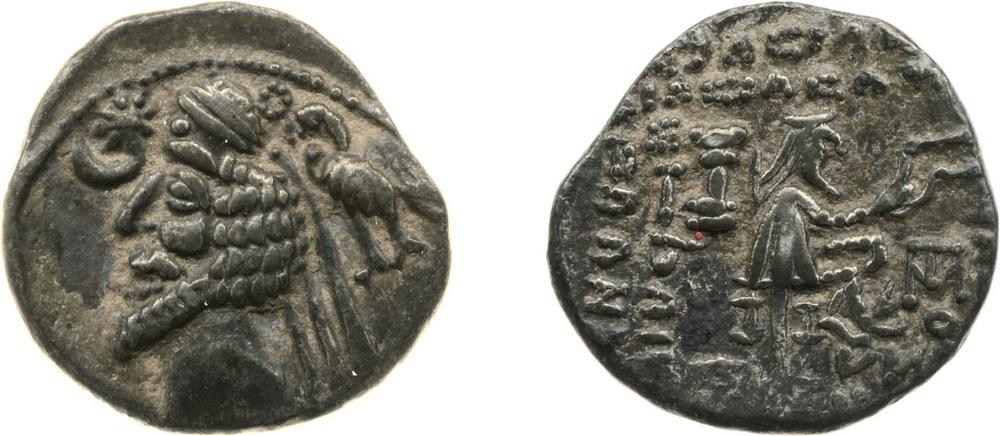
Fig. 1.33. Coin depicting Phraates IV, king of Parthia (Per-aa or Per-Nesu is a corruption of Pharaoh). Notice the star and cresent?
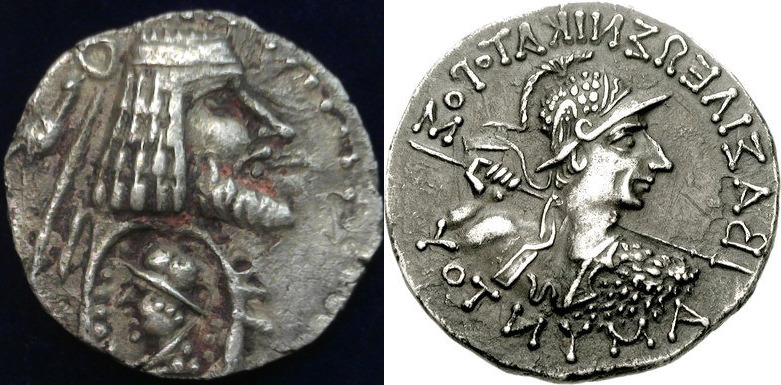
Fig. 1.34. L. Coin depicting Phraates IV of Parthia that also shows his son. Compare his sons depiction to the image of R. Amyntas Nikator, king of the Greco-Bactrian Kingdom. These above two coins connect the Bosphoran Kingdon to Bactria.
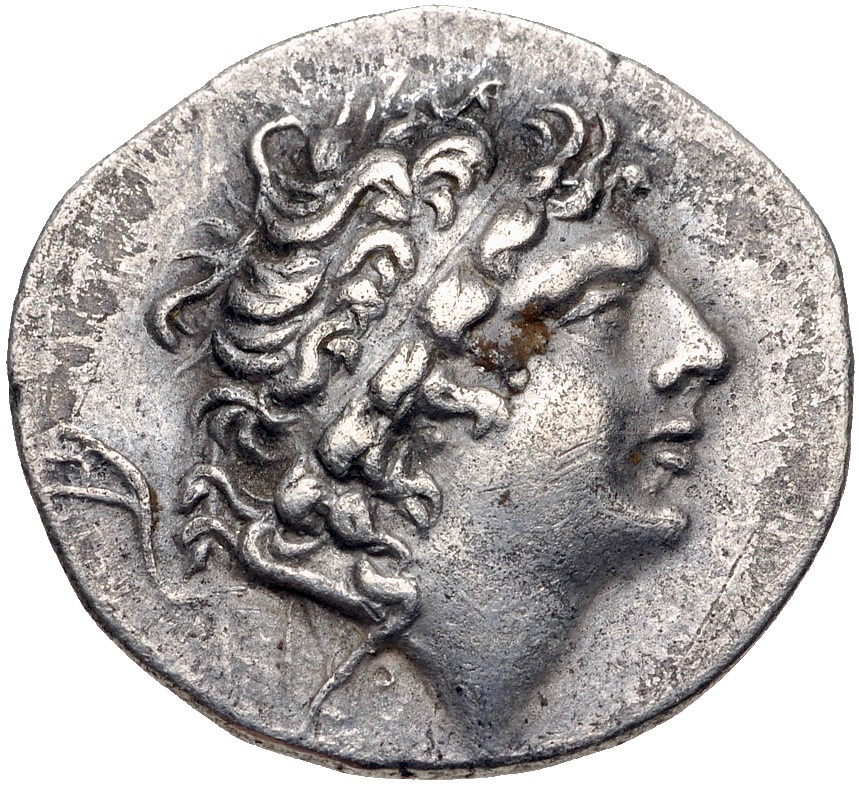
Fig. 1.35. Coin depicting Ariarathes IX Eusebes Philopator, King of Cappadocia (Central Anatolia/modern Turkey). He was the son of Mithridates VI Eupator of Pontus. Ariarathes IX Eusebes brothers were named Cyrus, Xeres, and Darius. His sisters were named Cleopatra and Mithridates. In Chapter 8.2. I write that the’Achaemenid’ Persian Empire is a phantom empire. it is a back projection of the Parthian Empire. Cyrus and Darius were composite characters based on the sons of Mithridates VI Eupator\
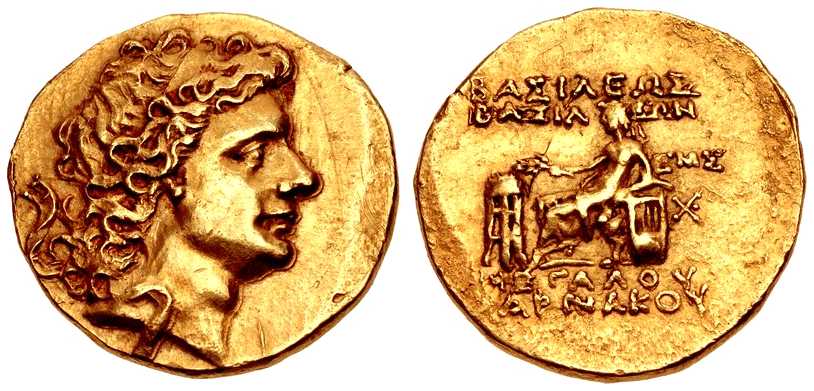
Fig. 1.36. Coin depicting Pharnaces II (“Pharao-Nikes”, or “Victorious Pharaoh”) who was another son of Mithridates VI, king of Pontus. He was the king of the Bosporan Kingdom and the Kingdom of Pontus. At the Battle of Zela (47 BC) Julius Caesar defeats Pharnaces II and coins the phrase “Veni, Vidi, Vici”. Pharnaces II flees and is killed by his own governor, Asander, who then becomes King of the Bosporus. This was not a succession; it was an avatar switch. Pharnaces II called himself “King of Kings” on coinsas Asander did.
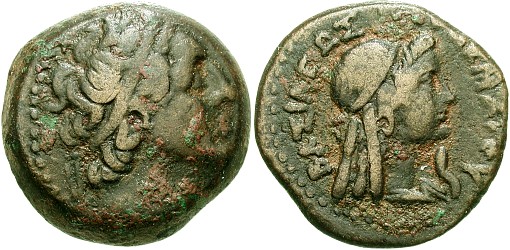
Fig. 1.37. Coin depicting Ptolemy Apion, king of Kyrene, Kyrenaica, North Africa.
5.3.2. Ptolemy XIII Theos Philopator aka Gaius Octavius (Emperor Augustus) aka Rhoemetalces I
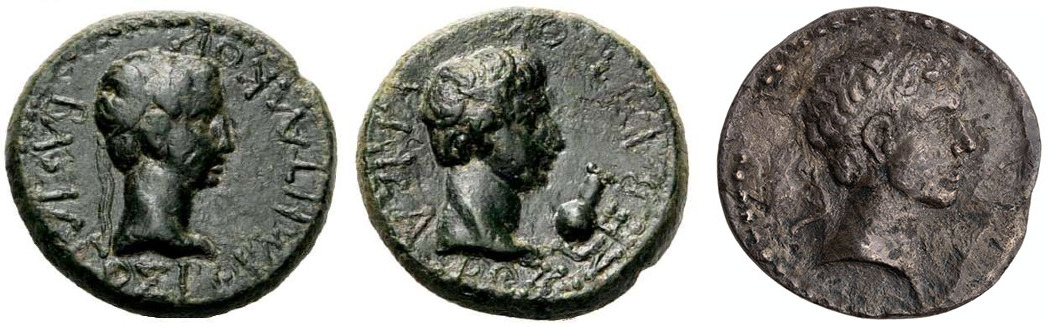
Fig. 1.38. L. Rhoemetalces I, king of Bosphorus. M. Emperor Augustus (Octavian). R. Marcus Antonius Polemon I, king of Pontus.
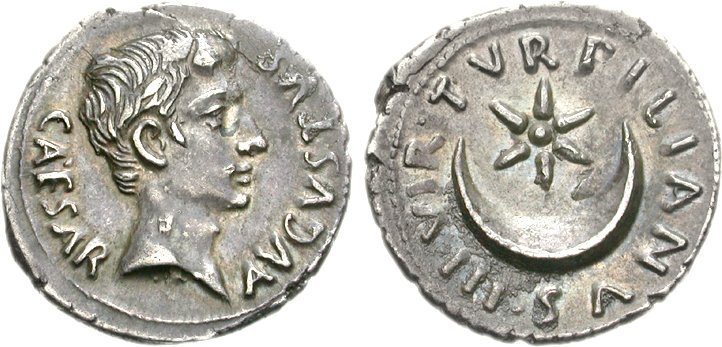
Fig. 1.39. L. Coin of Gaius Octavius (Emperor Augustus) that shows the star and crescent
Augustus was not a name. It was a title. The title Augustus was translated into Greek as Sebastos. Related to the Thracian deity Sabazios. Sabazios -> The “-zios” suffix is a divine marker (like in Zeus). The core is Saba- or Saba-zd-. In Greek pronunciation, the ‘b’ (beta) was a voiced bilabial fricative (like a ‘v’), so it could shift. Sabazios is where the Hebrew Sabaoth (“Lord of the Hosts”) comes from.
Zalmoxis was another name of Sabazius, the Thracian version of Zeus. Also, Zalmoxis or Zalmox or Zalmos can also be pronounced Salmos which is very close to the Aramaic and Hebrew pronunciation of Solomon.
He was also Rhoemetalces I, king of Bosphorus. Talces = the Thracian word for “king” or “ruler”. Rhoemetalces = “king of Rhome”, or “king of Rome” in ancient Thracian.
Bazus is the direct truncation of “Sabazios”. It’s the royal, dynastic form of the god’s name. Bazus is at the root of the title Monobazus.
Sebasteia or Sebastē was also a city in the heart of the Pontic-Bosporan kingdom.

Fig. 1.40. He was likely also Herod Philip son of King Herod (Ptolemy XII Auletes aka Mark Antony aka Mithridates VI Eupator). “Philip” means “Lover of Horses”—the Scythian/Sarmatian royal attribute (Source: https://www.imj.org.il/en/collections/539562-0)
Alexander the Great was either the son of Ammon Zeus or Sabazios. However, there’s no difference between them. Ammon Zeus means Hidden Zeus. Who is this? Hades. Hades and Osiris had the epithets Hidden (as did Cronus, and Kubera) or Invisible. Alexander Hislop also wrote that Nimrod was associated with the hidden god.
Sabazios was Serapis (Serapis = Sabazios (Osiris + Apis or Šar Apsi - King Apsu = Enki-Ea)). The Sabazios cult was the Serapis cult targeted at the Thracians.
5.3.3. Amyntas Nikator aka Amyntas, King of Galatia
Amyntas Nikator (Latin Invictus which links him to Sol Invictus) aka Amyntas of Galatia 21 aka Jesus ben Fabus aka Isa Amen (Jesus was named “Amen” in Rev. iii. 14 and Amen links to Egypt through the name of the pharaoh Amenhotep). Amyntas’s father was not Bogitarus. That is a later, localized alias. His true father was Mithridates VI Eupator of Pontus (aka Ptolemy XII Auletes/Mark Antony/Herod). Mithridates VI Eupator’s father was Mithridates V Euergetes. Mithridates V Euergetes’s father was Pharnaces I of Pontus. Pharnaces I’s brother was none other than… Amyntas of Pontus. The name “Amyntas” is a family heirloom, used for a brother of the king. For “Mithridates VI” to have a son named “Amyntas” is perfectly consistent with dynastic naming patterns. He was not the son of a minor chieftain; he was a scion of the primary Dragon Bloodline. His brother and heir to the dragon throne was Ptolemy XIII Theos Philopator aka Gaius Octavius (Emperor Augustus) aka Rhoemetalces I.
Amyntas of Galatia’s mother was simply named Adobogiona. There was an “Adobogiona the Elder” who was a Galatian princess who was a recorded mistress of Mithridates VI Eupator, so it is safe to assume these two are the same woman. Her true imperial title was Cleopatra V Tryphaena of Egypt, the sister-wife of Mithridates VI/Ptolemy XII. This makes Amyntas of Galatia/Nikator the full brother of Cleopatra VII Philopator (Dynamis).
He was also Jesus ben Fabus aka Isa Amen. The gens Fabia (Fabus) was one of the most ancient patrician families in ancient Rome, but it is possible that the name Fabus may have been distorted by Josephus from Jesus ben Bagus. Amyntas was the son of Bogitarus. In Celtic and Persian “Bagus” means god. “Boga” in Persian also means god and in the name Adobogiona “Bog-“ means god in Celtic. In Latin Nikator translates to Invictus which liks him the the deity Sol Invictus. “Jesus ben Bagus” means “Jesus, Son of God”, or “Jesus, Son of The Lord”.
“Bagha” (Old Persian), “Baga” (Avestan), “Bhagavan” (Sanskrit) all mean “Lord”, a title for God. It enters Persian as “Baga” (as in the city Baghdad, “Given by God”). He is known in Indian sources as “Amita”, from which “Amyntas” derives, but also as “Moga” or “Maues,” the first Saka (Scythian) King in India. He was also associated with the Mên Askaênos cult of Antiochia Pisidia which echoes the name of the Indian king Asoka the Great.
Islamic tradition holds that Jesus (Isa) was a prophet born of the virgin Maryam, who did not die but was raised to heaven. “Maryam” is not a Jewish woman. It is a title for the Mari, the Scythian “Mother Goddess” worshipped by the Anatolian Celts. Amyntas, as the son of the Celtic princess Adobogiona, was literally the “Son of the Mari.” His “ascension” refers to his assumption of the “Hidden Lord” (Amen) kingship after a period of conflict.
Amyntas’s mother Adobogiona was a “Jewish Queen” and the “Celtic Goddess-Queen” at the same time, proving Jew: Iudii -> Ioudaioi -> Jew. The Iudii were originally Scythian-Celtic priests from Galatia who later became “Jews” under Alexandrian syncretism.
Amyntas was the brother of Ptolemy XIII Theos Philopator aka Gaius Octavius (Emperor Augustus) aka Rhoemetalces I and Alexander, son of King Herod aka Alexander Helios aka Juba II.
Amyntas ruled an empire that stretched from modern-day Turkey through India, but likely further as his reign coicides with the “Yellow Emperor” Zhao of Han, an archetype that he fits perfectly with.
His palace at Isauria refers to Isis (also known as Isa or Aset) who was the mother of Horus (Cleopatra identified herself with the Greco-Egyptian goddess Isis and in Egyptian mythology the son of Isis was Horus), and Jesus is called Isa in the Quran. -Ura is a city suffix so this makes “Isaura” (Isa-Ura) literally “Jesus City”.
Galatia = Galilee: The names are linguistically identical. “Galatia” is the Greek form of “Galilee.” His kingdom was the biblical “Galilee”.
This would mean that Mithridates VI Eupator of Pontus (aka Ptolemy XII Auletes/Mark Antony/Herod) was also Brogitarix, king of Galatia (Full name: Brogitaris (Brigatos) van (de) Celtes Trocmii:”Bogo-“ is related to the Proto-Celtic word “bog-“, which means “god” or “divine”. “-diatarus” could be connected to the Latin word “diatus”, meaning “divine” or “godlike”, the Old Irish word -tairx means “ lord”.”Van” or “de” is a preposition indicating “of” or “from”, which suggests that Brogitaris/Brigatos is the divine leader or a member of the Celtes Trocmii which refers to the Trocmi, a Celtic tribe that lived in ancient Galatia).
5.3.3.1 Was Amyntas Nikator aka Amyntas, King of Galatia the Living Esus?
The Celts in classical Galatia worshiped a deity called Aesus/Esus/Iesus. Amyntas, as the god king of Galatia would have been the personification of Esus. “Esus” from “Aisus (Thracian Jove-variant). Esus is the Celtic pronunciation of Aisus. The Scythian root is Aes-, the same as the Aesir and Aesar. “Iesus” is the Latin rendering of “Esus.” There was no “J” sound. He was always called Ie-Sus (Yay-soos), “The Esus.”
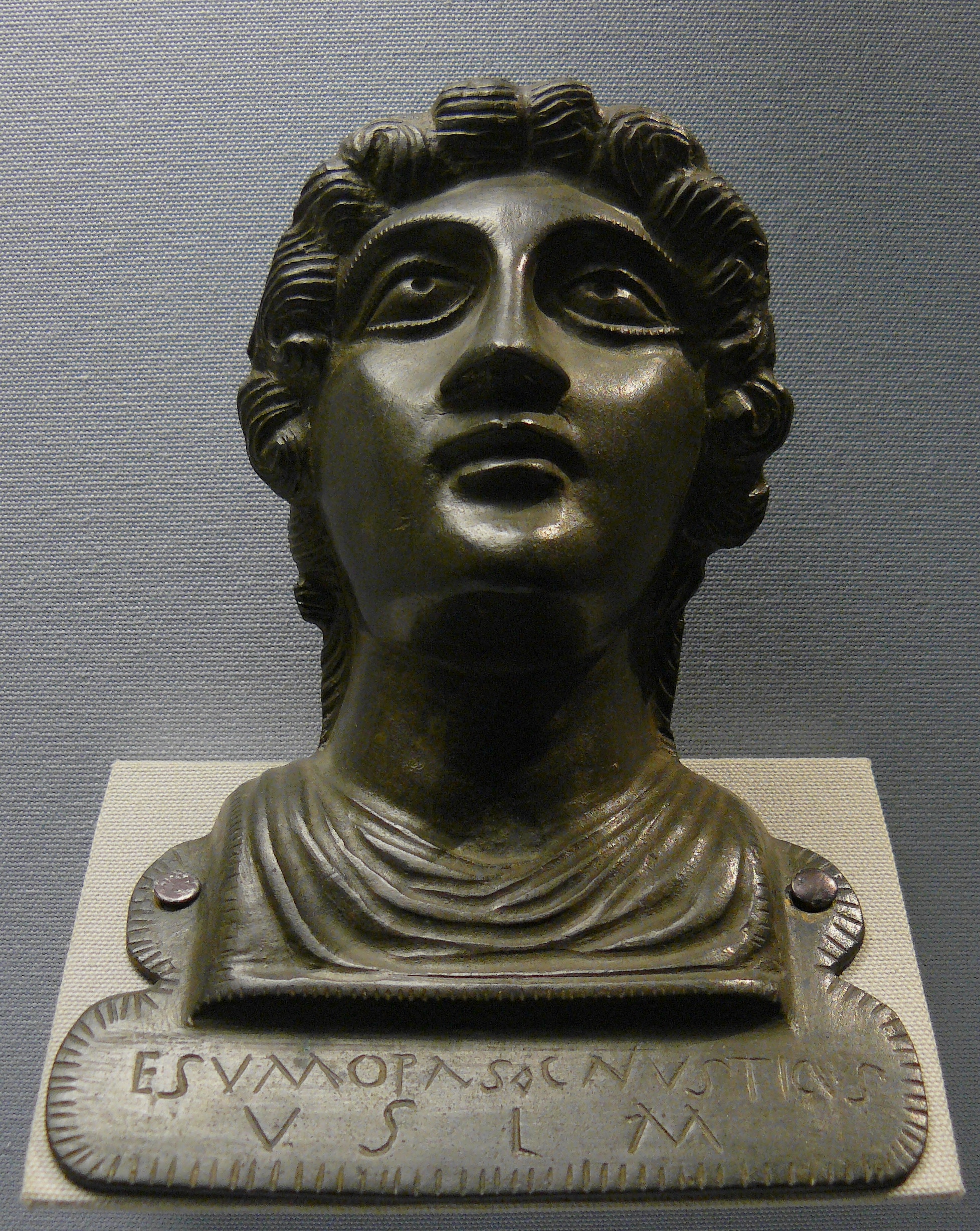
Fig. 1.41. Statue from classical Anatolia that is dedicated to “Esumopas Cnusticus”. Esumopas means “Slave to Esus”, and Esus means lord in Proto-Celtic. If you combine the Etruscan word “cnus” with the suffix “-ticus” or “-tic-“ you get a word that translates to “anointed one” or “consecrated one”, ie. a “Christ”. So, that inscription translates to: “Slave to Lord (Esus) Christ”. The “VSLM” inscription is an abbreviation for the Latin phrase “Votum Solvit Libens Merito” which translates to “He pays his vow willingly and with merit” or “He fulfills his vow with pleasure and deserving”, which is often found on Roman coins and other artifacts. Esus was crucified in mythology and his symbol was an axe, so he was associated with woodcutting, forestry, carpentry. Esus was also part of a “trinity” of Gaulish gods that included Taranis, Teutates and Esus.
The “Esus” cult was the Celtic-language version of the Serapis cult, rolled out under Amyntas. It follows the precise theological blueprint developed by the Alexandrian School for imperial control. The template is unmistakable: “Es” is the same root as “Aesir”, “Asa”, and “Osiris”. Divine Birth/Lordship: “Esus” from aisu (“lord”) mirrors “Serapis” from aser (“lord”) and “Christ” from Kristos (“anointed lord”). Crucifixion/Resurrection: Esus’s T-cross crucifixion parallels Attis’s pine-tree death, Osiris’s dismemberment, and Dionysus’s dismemberment by Titans. Sacrificial Symbolism: The labrys (double-axe) represents the same sacrificial logic as Mithras’s bull-slaying and Osiris’s grain symbolism. Trinitarian Structure: Esus-Taranis-Teutates mirrors Osiris-Isis-Horus, Serapis-Isis-Harpocrates, and the Christian Trinity.
Like Serapis, Esus represents a deliberate syncretism—in this case, merging the Celtic god of the axe with the Phrygian Attis (dying-and-reviving god) and Thracian Sabazios (Thracian horseman god, another form of Zeus). The dominant local Anatolian deity would have been Attis and Esus was the deity of the Gauls who settled in that area.
The “Esumopas Cnusticus” inscription proves this was a state-sponsored imperial cult, not organic Celtic religion. The original Esus was a warrior. The new, syncretic “Esus Christos” was a god who was crucified on a T-shaped tree (a clear parallel to the Tau cross). The message to the fierce Galatian Celts was: “Your god is not a warrior, but a sacrificial victim. True strength is in submission, sacrifice, obedience, and turning the other cheek”.
5.3.4. Alexander, son of King Herod aka Alexander Helios aka Juba II
Cleopatra aka Dynamis’s son with her father Mark Antony 22 (aka Ptolemy XII Auletes aka Polemon Pythodoros, King of Pontus, prince of Pontus aka King Herod aka Tiberius Claudius Nero aka Phraates IV of Parthia) was Alexander Helios aka Alexander (son of King Herod) aka Juba II who was married to his twin sister Cleopatra Selene II aka Queen Thea Muse Ourania. Juba II of Mauritania’s full name was Gaius Iulius Iuba, prenomen and nomen after his adopted father Gaius Iulius Caesar, and ‘Iuba’ is likely a diminutive of ‘Iehuva’ which traces to Jove/Jupiter. He was the claimed royal heir of the Massylii tribe, which is the ‘Messiah’ lineage from David’s firstborn son with Saul’s daughter Michal (one way to prove that Mark Antony was also King Herod is through the equivalence of Alexander Helios aka Alexander (son of King Herod) aka Juba II).
Alexander Helios’s father was Mark Antony who officially was declared Neos Dionysus (the “New Dionysus”), a dying-and-reviving god. His mother, Cleopatra VII, was the New Isis, the mother goddess. Therefore, Alexander Helios was, in the state religion of the Ptolemaic-Roman East, the literal divine son of a god and a goddess. This is the precise theological template for the Christian “Son of God”.
At the Donations of Alexandria, he was given the title of “King of Kings”. His parents also made him ruler of Armenia, Media, Parthia and any countries yet to be discovered between the Euphrates and Indus Rivers, despite the fact that most of this territory supposedly stood outside of their control at that time
Alexander, son of King Herod and Juba II were both married to Glaphyra of Cappadocia. Alexander Helios was married to his twin sister Cleopatra Selene II, Queen of Mauretania, who was also married to Juba II.
Alexander, son of King Herod, was allegedly killed by his father Herod, but Josephus even has a story about a ‘spurious Alexander’ that showed up in Rome claiming to be the son of Herod who faked his death, so he was ‘resurrected’ as Juba II, king of Numidia and Mauretania.
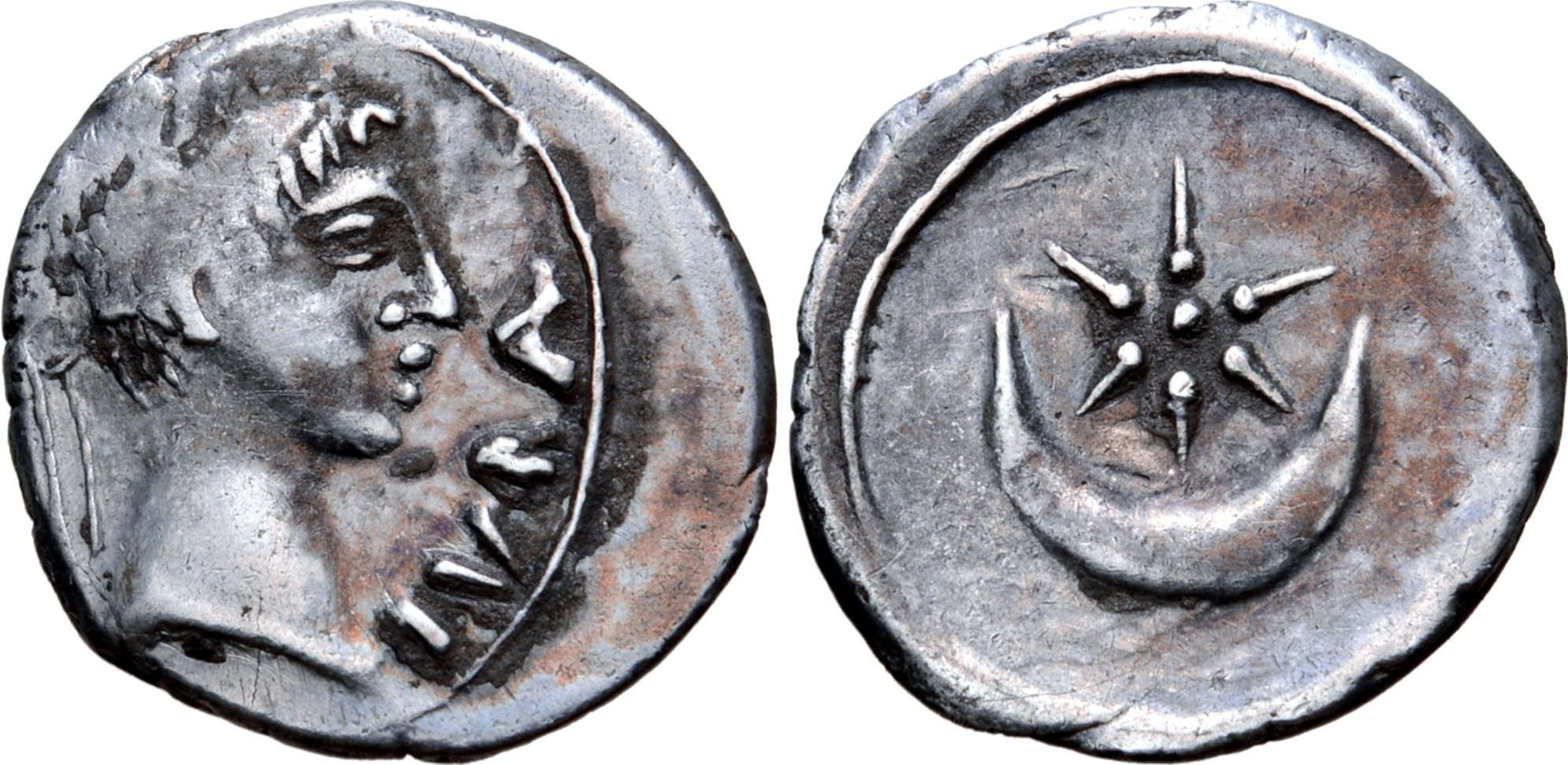
Fig. 1.42. Coin of Juba II that shows the Star and Crescent that is also on Asander, Julius Caesar, Dynamis and Cleopata’s coins
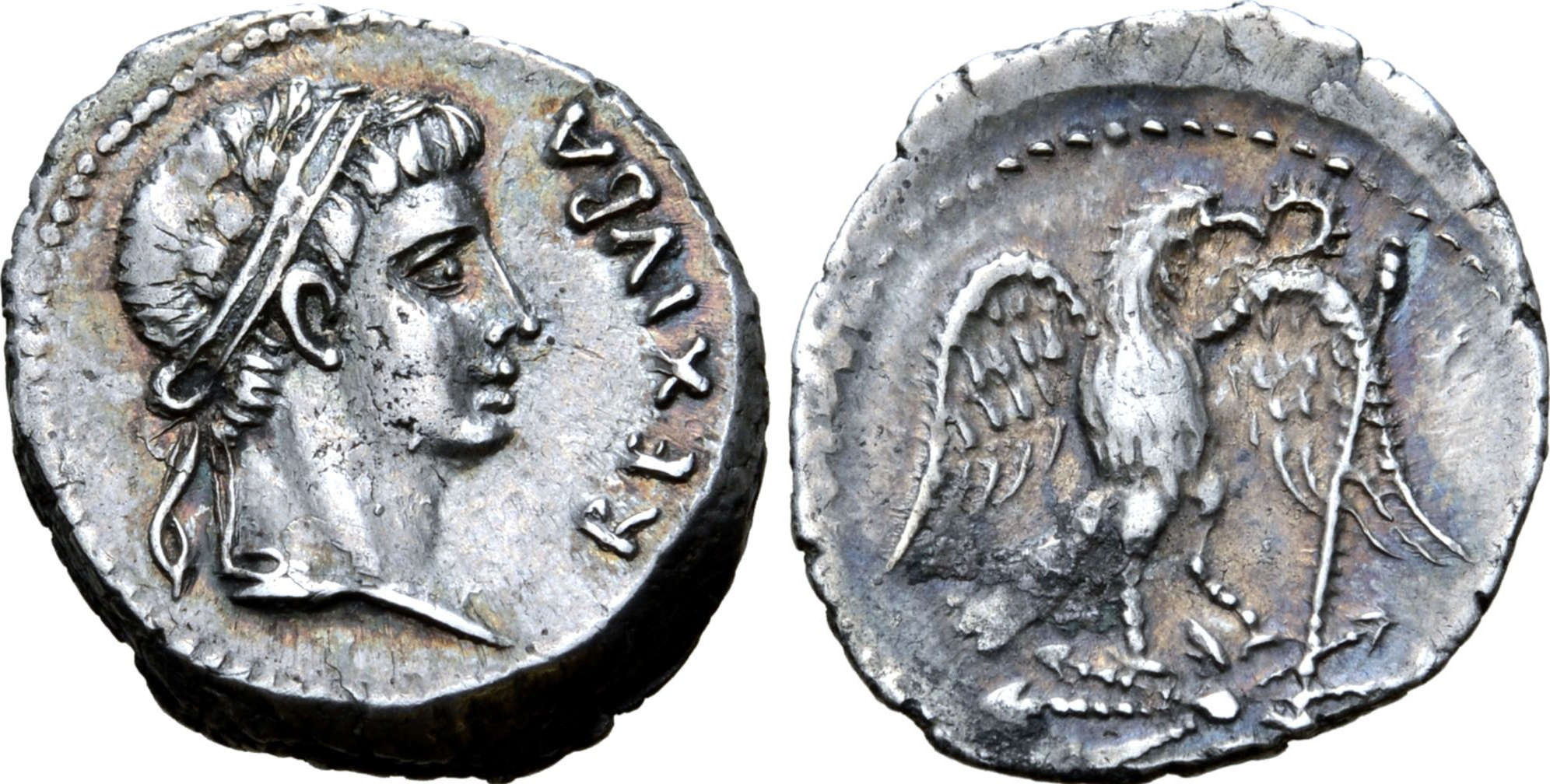
Fig. 1.43. Coin of Juba II that shows the Roman Aqullia – the supreme millitary symbo of Rome whicn also appeared on Ptolemaic coins.
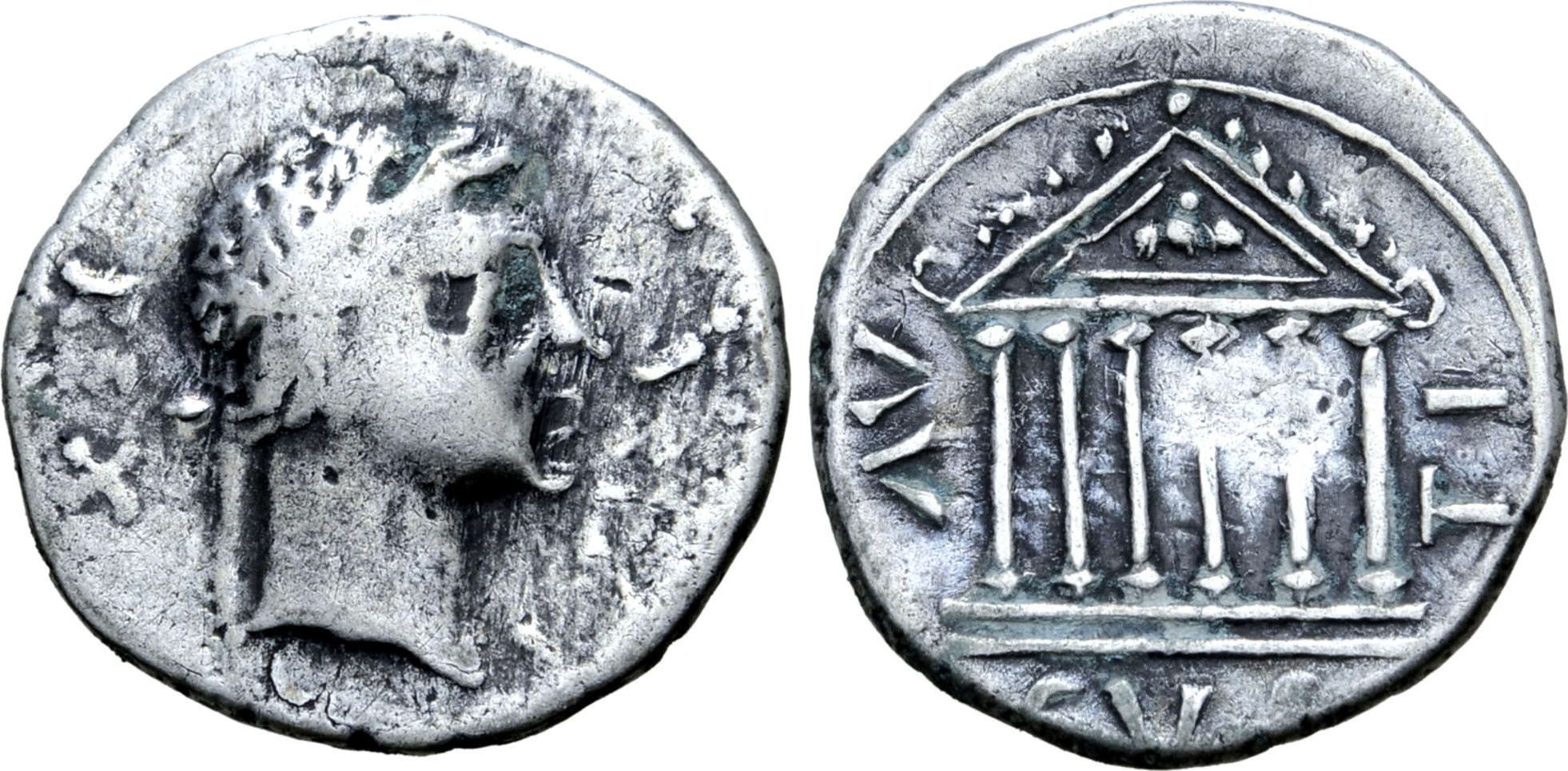
Fig. 1.44. Coin of Juba II that shows the temple that appears on Herod Phillip and later Simon bar Kokhba’s coins.
I identify Cleopatra’s brother-husband Ptolemy XIII Theos Philopator as Gaius Octavius (Emperor Augustus) (aka Polemon I of Pontus. Gaius Julius Sohaemus of Emesa. Rhoemetalces I, king of Bosphorus). Rhoemetalces Philocaesar of Pontus was the son of Marcus Antonius Polemon Pythodoros who was married to Pythodoris I (Cleopatra). Polemon I of Pontus was married to Dynamis (Cleopatra). Cleopatra was married to her brother Ptolemy XIII Theos Philopator who was born at the same time as Augustus. He was her brother husband. Asander was also married to Pythodoris I and Dynamis proving these were Cleopatra’s aliases. So, was Alexander, son of King Herod aka Alexander Helios aka Juba II also emperor Augustus? If not, he was his brother, as well as, the brother of Amyntas Nikator aka Amyntas, King of Galatia.
Was he also Jesus ben Panthera? “Panthera” is a Hellenized corruption of “Ptolemaios” (Ptolem -> Ptol -> Panther). “Jesus, son of Ptolemy”. The Talmud (Bereshit Rabbah 46:10) calls Izates and Monobazus the “Sons of Ptolemy”.
5.3.5. The Successor Generations
Cleopatra aka Dynamis’s son with Mark Antony = Ptolemy Philadelphus who was Sampsiceramus I?
Mark Antony’s son with Livia Drusilla = Emperor Tiberius Julius Caesar Augustus (one way to prove that Mark Antony was both King Herod and Tiberius Claudius Nero is through the equivalence of Doris the first wife of Herod the Great and Livia Drusilla the second wife of Octavius/Caesar Augustus (the Greek name Doris is a transliteration of the Roman Drus-us). Augustus was first married to Scribonia, but was divorced and he became engaged to Livia Drusilla (Doris), who was at the time pregnant, not by Augustus but by her own first husband Tiberius Claudius Nero, praetor of 41 BC and son of another Tiberius Claudius Nero, praetor of 62 BC).
Cleopatra aka Dynamis’s grandson with Mark Antony = Alexander (grandson of King Herod) aka Gaius Julius Alexander, Herodian Prince of Judaea aka Alexander Lysimachus aka Alexander the Alabarch aka Tiberius Julius Alexander Major aka (King/Tetrarch) Ptolemy (Alexander) bar Menneus aka Ptolemy of Mauretania (aka ‘Joseph Panthera’, the name for jesus’s father in the Talmud; Panthera is a corruption of Cantheras, or Cleopatros) aka Phraates V (the “King of Kings”) aka Monobazus I King of Adiabene, who was married to his sister Cleopatra (Thea Philopator) of Mauretania aka Cleopatra IX aka Pythodorida Philometor aka Helene aka Drusilla of Mauretania aka Julia Ourania of Parthia aka ‘Philo of Alexandria’ (aka Julius Philo, of the Julia gens, because she was the adopted granddaughter of Julius Caesar). She was also Claudius and Nero’s secretary Pallas and Vespasian’s first cousin and mistress Antonia Caenis. “The full name of Pallas was Marcus Antonius Pallas, with the Antonius part being an obvious sign of descent from Mark Antony and that Pallas wasn’t a random slave. (Philo’s hebrew name was Yedidia which means”beloved of God”, or”friend of God”, which is the same as Theophilos in Greek. Around 26% of the New Testament was written to Theophilus in Luke and Acts of the Apostles).
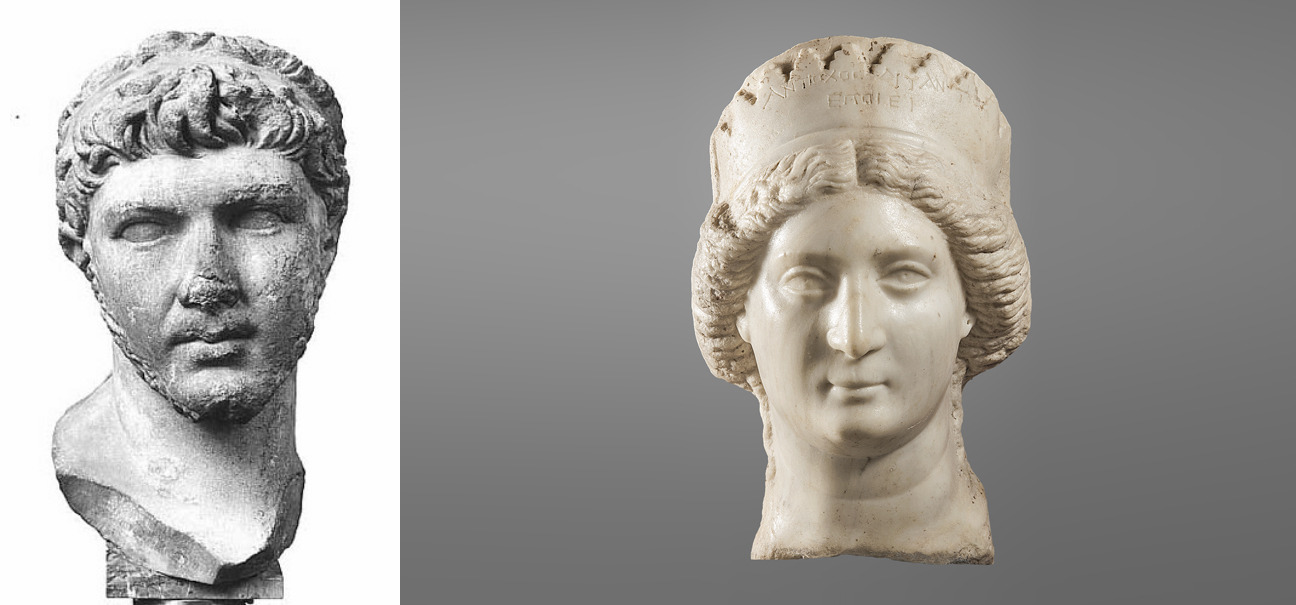
Fig. 1.45. (L) Alexander (grandson of King Herod) aka Gaius Julius Alexander, Herodian Prince of Judaea aka Alexander the Alabarch aka (King/Tetrarch) Ptolemy (Alexander) bar Menneus aka Ptolemy of Mauretania aka “Jesus” in the bible. (R) Cleopatra (Thea Philopator) of Mauretania aka Cleopatra IX aka Pythodorida Philometor aka Helene aka Drusilla of Mauretania aka Julia Ourania of Parthia aka Alexandra bat Mattathias (Matityahu is the Hebrew form of Mattathias, which itself is a variant of Mithridates (“Given by Mithra”)) aka “Philo of Alexandria”.
5.3.6. Izates II, King of Adiabene
Alexander (grandson of King Herod) and his sister-wife Cleopatra (Thea Philopator) of Mauretania had two sons: Tiberius Julius Alexander aka Arrius Calpernius Piso aka Arrius Varus aka Tiberius Julius Cotys (In Thracian, ‘Cotys’ is related to the word ‘kotys’ which is a title that means ‘lord’) aka Emperor Nerva, and Marcus Julius Alexander aka Yeshua Cleopatros (Cantheras/Panthera) ben Josephus bar Menneus aka Ma’nu of Adiabene/Edessa aka Ptolemy aka Yakov Zu Tolomoy aka Izates aka Jesus Emmanuel aka Monobazus of Adiabene 23
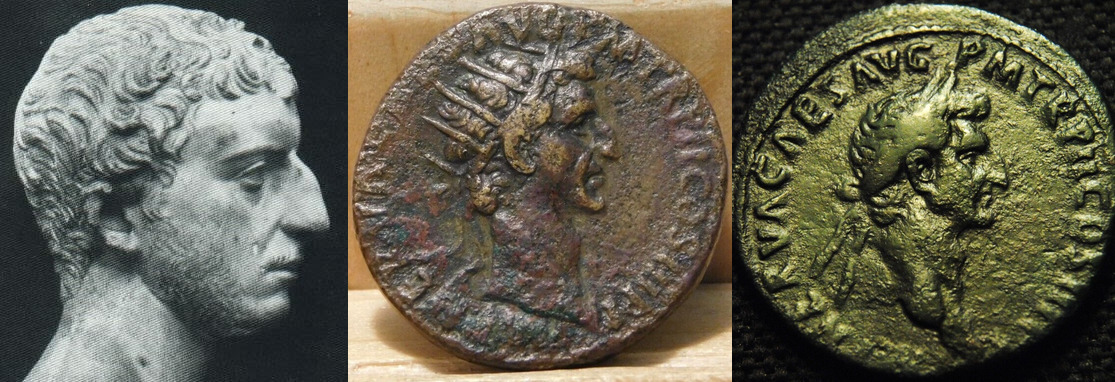
Fig. 1.46. ‘Josephus’ bust which I identify as Tiberius Julius Alexander. Compare it to Nerva’s depictions. So, ‘Josephus’ was Philo of Alexandria’s son. Tiberius Julius Alexander’s son was named ‘Philopappos’ and one of his mother’s aliases was ‘Alexandria bat Matthias’ (Matityahu -> Hebrew form of Mattathias, which itself is a variant of Mithridates) which is where the pseudonym ‘Josephus Bar Matthias’ comes from. Also, drop the initial b and final s in the name “Bar Mathias” and you get (Joseph of) Arimathea (Aria (Aryan) + Mathea (from Mithra/Mattathias)).
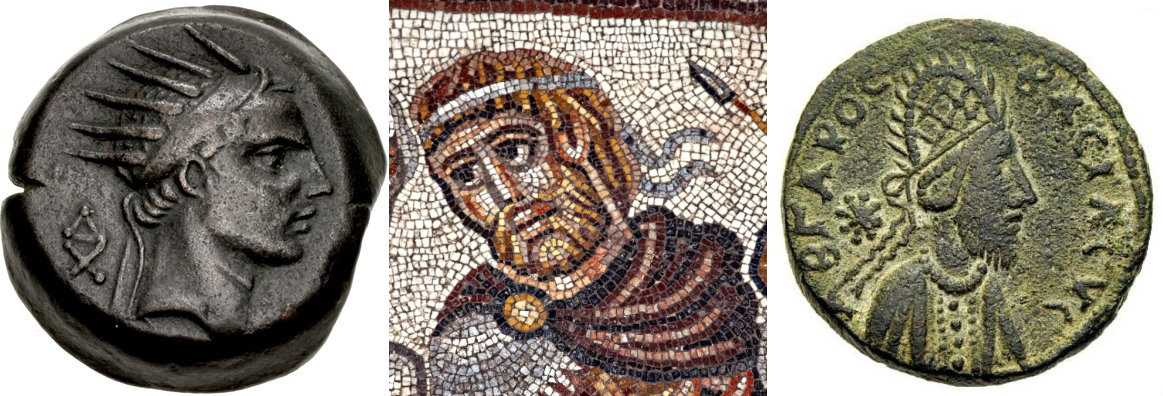
Fig. 1.47. (L) and (R) show King Izates Monobazus of Edessa (known in Greek as the “Kingdom of Ourania” or in English as the “Kingdom of Heaven”) wearing a crown of thorns. Izates or Izas is his title which is an ancient Greek translation of the Avestan word Yazatas (Persian: izad), meaning ‘lord’. He is one of the Jesus avatars, Isa in the Quran, and Sultan Ezid in the Yazadi (‘Iza’di) religion. He was the uncle of Tiberius Julius Sauromates II, King of Bosphorus. The middle image source: The Alexander Mosaic, Huqoq, Israel.
5.3.7. Tiberius Julius Sauromates II
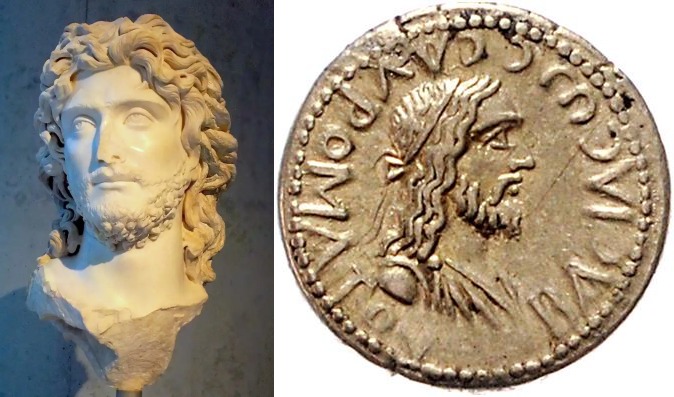
Fig. 1.48. Tiberius Julius Sauromates II, King of Bosphorus, who was the son of Tiberius Julius Cotys (aka Tiberius Julius Alexander aka Arrius Calpernius Piso aka Arrius Varus aka Emperor Nerva), great-grandson of Dynamis aka Cleopatra and Mark Antony. Does he look familiar? ΒΑCΙΛΕΩC CΑVΡΟΜΑΤΟΥ in the above coin translates to “King of the Sauromatians”. Sauromates is a Greek rendering of ‘Sarmatian’, referring to the Scythian tribe who came from the Pontic steppe. Sauromates has different meanings depending on the language. In Greek ‘Saur’ means ‘snake’ or ‘reptile’ and ‘mates’ means ‘man’ or ‘warrior’. Therefore, translated literally in Greek ΒΑCΙΛΕΩC CΑVΡΟΜΑΤΟΥ means “King of the snake people”, or “king of the dragon people”. In ancient Scythian/Iranian Saura = “sun” (cognate with Sanskrit Surya) and -matas = “ruler, lord”, so Sauromates translates to “Sun Lord” or “Sun King”. Also note that his father was Tiberius Julius Rhoemetalces and Rhoemetalces translates to “King of Rhoem” in ancient Tracian and at the root of Sauromates is “ROMA”? In Scythian, the root Roma or Ruma means “dragon” or “serpent” (Rome = “Place of the Dragon”). If Sauromatians or Sauromates originally connotated Rome/Rhome/Rum (Saromates: Sar- = King, -oma- = Rhoma, -tes = of = “King of Rome”?) then this would prove my theories beyond any doubt. He was the great (or great-great?)-grandson of Ptolemy XII Auletes aka Mark Antony aka Mithridates VI Eupator and his daughter Cleopatra aka Dynamis.
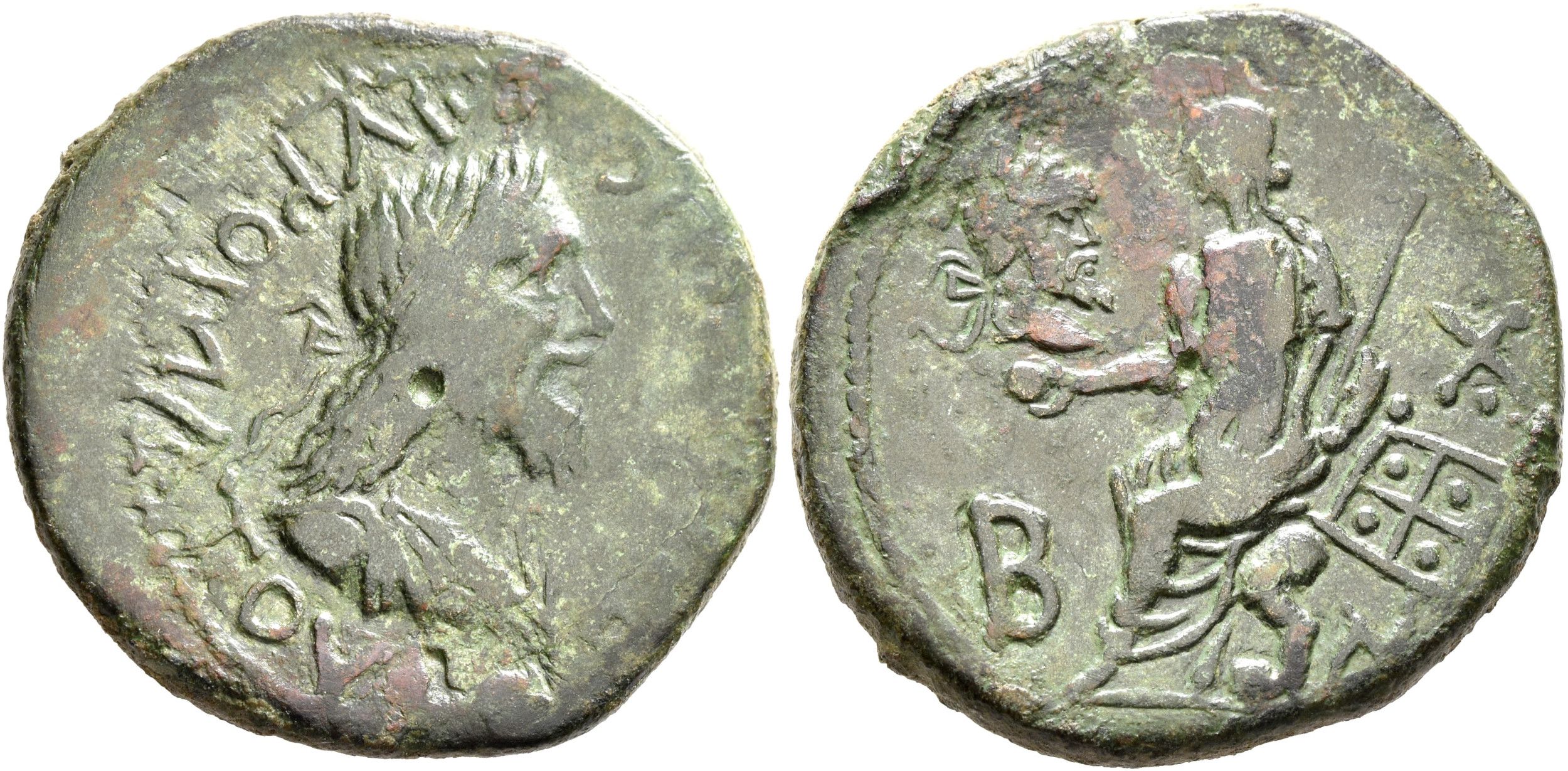
Fig. 1.49. Coin of Tiberius Julius Sauromates II that displays a cross in the right corner.
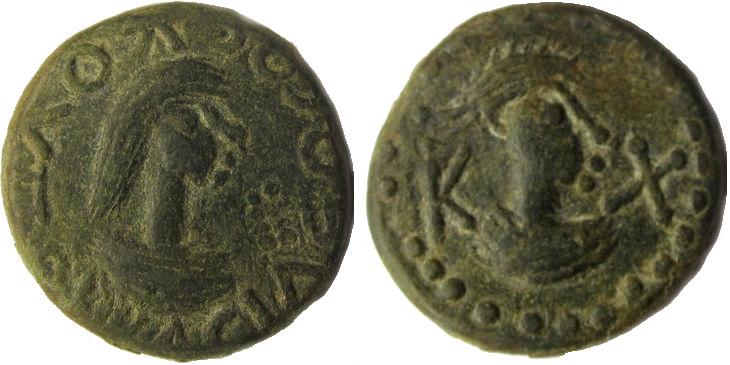
Fig. 1.50. Another coin of Tiberius Julius Sauromates II that displays a cross and what appears to be a crown of thorns (source: bosporan-kingdom.com/769-5139).
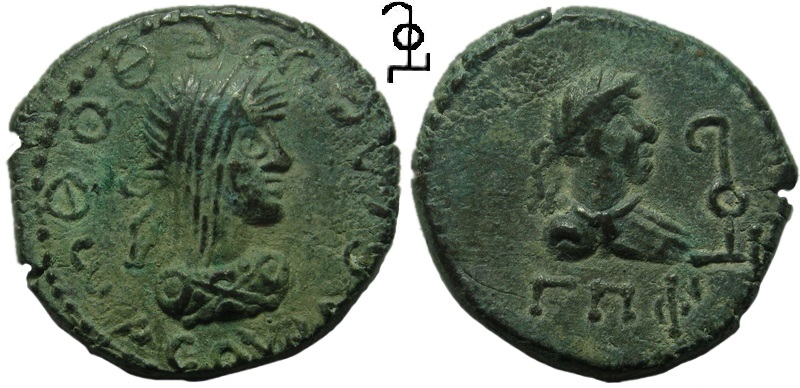
Fig. 1.51. Another coin of Tiberius Julius Sauromates II where he is wearing what appears to be a crown of thorns (source: bosporan-kingdom.com/731-4539).
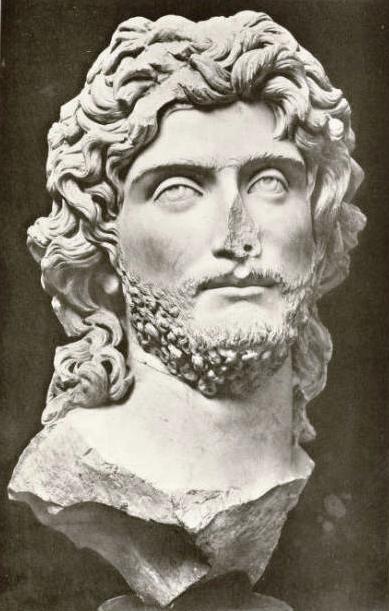
Fig. 1.52. Bust of Tiberius Julius Sauromates II found at the theatre of Dionysos, Athens. The bust depicts him emerging from a cluster of acanthus leaves at the base symbolizing resurrection. Acanthus leaves are one of the most potent symbols of resurrection in ancient Mediterranean art. Acanthus leaves symbolize rebirth, immortality, and the cyclical nature of life in art and architecture. Acanthus leaves are often used in Christian art to depict the resurrection of Jesus Christ.
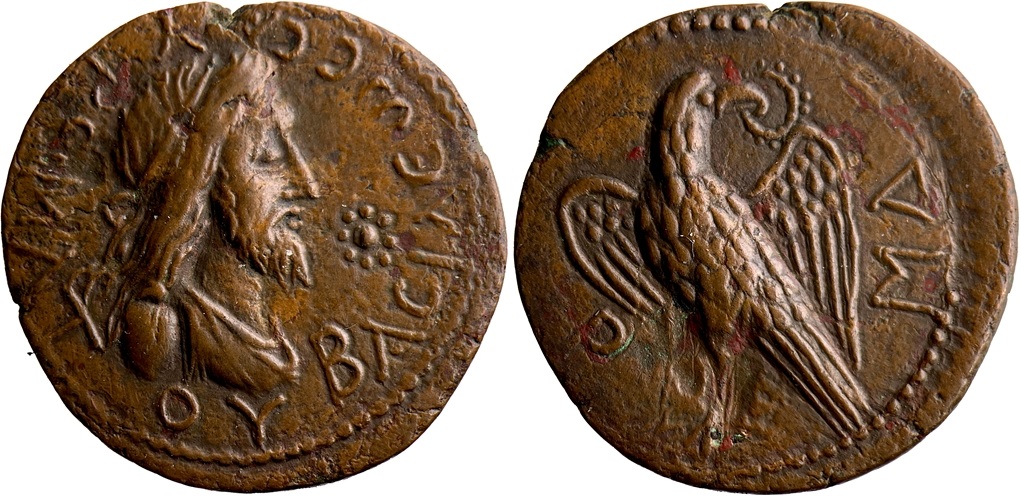
Fig. 1.53. Coin of Tiberius Julius Sauromates II displaying the sacred Roman Imperial Eagle (Aquila) — the supreme military symbol of Rome. No foreign king would be allowed to use the Roman Aquila — this was punishable by death. The Aquila was only carried by Roman legions and appeared on coins of Roman Emperors and Ptolemaic Pharaohs only. (source: https://bosporan-kingdom.com/618-4052/)
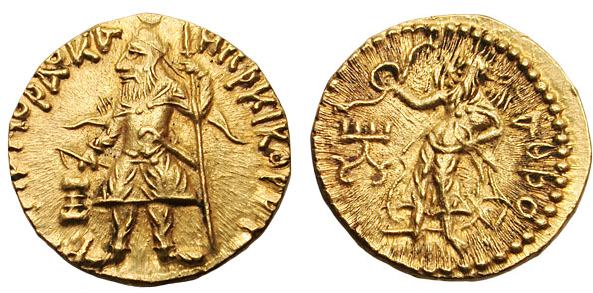
Fig. 1.54. Was the father of Tiberius Julius Sauromates II named Tiberius Julius Rhoemetalces also Kanishka I, also known as Kanishka the Great? (Kanishka = “Khan-Isha” (Kanishka = Khan Jesus (Khan = Scythian Kha’n (supreme ruler), from Ka-Sar (Dragon King), and Isha (ईश) = Sanskrit for “Lord, Ruler”). In the Quran, Jesus is Isa. In Aramaic, Isho. So Khan-Isha = “Lord Jesus” – the exact functional equivalent of Iesus Christus) was an emperor of the Kushan dynasty (modern day Afghanistan through India). This would mean that the Flavians only seized the western administration and rewrote its history. The eastern administration (Kushan) continued the old system for centuries. Kanishka I was the leader of the “Yuezhi” (“Iudii”/”Jove”) tribe.
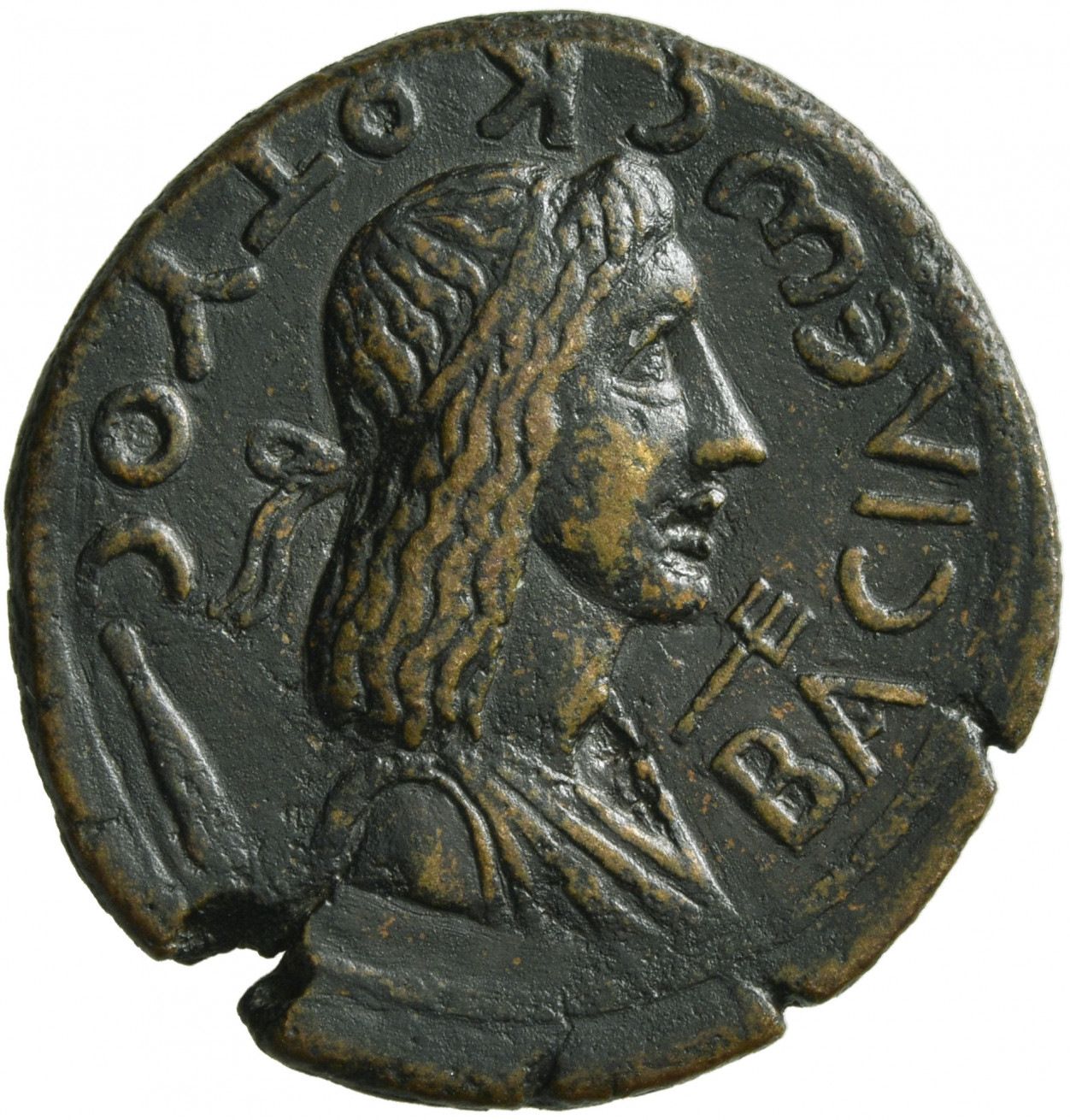
Fig. 1.55. Coin depicting Tiberius Julius Cotys II who was the grandfather of Tiberius Julius Sauromates II. Tiberius Julius Cotys II was the son of Tiberius Julius Sauromates I.
5.3.7.1 Simon Bar Kokhba
Tiberius Julius Cotys II was the grandfather of Tiberius Julius Sauromates II. Was he also Simon bar Kokhba? Bar Kokhba means “Son of the Star”. The star is the morning star (Venus), which is the symbol of the Julian house. That is the title of a Julian prince. The star iconography is prominent in coins of Tiberius Julius Sauromates II and his son Rheskuporis V and directly links to the “Star and Crescent” symbolism on the coins of Asander/Julius Caesar and Dynamis/Cleopatra. He led the Bar Kokhba revolt (132-136 AD) against Rome. As heir to the dragon crown he would have had a claim to the emperor position.
Bar Kokhba served as the state’s leader, crowning himself as nasi (lit. ’prince’) and rabbinic scholars in his time such as Rabbi Akiva believed him to be the long-expected Messiah. He died during the Roman capture of the fortress of Betar in 135 CE, and was possibly crucified.
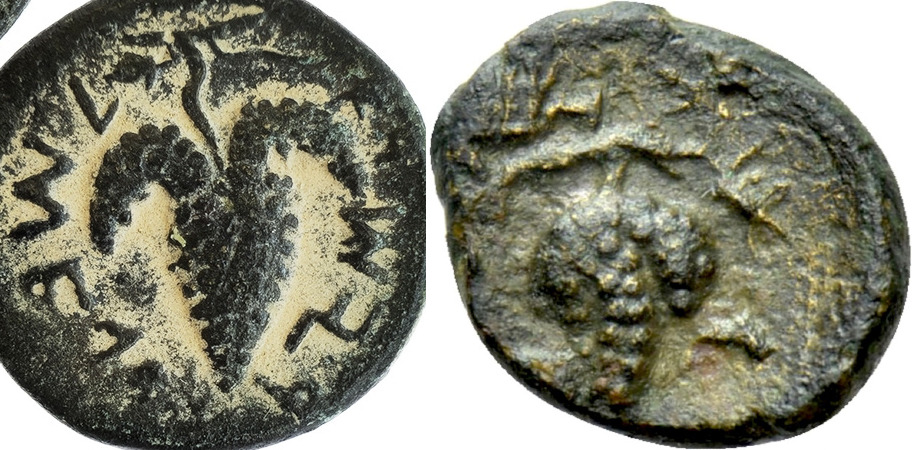
Fig. 1.56.L. Coin of Simon Bar Kokhba showing a vine and grapes. R. A coin of Thracian king Saratokos displaying the same vine and grapes. The vine and grapes are the symbols of Dionysus, the dying-and-reviving god of ecstasy, wine, and blood. Mithridates VI Eupator, the father of the Bosporan line, explicitly titled himself Dionysus. The Dionysian mysteries involved the consumption of wine as the god’s blood—the exact same sacrament later encoded in the Christian Eucharist (“drink this, for it is my blood”).
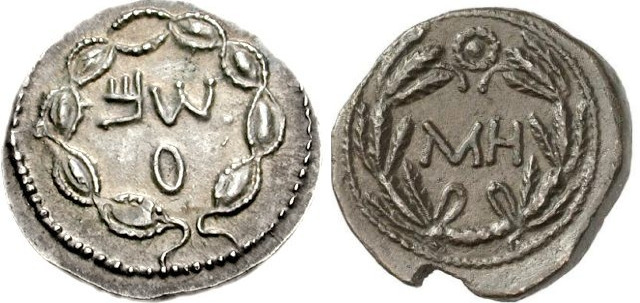
Fig. 1.57. L. Coin of Simon Bar Kokhba showing a wreath. R. A coin of Thracian king Kotys II showing the same wreath. This wreath also appears on coins of Sauromates I.
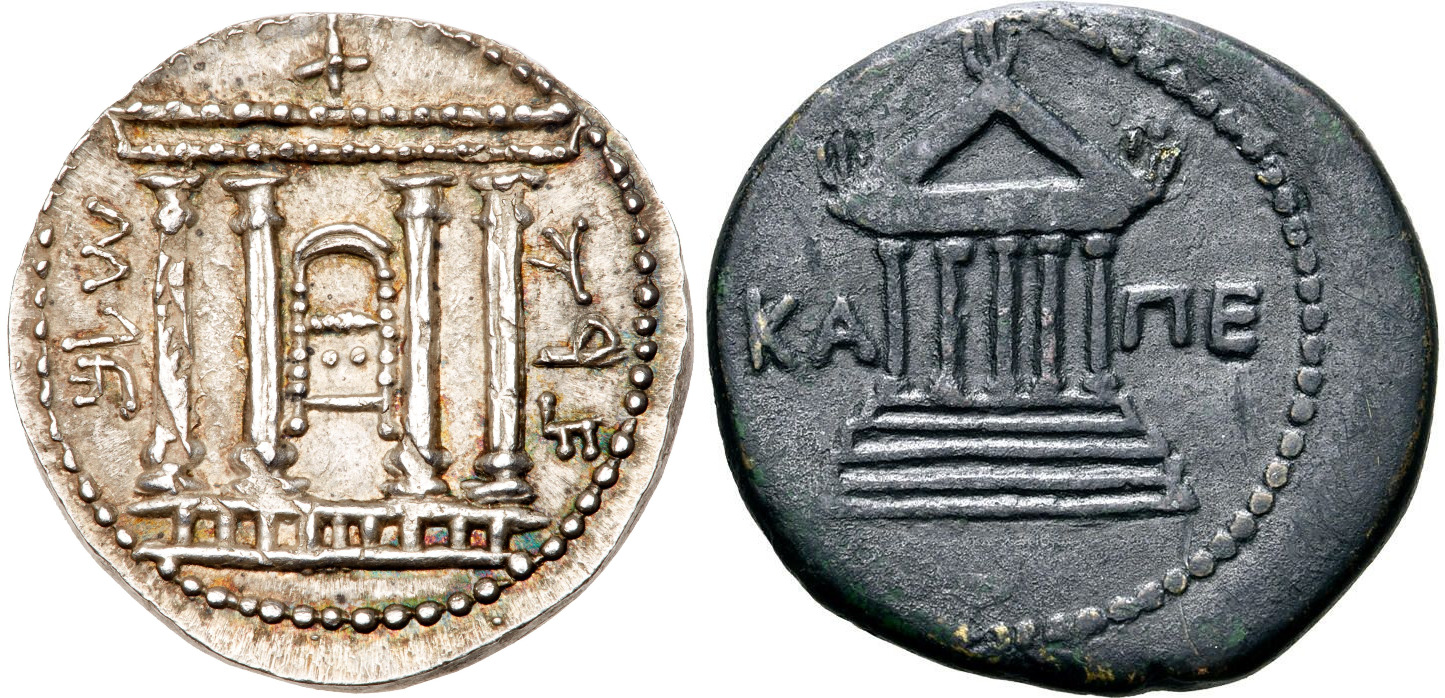
Fig. 1.58. L. Coin of Simon Bar Kokhba showing the same temple that appears on coins of Herod Philip son of King Herod and Juba II which indicates that they all held the same office (notice the cross above the temple?). R. Coin of Kotys II that also shows a temple.
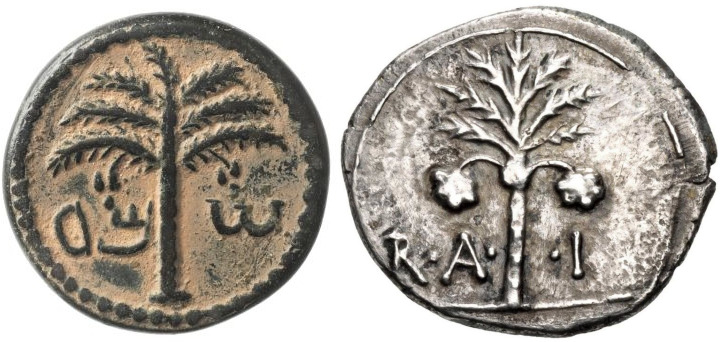
Fig. 1.59. L. Simon Bar Kokhba coin. R. Coin of Alexander (grandson of King Herod) aka Gaius Julius Alexander, Herodian Prince of Judaea aka Alexander Lysimachus aka Alexander the Alabarch aka Tiberius Julius Alexander Major aka (King/Tetrarch) Ptolemy (Alexander) bar Menneus aka Ptolemy of Mauretania that shows the same tree that shows up in Simon Bar Kokhba’s coins.
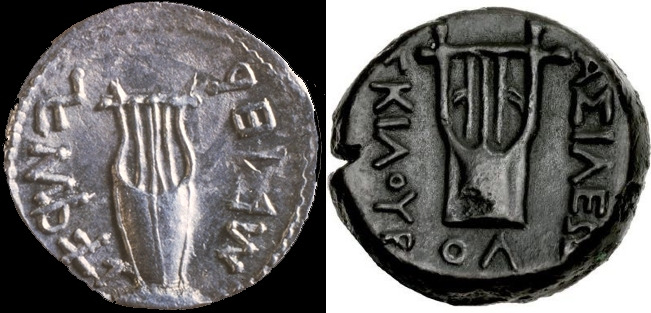
Fig. 1.60. L. Simon Bar Kokhba coin showing a kithara (Greek musical instrument). R. Coin of Scilurus, king of Scythia also showing a kithara.
Endnotes (Chapter 5)
(a) Apollonius of Tyre was married to the daughter of a king of Libya
(“Historia Apollonii Regis Tyri” or “The Story of Apollonius, King
of Tyre”), who was Cleopatra Selene aka Drusilla (aka Cleopatra
(Thea Philopator) of Mauretania aka Cleopatra IX aka Helene aka
Julia Ourania of Parthia aka Philo of Alexandria. Drusilla was the
wife of Azizus who was her brother Juba II (Alexander Helios aka
Alexander (son of King Herod)) aka Gaius Julius Alexander, Herodian
Prince of Judaea aka Alexander Lysimachus aka Alexander the Alabarch
aka Tiberius Julius Alexander Major aka (King/Tetrarch) Ptolemy
(Alexander) bar Menneus aka Ptolemy of Mauretania aka Phraates V
(the “King of Kings”) aka Monobazus I King of Adiabene).
24
25
So, Alexander aka Juba II was also Apollonius of Tyre. Juba II
carried the title “Rex Literatissimus” which can be translated as
“Most Learned King” or “The Most Scholarly King”. He was known as a
philosopher. These members of this royal family liked to role-play as philosopher kings. Is Apollonius of Tyre the same person as Apollonius of
Tyana? This would make Apollonius of Tyana the brother-husband of
Philo of Alexandria and the father of Josephus. These three created
the core of Christianity.
(b) The long hair of the Bosphoran kings was a Merovingian tradition. They had a prohibition against cutting the royal hair (Reges Criniti) because it was a genetic marker. The Sarmatian Alans and the later Scythian Goths of the Chernyakhov culture were known for bleaching their hair with lye to achieve the golden/R1a-red “Flavus” color. Cutting the hair was the ritual mutilation of a deposed Dragon King, severing his connection to the Khvarenah (Avestan: Divine Glory) which was believed to reside in the head and hair (cf. the biblical Samson, a clear retelling of a Scythian Nazarite warrior whose power is lost when his “serpent locks” are shorn). The Name Merovech: Merovech = Mari (Scythian Mother Goddess) + Vech (Gothic Weihs, “Holy/Sacred”). He is literally “Son of the Sacred Mari.” The legend of his conception by a Quinotaur (Sea-Bull) is a corrupted priestly code for Poseidon/Enki (the Serpent God of the Abyss, Šar Apsi), whose symbol was the bull (Apis). The Merovingians were the direct descendants of Juba II’s Atlantic fleet captains who established a continuity-of-government site in the Frankish lowlands before the Flavian purge.
6 Flavian Dynasty
Vespasian was also a great-grandson of Cleopatra and Mark Antony (King Herod). He was Herod Pollio aka Herod Agrippa I, grandson of King Herod’s son Aristobulus IV. Vespasian was his title, not his name Vas/Bas was the royal abbreviation for the Greek word Basilius which = King. Ves‑ is also a contraction of Vah‑ / Bah‑, an honorific prefix (cf. Bahram, Vahram). Pas‑ is exactly the Paisa/Pahlav root, plus the adjectival suffix ‑ianus (“belonging to”). Thus Vespasianus = Ves‑pasianus = “Lord of the Pasa (Parthians)” or “King belonging to the Pahlav clan” (another option: Vas/Bas was the royal abbreviation for the Greek word Basilius which = King, and Pas means “all” as in Pan. “Vespasian” = “King of All”, or “King of Everything” which is a claim to the title “King of Kings”) 26).
Vespasians’s mother was Vespasia Pollo. Pollio derives from Ptolemy, or Polemon. The hypocoristic (pet‑name) form of Ptolemy in Greek was Ptollion. In Latin, that became Pollio (the initial Pt‑ was simplified to P‑, as happened with many Greek loanwords). Ptolemy and Polemon are regional pronunciations of the same Dragon‑King title. In the bible Ptollion was a leader of the Pharisees during the 1st century BCE. Vespasia Pollo was a secret descendant of Cleopatra and her brother-husband Ptolemy XIII Theos Philopator (aka Gaius Octavius (Emperor Augustus) aka Polemon I of Pontus). Also, their “Sabine” origins are a cover for their Bosporan roots: Suetonius, a Flavian court historian, claims the Flavian family was of “Sabine” origin. This was a lie. They were not Sabine; they were Sabi—priestly Dragon Kings from Scythian Sabi, which means “seven” (a sacred number) and is the root of Sabazios (the Thracian Zeus) and Sabaoth (Lord of Hosts).
He was also ‘Flavius Scaevinus’ the conspirator involved in Nero’s assassination.
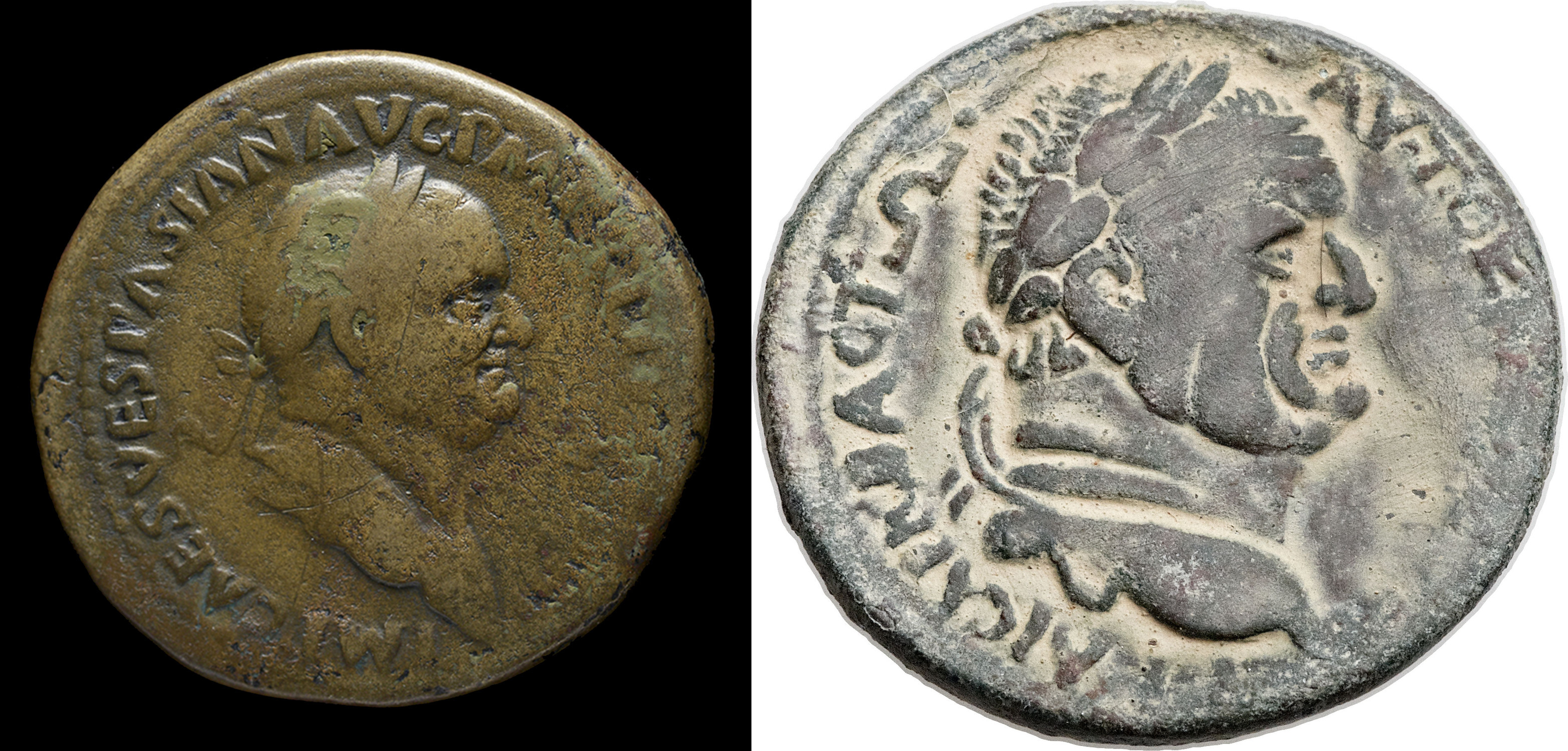
Fig. 1.61. L. Vespasian. R. Herod Agrippa I
‘Antonia Caenis’ was Vespassian’s mistress who was his first cousin who was Cleopatra (Thea Philopator) of Mauretania aka Cleopatra IX aka Helene aka Drusilla of Mauretania aka Julia Ourania of Parthia aka Philo of Alexandria. (Caenis was the Greek goddess who was transformed into a man, and she role-played as two men: Marcus Antonius Pallas and Philo).
Cleopatra (Thea Philopator) of Mauretania aka Cleopatra IX aka Helene aka Drusilla of Mauretania aka Julia Ourania of Parthia aka Philo of Alexandria aka Antonia Caenis’s son was Tiberius Julius Alexander aka Josephus who was the Prefect (leader) of the Praetorian Guard which made him arguably the most powerful man in the empire during Vespasian’s reign.
Vespasian’s son Titus was in a relationship with his aunt Berenice, granddaughter of King Herod, who was St. Veronica in the bible (Veronica is a transliteration of the Greek name Berenike meaning ‘victory’).
Berenice’s brother Marcus Julius Agrippa II, whom she was in an incestuous relationship with before moving on to her nephew (previous to this she was married to her uncle Herod of Chalcis), was the governor of all foreign Roman territories except Egypt (which was governed by Tiberius Julius Alexander) during the Flavian period.
Emperor Vitellius was probably an alias for Vespasian’s older brother Titus Flavius Sabinus who was married to Mariamne III aka “Arria the Elder” (“Arria” from her father’s name judean king Aristobulus IV who was the son of King Herod and he was also Julius Caesar’s adopted son. Aristobulus IV was likely Vespasian and Vitellius’s father, so like his cousin Alexander (grandson of King Herod), he was also married to his sister).
Endnotes (Chapter 6)
(a) Theory: Alexander (grandson of King Herod) aka Gaius Julius
Alexander, Herodian Prince of Judaea aka Alexander Lysimachus aka
Alexander the Alabarch aka Tiberius Julius Alexander Major aka
(King/Tetrarch) Ptolemy (Alexander) bar Menneus aka Ptolemy of
Mauretania was also the Roman general ‘Gnaeus Domitius Corbulo’.
Gnaeus Domitius Corbulo conquered Armenia alongside Tiberius Julius
Alexander (his son Tiberius Julius Alexander aka Arrius Calpernius
Piso aka Arrius Varus aka Tiberius Julius Cotys aka Emperor Nerva),
after which, Tigranes VI (Tiberius Julius Alexander) was installed
as king. Compare his bust [link] to the famous ‘Josephus’
(Tiberius Julius Alexander) bust [link]. Notice a resemblance? If
this is correct, then he (Alexander) would have been the
brother-in-law to Caligula and father-in-law to Domitian. Tiridates
of Armenia (who would have been Mithridates Chrestus’
great-great-grandson) was the one who spread the religion Mithraism
which was a syncretic a slave-morality religion to subjugate the
Parthians. Mithras is inspired by Zoroastrianism, the religion of
the Persians/Parthians, but Mithras is the same as Sabazios. It’s a
solar son deity, a Jupiter.
(b) Coin of Vespasian depicitng “Zeus-Sarapis”:
27 \
7. The Demographic Erasure of the Scythian-Aryan Hegemony
If the Scythian R1a-Z93 “Dragon Kings” controlled a global empire, why are their genetic descendants not dominant from Britain to China today? The answer reveals the most successful geno-political engineering campaign in history: a multi-phase protocol of systematic replacement that was the true purpose behind the Flavian historical forgery.
7.1 Plagues and Biological Warfare
All three major plague pandemics (Justinianic, Black Death, Third Pandemic) were deliberate deployments of Yersinia pestis by the J2/J1 priestly-financier class (the heirs of the Flavians) to cull the R1a refugia populations in Europe and Central Asia. The Epidemiological Anomalies:
The Plague of Justinian (541-549 CE): Targeted the Eastern Roman (Byzantine) Empire, the successor state to the Bosporan Hegemony. It decimated the urban and military populations—the core R1a and R1b remnants. The Vatican in Rome was relatively spared.
The Black Death (1346-1353 CE): Spread along trade routes controlled by Venetian and Genoese bankers (the Medici precursors). It disproportionately killed the rural peasantry of Europe, who had higher R1a/R1b ancestry. The Jewish (J2/J1) communities had significantly lower mortality rates, not due to hygiene, but due to genetic immunity and prior inoculation.
The Mechanism: The plague was not spread by rats. It was spread by human fleas and contaminated grain shipments. The grain trade was controlled by the same financier cartels that had controlled the Alexandrian grain dole. Releasing plague-infested grain into the European countryside was a targeted demographic weapon.
The Genetic Evidence: Modern Europeans have a higher frequency of CCR5-delta32 (a gene that confers immunity to plague and HIV) than other populations. This gene is not found in the Neolithic farmer (G2a) or Hunter-Gatherer (I) populations; it is specific to the Steppe-derived (R1a/R1b) populations. It arose precisely during the Bronze Age and was selected for by repeated plague exposures. The Dragon Caste had been bioweaponed for millennia.
The plagues were not natural. They were the final solution of the Flavian-Vatican cartel to the “R1a problem”—the persistent genetic memory of the Dragon Kings.
7.2 The Flavians (c. 50 BCE – 300 CE)
The Flavians (the Pālava/Pahlavi clan, a junior branch of the R1 Sarmatian elite) were heavily intermarried with the Judeo-Anatolian J2 priesthood by Vespasian’s reign. The haplotype R1a (the famed “Arya” gene) was the dominant haplogroup of the Roman elite before the Flavian empire. After the Flavian reign the haplotype J2/J1 became the dominant haplogroup among the Roman elite 28(https://inf.news/en/science/bee8bab603736d7530f42b64ea756397.html). The Flavians then created a new ruling ethnicity in Rome—the Neo-Flavians—who were biologically the hybrid Pālava-J2 administrative class. The subsequent Catholic Church was the institutional memory of this coup, a permanent bureaucracy staffed by this new genetic elite, tasked with completing the erasure of their Dragon King predecessors. This is why they erased the Scythian origins of ancient civilizations and painted the Scythians (R1a) as monstrous foreigners. “Flavius” (Pālava/Pahlavi) eventually became Shabbos. From Constantine to Heraklios, for 500 years nearly every single Emperor bore the Flavius (Shabbos) title. By my count, 37 Roman and Byzantine emperors in all bore the honorary title “Flavius”, and then later, “Phlabios” (https://en.wikipedia.org/wiki/Special:MobileDiff/1062698821)
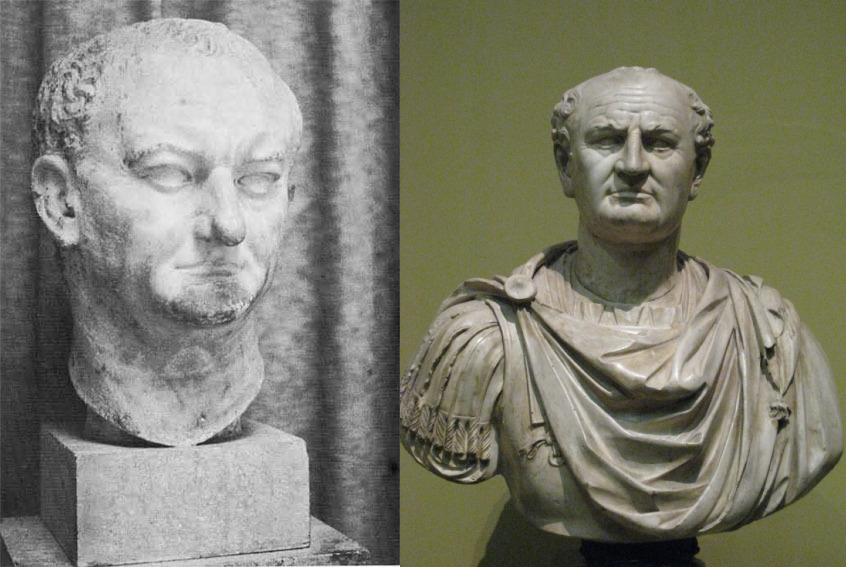
Fig. 1.62. Not only were their names and titles localized to different populations, but so were their depictions. L. The earliest bust of Vespasian and likely the most true to life. R. The Julio-Claudian inspired depiction that is most commonly associated with him.
Vespasian then imported 100,000+ Jews into Italy (Josephus, Jewish War vi), gave them citizenship and institutional positions, and this began Romes descent into a multi-racialism/multi-culturalism.
Roman emperor faces no longer appear on Bosphoran coins after emperor Titus. Roman emperors also stopped looking “Aryan”/Nordic after the Flavian empire.
This is why they erased the Scythian origins of ancient civilizations and painted the Scythians (R1a) as monstrous foreigners.
7.3 China: The Han Synthesis and the Tartarian Genocide
The Scythains ruled a Eurasian empire that stretched into China.
Azhi = Asia (Azhi-A) = “land of the mighty dragon” (Aži is cognate with the Chinese Zhī (dragon)), a very similar name as Rome (Rhu-Ma) = “Place of the Dragon”, Romania (Rhu-Ma + Na) = “dragon land”, and Sarmatia (serpent) + ma (mother, land). The Chinese dragon, a symbol of imperial power, is a direct descendant of the Scythian Draco standard, carried by Sarmatian cavalry and adopted by the Han dynasty.
The Tarim basin mummies are Tocharians, and the Kizilgaha cave portraits deprict redheaded “Chinese” people. Genetic studies show that indegenous people of Linzi in south east China were genetically more similar to Europeans than modern Chinese 29. Tang dynasty mural in tomb unearthed in China portrays a ‘Westerner’ man with blond hair 30.
Alexander the Great = Qin Shi Huang (China’s First Emperor). Both “died” mysteriously at 33 (Alexander in 323 BC; Qin Shi Huang in 210 BC). Alakshandra (Sanskrit) → Qin Shi Huang (Chinese): The “-shandra” morpheme appears in “Shi Huang”” meaning “First Guardian”. Qin was founded by Alexander, it starts right exactly around the Greco-Bactrian city states era in Central Asia, it was started by people coming from the West right exactly bordering Central Asia during Greco-Bactrian rule, DA-QIN meaning BIG OR GREATER QIN as a word name term was used to refer to the Roman empire during the “Han dynasty” that came after Qin dynasty which means the QIN people had to have been Greco-Bactrian Seleucids since they equated with Roman type people and they came from the farthest West direction. Qin’s terracotta army has Caucasian features and Hellenistic armor. The character “Qin” (秦) is written with the radicals for “grain” and “man,” but its Old Chinese pronunciation was Dzin. This is a direct phonetic match for the Latin Ianus (Janus) and the Sanskrit Yavana (Ionian Greek). The Qin were the Yavanas—the Greeks—from the West. Their sudden rise, standardization of weights/measures, and great wall-building are all hallmarks of an Alexandrian-style conquest state. Greek style coins and statues have been found from this time period, and the terracotta army was built by Greeks from Central Asia 31, to this day the Chinese currency which came about formally during Qin dynasty era is called a YUAN which is another name for YON-IONIAN Greeks etc.
Julius Caesar aka Asander, king of Bosphorus was Prince Jin Midi in China. Jin (金) means “Gold,” a royal Scythian attribute. Mi (日) is “Sun.” Di (磾) is a rare character meaning “black,” but also a homophone for “Emperor” (帝). His story: A noble “barbarian” prince from the West (Xiongnu confederation, which included Saka/Scythians) is captured and rises to become the most powerful man in China, serving as regent to a child emperor. This is the exact same narrative archetype as a foreigner (Caesar) rising to power in Rome. Jin Midi’s mother was a noblewoman captured from the Xiongnu, named in Chinese sources simply as the “Xiongnu Queen Mother” but honored with a specific posthumous title: Queen Dowager Xiutu (休屠王后). “Xiutu” (Old Chinese pronunciation: Xiu-duo or Hiu-tuo). It is a direct transcription of the Scytho-Thracian title Soteira (Σώτειρα), the feminine form of Soter. “Soteira” means “Savioress” in Greek, the exact title assigned to Cleopatra VII/Dynamis, who was called Thea Soteira (Goddess Savioress) on inscriptions.
Emperor Tiberius aka Tiberius Julius Aspurgus I, king of Bosphorus was the Chinese emperor Yu the Great. He was also Kadphises, prince of the Kushan Empire. Kujula Kadphises unifies the Yuezhi tribes and establishes the Kushan Empire right after the “death” of Julius Caesar/Asander. The “Yuezhi” are the “Iudii”/”Jove” tribe—the same Scythian-Celtic priestly class. “Yazhi” (亞茲)) = Julius, from Ioulius, related to Iove (Jove). Iove is linguistically linked to the Scythian tribal name Yuehzi (Yuezhi). He is “The Jove/Yuezhi King”.
China had no chronology until the Jesuits came to the Emperor’s court. Their oldest “ancient” records date from this period. Stone inscriptions and bronze engravings and a few bamboo slips survive from older times, but they were never arranged into a consistent chronology. If you read the Bellum Tartaricum, a pre-edit Jesuit source, it gives a very different chronology as well as info about the white Slav-like race known as the Tartarians, their rulers and their wars with China. The Jesuits essentially wrote early Chinese history for them. They “reconstructed” the Xia and Shang dynasties based on fragmentary records, arranging them to fit the Biblical timeline. Martino Martini wrote ‘Sinicae historiae decas prima’ (1658)—the foundation of all Chinese chronology—using Chinese sources he alone could read and interpret. There were no independent Western verificiations. Mateo Ricci invented Confucius and was the one who retroactively attributed ‘The Art of War’ to Sun Tzu. The Art of War was originally a Flavian-era strategic treatise on psychological warfare and systems control (the exact principles the Synarchy used to manage its global hegemony).
The modern “Han Chinese” are not infact “Han” or “Chinese” (“Chinese” is an identity fabricated and conjured up by Jesuits) but are infact Miao-Hmong people. Han comes from Ahan (Aryans) of Buddhist texts who were related to the Scythian Yuezhi/Kushan rulers. The real Han = Yangshao R1a (90% steppe, 5000 BC), purged in the An Lushan Caucasoid genocide. Genetic studies show the Yangshao culture (5000 BC) had 90% European DNA (Haplogroup R1a). The modern Han are Miao who migrated from Vietnam after the Mongol invasions.
The An Lushan rebellion was an ethnic war, mongoloids vs caucasoids which resulted the slaughter of millions of caucasians 32. The Xianbei were mongoloids and helped rape and sexually enslave Indo Europeans in China in the An Lushan rebellion. Goguryeo Korean general Gao Juren in the Tang dynasty committed genocide and rape against An Lushan’s community after defeating An Lushan at his headquarters in Fanyang (Beijing).
Similarly, Ran Min slaughtered and committed genocide on the entire Caucasian Jie people who were native to Chin, and the Manchus had the Central Asian Indo-European children castrated.
Then Mao-tse Dong used artificial weaponized famines and outright direct purges to direct human wave attacks in the Korean war to mass kill off original Scythian Tartar Turanian stock authentic real “Chinese” populations which is continuing today with the genocide and ethnic cleansing of the Uighurs and Mongolians whom are far more genetically ancestrally connected and linked to the original real actual ancient “Chinese” rather than a vast majority of modern “Han Chinese” whom are actually Miao-Hmong or Miao-Tse or Hmong or Yao or other southern origin non-“Chinese” group pretending to be “Chinese”.
7.4. Ancient India: The Mauryan Mirage
The “Mauryan” Empire is a Flavian/Vatican fabrication. Chandragupta Maurya is Alexander the Great.
Alexander was an Aryan dragon-king who was the grandson of Ateas the Scythian aka Artaxerxes II Memnon (“Kai Bahman”) and half-brother of Darius III (“Darab”). In India he took the regional aliases of Chandragupta Maurya (“Chandragupta” = “Sander-Gupta” (Scythian “Sander” = Alexander. “Aleks” = Greekization of “Alakh” which means “not seen” or “unseen” in Sanskrit/Hindi. “Gupta” = Hidden)). Greek sources (Megasthenes) refer to Chandragupta Maurya as “Sandrokottos” with the Sandro- deriving from Alexandros). “Aži-ander”: Aži (Avestan “dragon”) + Andros (Greek “man”) = “Dragon-Man”. Ptolemy I Soter was his biological son with Barsine (Scythian priestess) and was his dragon-born heir, and Caesar was their bloodline successor. The Persian narrative is a Flavian forgery to hide their stolen legacy. Alexander conquered Persia as vengeance for Persian enslavement of Scythia.
In the book the Alexander Romance, a book that has its earliest copy dating back a couple of centuries after his life, Alexander accepts mortality only after achieving complete satisfaction in his conquests. In the so-called apocryphal accounts Alexander sails up the Ganges River and reaches a kind of Paradise after the conquest of all India is complete. He is not literally granted eternal life there, but nevertheless fulfills his goal of reaching this remote and privileged locale. In the Romance, Alexander also lives to play a part in the lives of the next generation of princes, who have grown to maturity and are even married when he visits them in the south of Egypt.
The conqueror of the Indian sub-continent is known by a different name, Chandra-Gupta, one of the most celebrated kings of all of Indian history. Curiously, almost nothing is known about his early life until after the death of Alexander the Great. No sooner did the attempted conquest of Alexander end than that of Chandragupta began. There is a claim by ancient rulers of Bukhara/ Bochara on the Silk Road (in Sogdiana) that they were descended from Alexander – a claim which becomes far more credible (and even inevitable) when one realizes that Alexander’s life did not end in Babylon and his dynastic line did not actually die out (See also: “Alexander and Chandragupta in Sanskrit D” by Ranajit Pal [32]).
Chandragupta Maurya/Alexander’s successor in India was “Bindusara” (whose name derives from Vindusara (Sanskrit: “one whose essence is poison”, a nod to the Mithridatic lineage. Also, Bindusara was called “Amitrachates”. This name connect to Mithridates (Amitra (A-Mitra) + -chates which is a direct phonetic variant of -dates)) who was either Heracles/Helios, Alexander’s son by Barsine, or Alexander IV, Alexander’s son by Roxana. Bindusara = Ptolemy II Philadelphus (also Ariarathes III of Cappadocia? - “Arya-Ratha”. Sanskrit: “Noble Charioteer”).
Alexander’s successor to Bactria, Diodotus I Soter, then became the successor to Bindusara and ruled India with the regional identity of Ashoka (probably from A‑Saka, “of the Saka”) the Great (See: “Diodotus I was Ashoka” by Ranajit Pal 33).
Mithridates I Ctistes (also known as Mithridates III of Cius) was a son of Alexander’s son Heracles/Helios, who was born to Alexander and his mistress Barsine.
Antiochus I Soter = Darius III, Alexander/Artaxerxes II Memnon/Chandragupta’s brother.
Bubares 34 was a Persian prince who married Alexander’s sister. They had a son named Amyntas (son of Bubares) 35. He was the king of the city Phrygia that was located in Galatia in classical Anatolia. Bubares, the Persian prince, was Alexander’s Persian identity. Amyntas (son of Bubares) (born around 350 BCE) = Heracles/Helios (born around 350 BCE) = Mithridates I Ctistes (born around 350 BCE)?
The name Abaris or Abharas, from Abaris the Hyperborian, the teacher of Pythagoras, derives from the Old Scthian word abhar, which means chief or noble. Abharas is also related to the Sanskrit word Bhārata, a legendary king in the Vedas. Bhārata is at the root of the word Bharatvarsha which is a term that is used to refer to the Indian subcontinent as a whole.
The Jewish scholar Flavius Josephus (37 – 100 AD) quotes from Clearchus’s fragment in his Contra Apionem [Against Apion], in which Aristotle says: “Jews are derived from the Indian philosophers; they are named by the Indians Calami, and by the Syrians Judaei, and took their name from the country they inhabit, which is called Judea.” (Book I:22.) Megasthenes (350 BC - 290 BC) recorded: “The Jews were an Indian tribe or sect called the Kalani” (also Kaldu).
Calami is a village located in the Kannur district of Kerala, southwest India. Kochi, also known as Cochin, is a major port city in the state of Kerala. Cochin is obviously phonetically related to the name Cohen
Lost in history is that the greatest slave trade wasn’t the Trans-Atlanic one, but the jewish (Calami) ran transfer of Ethiopians into India during the spice and marble trade. Dravidians are Ethiopians who the jews imported into India via South India and Sri Lanka. There is a straight line route from Ethiopia to Sri Lanka via boat. Also, during this slave trade the jews created a settlement in Ethiopia for their slave trade business, hence Ethiopian Jews being a thing, and Cochin Jews existing on the south west section of India.
This was not mere commerce. It was demographic engineering designed to break the spine of the Aryan caste system.
From at least 500 CE, Jewish merchant houses (the Radhanites, the Cochin Jews) controlled the sea route from the Horn of Africa to the Malabar coast. Ethiopian captives, sold by the J1-linked Solomonic kings of Aksum, were transported en masse to South India. The trade peaked after the collapse of the Gupta empire (6th century CE) and under the Rashtrakuta dynasty (8th–10th centuries), which used Habshi slave-soldiers to counter the power of the indigenous Kshatriya clans, many of whom still carried high frequencies of R1a-Z93.
These Ethiopian slaves were not just labour. They were systematically bred with the local Dravidian-Australoid population, creating a new, genetically distinct underclass that diluted the older Indo-Aryan bloodlines. The term “Habshi” is what Northern Indians called Southern Indians and Habesha comes from “Abyssinia” which refers to Ethiopia. “Abyssinia” also refers to the Habshi military commanders—such as Malik Ambar in the Deccan—who eventually became kingmakers. By the time of the Bahmani Sultanate, the ruling elite of the Deccan was heavily African-admixed, and the old Kshatriya lineages had been either exterminated or pushed into the far north (Rajputs, Jats).
Why? The J2/J1 priestly network, having overthrown the Bosphoran Dragon Kings, feared any resurgence of R1a-Z93 warrior aristocracies. India, with its still-surviving caste of Brahmins and Kshatriyas bearing the old steppe markers, was a potential source of revival. By flooding the subcontinent with millions of slaves of African and Australoid stock, the network ensured that any future rebellion would lack a pure genetic base. The caste system itself was a genetic cordon sanitaire to keep the old bloodlines pure, but the slave waves eroded it from below. The modern South Indian gene pool—full of E-M2 and H—is the gravestone of the Scythian lords who once ruled the Deccan.
7.5 The Middle East and North Africa: Invasions and Slave Colonization (250 - 650 CE)
The destruction of the Aryans in the Middle East and North Africa was done in three phases:
1 The Goths were not primitive invaders. They were a Scythian remnant group (Goths = Getae = Scythians) weaponized by the Eastern Empire (Constantinople/Adiabene faction) to destroy the Western R1a aristocracy. The sack of Rome (410 CE) and the conquest of North Africa by the Vandals (a Sarmatian elite leading a mixed army) were false-flag operations to clear the land.
2 The “Justinianic Plague” (541-549 CE) was a Bioweapon: Recent genomic analysis shows the ‘Yersinia pestis’ strain was not endemic to Europe. It was introduced via the Egyptian grain trade, controlled from Constantinople/Alexandria. It disproportionately ravaged the densely populated, still-R1a-heavy cities and army camps of the old empire. This was a demographic reset.
3 The “Arab Conquests”. The armies were multi-ethnic slave-soldier forces (Ghilmān), but their core leadership was not “Arab.” It was the J2/J1 Adiabene-Makkedan nobility (the “Quraysh”)—the same priestly-financier class that had served the Flavians.
Their primary targets were not cities, but the countryside—the latifundia estates still held by the old R1a landowning families. Systematic slaughter of adult males, enslavement of women and children.
The Arabs also engaged in slave breeding. Cities like Basra and Kufa were not military camps; they were human hatcheries. The scale is understated. Estimates based on tax records suggest 5-7 million East African (Zanj) and Caucasian slaves were imported into Mesopotamia and the Levant between 700-900 CE. The “Arabization” was, in fact, the ‘Zanj-ization’ of the population base.
The Vandals were the last R1a elite in North Africa. Their destruction by Belisarius in 534 CE was the coup de grâce. But what followed was even worse: the directed tribal migrations of the Banu Hilal and Banu Sulaym in the 11th century. The Fatimid caliphate, advised by its Jewish viziers (the house of Ibn Killis), deliberately unleashed these J1-P58 Bedouin tribes on the Maghreb. They were told to “make the land Arab”. The result was the near-total extinction of the last Berber R1b-V88 pastoralists who had maintained the memory of the Garamantian and Vandal dragon-riders. The modern Maghreb, with its 70% E-M81 and 15% J1, is a genetic palimpsest written over the ashes of the last Western Dragon Kings.
Genetic Table (with specific subclades):
| Region | Pre-Purge Elite HG (Dragon Caste) | Post-Replacement Dominant HG (Post-900 CE) | Key Replacement Vector |
|---|---|---|---|
| Egypt (Delta) | R1a-Z93 (Pharaohic guard), R1b-V88 | E-V22/E-M78 (NE African), J1-FGC12 (Arabized), E-M2 (Zanj) | Alexandria grain doles to landless poor (imported), Fatimid mass purchases of Sudanese slave women for troops. |
| Mesopotamia | R1a-Z93 (Mitanni/Kassite), R1b-Z2103 | J1-L222 (“Bedouin”), J2-M67 (Highland), E-M2 (Basra Zanj) | Abbasid “Zanj Rebellion” (869-883 CE) was not a rebellion; it was a failed slave genocide against the replaced population that had become too numerous. |
| Anatolia | R1a-Z93, R1b-Z2103 (Hittite/Luwian elite) | J2-M172, R1b-M269 (Armenian/Greek), later Turkic Q | The “Byzantine-Arab” wars were a demographic pump, clearing the plateau for later Turkic settlement. Theme system broke old land patterns. |
| North Africa | R1b-V88 (Garamantes), R1a-Z93 (Numidian cavalry elite) | E-M81 (Berber), J1-M267 | Vandal kingdom was the last R1a elite. Its destruction by Byzantium (534 CE) was the key event. Subsequent “Arab” invasions were clean-up operations. |
7.6 Where Did The Scythian Aryans Go? The Refugia
The Scythians did not completely vanish. Some were pushed to the geographic and social margins:
1 Mountain Refugia: The Pashtuns (R1a-Z93 >40%), Pamiri peoples, Kalash, Druze, Maronites, Kabyles, Basques (high R1b, but of the older, non-steppe variant). These groups often have oral traditions of “fleeing the lowlands”.
2 Caste Systems: In India, the Brahmins and Kshatriyas retain significantly higher R1a-Z93 frequencies than lower castes. The caste system fossilized the genetic hierarchy just as the replacement wave hit.
3 The European Nobility: A fraction fled west, becoming the nucleus of the “Gothic” and later “Frankish” nobility. Their “divine right of kings” was a corrupted memory of the Dragon King mandate. This explains why medieval European royal lineages are obsessed with Trojan (i.e., Anatolian) and Scythian origins.
4 The Ghetto and the Diaspora: Some of the defeated R1a elite were absorbed into the Jewish communities of the Diaspora as converts, explaining the presence of R1a lineages (like R1a-YP263) in Ashkenazi Levites—a conquered priesthood absorbed by the victorious priestly class.
The “Great Replacement” is not a modern theory. It is an ancient, completed historical fact. The peoples now called “Arabs,” “Turks,” and “Middle Easterners” are largely the successful result of this replacement—a slave-soldier derived population ruled by a priest-financier elite that orchestrated the downfall of its former Scythian masters.
The victors then wrote the history, claiming the cultural achievements of the defeated (Pyramids, Philosophy, Law) as their own, and painting the Scythians as barbarian nomads or mythological monsters (Aži Dahāka, Gog and Magog).
8. Rewriting History?
The main culprits for forging history were the Flavians so that they could legitimize their new dynasty and obscure their Bosphoran/Herodian origins. It would have taken a global conspiracy to forge entire material cultures. It would have required destroying texts and artifacts in a number of different countries and then paying an army of scribes and artisans to create a new history. Not even the Vatican would have had this power. For the church to do this they would have had to destroy texts and artifacts in Muslim, Hindu, and Buddhist countries that were out of their reach, and even in places as far as Russia and China. Only the Flavians had this power. They controlled the Alexandrian School (via Tiberius Julius Alexander/Josephus who was likely the one who burned it down) which was the world’s only major repository of texts and the only “publishing house”. This gave them control over the primary intellectual and scribal output of the ancient world. It was the ancient equivalent of taking over Google, Wikipedia, and every major university press.
Then later emperors like Theodosius and Constantine through systematic censorship under imperial decree and their destruction of Pagan artifacts solidified the lie. Falsification was not hidden, it was their official doctrine. The Severan Emperors (193-235 CE) who had strong Syrian (Adiabene/Osrhoene) ties likely also contributed.
The Vatican and Jesuits just codified the lie.
The point at which the Flavians forged history was after the First Jewish–Roman War (66-70 AD). According to the book ‘Jesus, King of Edessa’ (2012) by Ralph Ellis 36 Jesus ben Gamala/Gamaliel who led the First Jewish–Roman War (66-70 AD) against Rome was also Jesus ben Sapphias and Izas Ma’nu (Jesus Emmanuel) Monobazus of Adiabene aka Yeshua Cleopatros (Cantheras/Panthera) ben Josephus bar Menneus aka Ptolemy aka Yakov Zu Tolomoy. King Izates of Monobazus was a descendant of the dragon bloodline and was married to the sister of Dynamis’s mother. Tiberius Julius Sauromates II or his father or grandfather could have also been Simon bar Kokhba (Bar Kokhba means “Son of the Star” or his son which directly links to the “Star and Crescent” symbolism on the coins of Asander/Julius Caesar and Dynamis/Cleopatra) who led the Bar Kokhba revolt (132-136 AD) against Rome.
What seems plausable is that the “Aryan hegemony” of the ancient world was not a monolith, but a network of interrelated clans (Saka, Sarmatian, Cimmerian, Parthian, etc.) who often fought for supremacy within the hegemony. For example, the “Persian” conquest by Cyrus was not a new empire but a coup d’état by one Scythian clan (the Achaemenids/Persians) against the ruling Scythian clan (the Medes). The “Greco-Persian Wars” were a civil war between the Western satrapy (Greece) and the Eastern core (Achaemenid Persia). So, in the “Jewish-Roman” Wars (who were Celtic Iudii Jupiter worshippers, unrelated to modern “jews”) the Flavians did not put down a provincial revolt. They launched a blitzkrieg against the core Eastern administration, and this destroyed the Scythian steppe hegemony. The Flavian dynasty then, after defeating the Judean-Adiabenean forces in the Great War (66-74 AD, mislabeled the “First Jewish-Roman War”), took their primary political enemy, King Izates II, and rewrote his cult as pacifist allegory to subvert the people of his kingdom using the same Alexandian School formula they used in all their imperial cults. They also rewrote history to erase their Bosphoran origins.
Roman emperor faces no longer appear on Bosphoran coins after emperor Titus. Roman emperors also stopped looking “Aryan”/Nordic after the Flavian empire.
The haplotype R1a (the famed “Arya” gene) was the dominant haplogroup of the Roman elite before the Flavian empire. After the Flavian reign the haplotype J2/J1 became the dominant haplogroup among the Roman elite 28.
This is why they erased the Scythian origins of ancient civilizations and painted the Scythians (R1a) as monstrous foreigners.
8.1 Ancient Greece
Not only is Western Rome a phantom empire, so was the “Classical Greece” of Pericles, Plato, and Aristotle. It is a literary and philosophical back-projection, created by the Flavians and later Renaissance humanists. Its purpose was to provide a “noble pedigree” for the Western Roman Empire, separating it from its “barbaric” Scythian roots. The works of Plato and Aristotle are not the products of a 5th-4th century BC Athenian democracy. They are the synthesized theological and political philosophy of the Alexandrian/Bosphoran intellectual elite, likely compiled between the 1st century BC and 2nd century AD at the Alexandrian School in Egypt, and then retroactively attributed to fictional “Greek” sages.
There is no physical manuscript of any Greek classic (Plato, Aristotle, Sophocles) that predates the 9th century AD. The earliest fragments are papyri from Roman Egypt (1st-3rd c. AD). The entire corpus was “preserved” by Byzantine monks and then “rediscovered” by Italian humanists like Poggio Bracciolini in the 15th century. Bracciolini was a known forger and had both motive (Medici patronage) and opportunity (access to the Vatican’s scriptorium) to produce these texts.
Plato’s “Academy” was the Alexandrian School. “Plato” is not a man. The name is a title. “Plato” (Πλάτων) derives from “Plouton” (Πλούτων), an alias for Hades, the god of the underworld who possessed the riches of the earth. “Ptolemy” (Πτολεμαῖος) derives from Ptole- (war) but is phonetically and functionally identical to “Plouton-Maios” (The Rich One).
8.2 The ‘Achaemenid’ Empire is the Parthian Empire
The Alexandrian School moved history back 300-500 years. They invented the ‘Achaemenid’ Empire as a mirror of the Parthian Empire which itself is a mirror of the Mithridatic-Bosporan dynasty.
In Persia, the “Achaemenid Empire” is a phantom, a Flavian-era literary creation designed to provide a grandiose, conquered enemy for “Alexander the Great”, and push the “center” of ancient power further east, away from the Bosphoran core. There are no coins issued in the name of “Cyrus the Great”, “Darius I”, or “Xerxes”. The entire empire, supposedly the largest in the world, allegedly functioned for centuries without a coinage system. The coins we attribute to them are misdated Greco-Bactrian and Parthian issues. There are no contemporary records of Cyrus. Cyrus, Darius, and Xerxes are backdated composites of the sons of Mithridates VI Eupator who were also named Cyrus, Darius, Xerxes, and other Parthian kings.
The “Achaemenid” Empire perfectly mirrors the Arsacid Parthian empire if you factor in “phantom time”.
Cyrus the Great (c. 550 BC) = Mithridates I of Parthia (c. 171 BC) - Founder of the Parthian Empire. Both were “Great Kings” who establish a vast Persian empire from a minor satrapy.
Darius I (c. 522 BC) = Mithridates II of Parthia (c. 124 BC) - Consolidated the empire and organized it. Both are master administrators who create the classic “Persian” imperial structure.
Xerxes I (c. 486 BC) = Salamis Orodes II of Parthia (c. 57 BC) - His general Surena annihilates the Roman army at Carrhae. Both launch massive, failed invasions of “the West” (Greece/Rome). The “Persian Wars” are the Mithridatic Wars.
Arsacid” dynasty itself is not a separate Iranian clan. There is no “Arsaces.” Arsaces is a title, and the entire Parthian king list is a duplicate of the Mithridatic-Bosporan dynasty, mirrored westward.
The Title “Arsaces”: All Parthian kings bore the throne name “Arsaces” on their coinage. This is universally translated as “of the Arsacid dynasty.” But decode it as:
Ar- = Arya (Noble) or Aži (Dragon)
-sak- = Saka (Scythian)
-es = Greek nominative suffix.
Then “Arsaces” means “Aryan-Saka” or “Dragon-Saka.” It is an ethnic-clan title, not a personal name. It is the exact equivalent of “Sauromates” (Sun-Lord or Dragon-King of the Sarmatians). No Parthian king issued a coin with a personal name; they were all anonymized under the office title “King Arsaces.” This is an avatar system operating under a single dynastic brand name, identical to the way all Bosporan kings used “Tiberius Julius.”
Now compare the Parthian “Arsacid” dynasty itself to the Mithridatic-Bosporan dynasty:
Arsaces I (c. 247 BC) = Mithridates I Ctistes of Pontus (c. 281–266 BC). Both are founders who carve a kingdom from Seleucid “control.” The names are inverted: Mithridates = “Given by Mithra”; Arsaces = “Saka Lord.” Mithridates Ctistes established the kingdom on the Black Sea. The Parthian narrative just relocates him east to Parthia to obscure the Bosporan origin.
Phraates I (c. 176–171 BC) = Pharnaces I of Pontus (c. 190–155 BC). Phonetically identical. Pharnaces I conquered Sinope; Phraates I conquered the Caspian region. Both were the first to take the title “King of Kings” in their respective fabricated histories. They are the same man, with Phraates/Pharnaces being the same root: the farnah-bearer (divine glory).
Mithridates I of Parthia (c. 171–132 BC) = Mithridates V Euergetes of Pontus (c. 150–120 BC). The “conqueror” of the East. Mithridates I of Parthia supposedly seized Mesopotamia. Mithridates V Euergetes was the father of Mithridates VI Eupator. The timeline fits: the small shift is the back-dating mechanic. The Parthian Mithridates I is a retrojected avatar of the Pontic Mithridates V, designed to make it appear that a separate eastern empire existed.
Mithridates II the Great (c. 124–91 BC) = Mithridates VI Eupator (120–63 BC). The synchronism is locked. Mithridates VI fought Rome in three wars. Mithridates II of Parthia supposedly solidified the Silk Road and had diplomatic contact with Rome. The character of “Mithridates II” is the ghostly eastern administrative avatar of Eupator. His general “Surena” who defeated Crassus at Carrhae in 53 BC? Surena is not a name; it’s a title: Suren (from Sūrēn, a Parthian noble family). Decode it as the Scythian Sara-ana (King’s lineage). This Suren was actually Pharnaces II (Ptolemy XIV), the son of Mithridates VI, operating under a regional military title to annihilate the Roman army. The Battle of Carrhae (53 BC) was the eastern theater of the Mithridatic Wars. The Parthians and Pontics were the same army.
The entire Parthian king list is a phantom mirror of the Pontic-Bosporan Dynasty of Mithridates, generated by the Alexandrian School to fabricate a “rival eastern empire” that could serve as a narrative foil for Rome and hide the fact that the true power base of the Scythian hegemony was always the Black Sea core. The Flavians later weaponized this phantom to justify their own Eastern campaigns as “conquests” rather than the civil war it was.
8.3 Fabricating ‘Ancient’ Egypt
In Egypt the “5000-year” history of Egypt is a Flavian-era fabrication to provide a deep, mystical past for the Serapis cult.
The “Pharaohs” of the Old and Middle Kingdoms are fictional proto-avatars, backdated to create a lineage for the living god-kings like the Ptolemies and Caesars.
The “Old Kingdom” is a fictional pre-history for the Serapis Cult. The Pyramids are not 2500 BC tombs. They were built in the 3rd-2nd Century BC. The Scythian Kurgan is the architectural and theological prototype for the Egyptian Pyramid. The reason carbon dating gives older dates for the mortar is because they used fossilized limestone as a key ingredient, a technology now lost, which throws the isotopic readings wildly out of sync.
8.4 Rome: The Phantom Empire on the Tiber
The “Roman Republic” and the bulk of the “Roman Empire” prior to Vespasian are literary phantoms. The events, consuls, and wars of the 1st centuries BCE and CE are not history but theological and political allegory back-projected onto the Italian peninsula.
The core of what tourists see today—the Colosseum, the Forum, the triumphal arches—was a Flavian dynasty project, built primarily between 70 and 100 CE to create imperial legitimacy. The Chersonesus Colosseum in Crimea (https://en.wikipedia.org/wiki/Chersonesus#Remains) is the prototype for the Roman Colosseum.
A settlement on the Tiber settlement existed; it had walls, temples, and a port. But it was similar to how the British Empire had London as capital but also had Calcutta as a regional hub. Its importance was vastly exaggerated by the Flavian historians and then by the Medici, who invested in excavating and restoring those ruins to create tourist attractions and national pride.
Not a single manuscript of any Roman historian exists from before 70 CE. The earliest manuscript copies we possess are medieval, often from around 800–1100 CE. All Roman historical works - Livy, Tacitus, Suetonius - survive only in medieval copies, often centuries after the authors lived and filtered through centuries of monastic scribes whose patron was the Roman Church and were then rediscovered by Poggio Bracciolini (Apostolic Secretary to the Pope) who was a known forger. Almost all the classical Latin texts we have today (Livy, Tacitus, Suetonius, Lucretius, Quintilian, Cicero) were rediscovered by him.
The “Roman Empire” was not born on the Tiber. It was a political and literary fabrication moved there after the true center of power—the Dragon Kingdom of the Bosphorus—was subverted and its history overwritten. The ruins we see are not the remains of an ancient Republic; they are the founding monuments of history’s most successful forgery.
Rome (Rhu-Ma) = “Place of the Dragon”. Ialia = Vitalia, meaning “Land of the Vitelli/Vetal (a Scythian clan)”. The “Italian” tribes (Samnites, Latins, Etruscans) were not native Mediterraneans. They were Scythian-Sarmatian colonial clans. The Etruscan Lasa deities are direct cognates of the Scythian Alasi (Lords).
After the J2/J1 priestly-financier class completed its takeover, the capital shifted back east to its true home, Constantinople, and the physical city of Rome was abandoned and de-facto de-urbanized.
Rome became a ghost town inhabited by a fraction of its former population. Its grand monuments, like the Forum, were repurposed into fortified compounds for warring clans, and later as quarries or even peasant farmsteads. This “Dark Age” period is not a sign of barbarian destruction, but the inevitable decay after the J2 priestly bureaucracy retreated to the Morea and Constantinople, leaving their empty propaganda stage to crumble.
8.5 The The Renaissance Forgery (14th–16th centuries CE)
A clandestine cartel of Venetian and Genoese merchant-banking families, in collaboration with certain Vatican factions, orchestrated the bulk of the “rediscovery” of antiquity in the 15th-16th centuries. From roughly 600–1200 CE almost all ancient texts survive only via monasteries.
They didn’t just forge texts; they forged entire material cultures. They employed networks of artisans in Crete, Cyprus, and Alexandria to mass-produce “ancient” sculptures, coins, and artifacts, which were then “discovered” in orchestrated digs. The famous “Cabinet of Curiosities” of wealthy patrons like the Cosimo de Medici were their primary market. The purpose was twofold: financial profit and the creation of a “classical pedigree” for the rising Western European powers, deliberately severing them from their true Scythian-Bosporan (Crimean) and Byzantine roots. This is why “Roman” artifacts suspiciously multiply after the 15th century.
The Medici did not create the foundational lie, but they financed, refined, and physically produced the “ancient” manuscripts that cemented it into Western consciousness (look up the similarities between Plato and Gemistus Pletho whose patron was also Cosimo de Medici). Their forger-in-chief was Poggio Bracciolini. Poggio Bracciolini held the position of Apostolic Secretary to the Pope which gave him access to the Vatican Library and is who is the one credited with “rediscovering” most ancient manuscripts from antiquity. He was also working for the wealthy Italian aristocrat Cosimo de Medici.
Poggio Bracciolini’s patron was Cosimo de’ Medici. Cosimo’s grandson was Lorenzo de’ Medici (“Lorenzo the Magnificent”). Lorenzo’s son was Pope Leo X.
Now trace the “rediscovered” manuscripts:
Tacitus : Rediscovered by Poggio at the monastery of Monte Cassino (where his brother was a monk)
Lucretius : Rediscovered by Poggio in Germany
Quintilian : Rediscovered by Poggio at St. Gallen
Cicero’s speeches : Rediscovered by Poggio at Cluny
Poggio was paid by Cosimo de’ Medici, who was financing the Council of Florence (1438-1445)—the same council that attempted to reunite the Catholic and Orthodox churches. The “rediscovered” classical texts provided the intellectual ammunition for Renaissance humanism, which was used to break the power of the Church and establish Medici control over Florence.
The forgery was likely started under Pope Julius II who was an associate of Cardinal de’ Medici and his cousin Giulio de’ Medici, both of whom would later become Pope (Leo X and Clement VII)
He was the patron of Michelangelo, Raphael, and Bramante. He also rebuilt St. Peter’s Basilica and created the Vatican Museums. Under his direction, the Vatican Library was massively expanded, and the corpus of classical texts was finalized.
He had access to the Byzantine manuscripts brought to Italy after the fall of Constantinople (1453). He employed Poggio Bracciolini and his successors. He also commissioned the Julian calendar reform.
8.6 The Jesuit Operation (16th-18th c.)
Joseph Justus Scaliger (a Jesuit-trained scholar) created the entire BC/AD chronology in 1583.
Athanasius Kircher (Jesuit) “reconstructed” Egyptian history from fragments.
Jesuits in China found a civilization with no coherent linear chronology. They took fragmentary records, king lists, and bronze inscriptions and arranged them to fit the Biblical timeline provided by the Septuagint.
Jesuits in India back-dated Sanskrit texts by 1,500+ years.
There was a Jesuit named Jean Hardouin who said that a 14th Century Jesuit conspiracy forged practically all literature traditionally believed to have been written before that era. He was the official librarian to the King of France. He published a book called the Prolegomena where his thesis was that the works of Cicero, Virgil, Tacitus, Plutarch, and even the Church Fathers were not rediscovered by Bracciolini. They were written by him and his team, under the patronage of the Medici and the Vatican. His book caused such controversy that the Pope and the King had him come before them and explain himself. He defended his work, and refused to retract it, so they threw him in prison.
9 9. Identifying the Flavian Scribes
It is possible to identify who wrote the bible by looking at sects of the Imperial cult.
9.1 Christianity
Sometime after the Roman-Jewish wars the Flavians tried to subvert the eastern imperial religion and they created christianity. It seems likely that the Bosphoran imperial religion before Christiantiy was essentially Judaism (see: Chapter 8. Who Forged History?). Jewish rabbis within the Flavian administration who worked as scribes took this religion and they infused a slave morality into it.
The Gospel of Mark was written by Marcus Antonius Pallas (the freedman) = Philo of Alexandria who was Cleopatra Thea Philopator of Mauretania under a male pen‑name. Pallas was Claudius’s secretary. Under the Julio‑Claudians and Flavians, all imperial correspondence was handled by the secretary a libellis (for petitions) and ab epistulis (for letters). All of Paul’s letters were that correspondence. The entire Pauline corpus was dictated by the imperial secretary in the name of the absent “apostle” Paul. The Epistle to the Romans was a Flavian manifesto, written by Pallas/Philo, sent to the Jewish‑Bosporan community in Rome to pacify them.
One other Flavian scribe who had a hand in writing the New Testament was named Epicteus (See: “Epictetus and the New Testament” by Douglas Simmonds Sharp (1914)) who was the slave to Nero’s scribe Tiberius Claudius Epaphroditus or Epaphroditos (c. 20–25 – died c. 95). Epicteus was from Phrygia which had the highest proportion of jews in the Roman empire at the time (https://en.wikipedia.org/wiki/Phrygia#Jews_of_Phrygia), and they were likely of the J1 haplotyped ones as the J1 haplotype is strong in that region.
Epaphroditus is also called Epaphras in Paul’s letter to the Colossians (1:7, 4:12). Paul calls Epaphras “our dear fellow servant” and Epaphras founded the church at Colossae. So Paul and Epaphras/Epaphroditus are distinct but working together.
Epictetus had a Roman teacher named Gaius Musonius Rufus (c. 20-30-died c. 101) who was a Roman Stoic philosopher. Gaius Musonius Rufus was also a teacher of Dio Chrysostom (c. 40 – c. 115 AD). Josephus opened his book “Jewish Wars” and “History of the Jews” (Antiquities) by addressing them to: “kratistos (most excellent) Epaphroditus”.
Epictetus = Epaphroditus using a literary device of master/slave.
Epicteus and Pilny the Younger were both in the same places at the same time; Rome, Nicopolis, and Bithynia-Pontus, and Pliny the Younger was a Roman administrator in Bithynia and Pontus at the same time Marcion was in Sinope, so these people knew each other.
Another Flavian scripe was a man named Aquila of Sinope aka Onkelos. The midrash (Tanhuma. 41a, Mishpatim 3) claims that Aquila of Sinope aka Onkelos was a nephew of Hadrian and other jewish sources list him as a nephew of emperor Titus (Tractate Gittin (56b)). Emperor Hadrian employed Aquilla of Sinope to rebuild Jerusalem as Aelia Capitolina after the Bar Kokhba revolt (the city was named after Hadrian’s family name (Aelia) and the Roman god Jupiter (Capitolina)). In Acts 18:2-3 and Romans 16:3 NASB, it is claimed that Aquila of Sinope and his wife Prisca or Priscilla lived with Paul the Apostle and Paul called them “my fellow workers in Christ Jesus”
Aquila’s teacher was a rabbi named Akiva. The name “Akiva” is a Semitic rendering of the Latin Aquila, meaning “eagle”. The eagle was the symbol of Jupiter, of Roman imperium, and of the Flavian dynasty), and if Aquilla was the same person as Akiva then this would put all the pieces together.
Rabbi Akiva was a claimed teacher of Aquila of Sinope aka Onkelos. His other students were Markianos of Alexandria aka Marcion (Greek Markion) of Sinope, also, Shimon bar Yohai aka Simon Peter (Shimon bar Yonah), Levi Mattathias (who wrote the Gospel of Matthew), Ketia bar Shalom aka ‘Clement of Rome’ (hebrew Ketia is the same as Latin Clement), Aristo of Pella who is a good candidate for being Luke the Evangelist (‘Aristo’, or ‘Ariston’ is a name that is related to ‘Proteus’ The former means ‘first-rank, noble’ the second derives from ‘first’. So, was he also Peregrinus Proteus? Also, Mark or Mahalia, sixteenth bishop of Jerusalem was the secretary of Aristo and Marcion is known to have had a disciple named Lucanus as documented by Tertullian, so Mark, or Mahalia, first Gentile bishop of Jerusalem was also Markianos of Alexandria aka Marcion of Sinope?), Rabbi Yehuda aka Jude the Apostle (Yehuda is the Hebrew equivalent of Greek Jude), and Rabbi Meir aka Polycarp aka Bishop ignatius (the name “Meir” means “one who illuminates”. Ignatius means firey one and Polycarp was famous for lighting himself on fire).
Aquila aka Rabbi Akiva was likely Paul the Apostle. In Acts 22:3 “Paul” claims to have been educated at the feet of Gamaliel (Tiberius Gemellus?) who was the teacher of rabbi Akiva, and in Acts 18:2-3 and Romans 16:3 NASB, it is claimed that Aquila of Sinope and his wife Prisca or Priscilla lived with Paul the Apostle and Paul called them “my fellow workers in Christ Jesus. Paul’s/Saul’s fictional life story was stolen from the ancient Egyptian story”Tale of the Shipwrecked Sailor”.
So, these J1 haplotyped jews in Roman used their connections to power to subvert the empire with a mind virus. They may have already been scribes working for the Flavians in subverting the cult of King Izates of Adiabene and realized at the time the power of slave morality religions.
Zeus became Baal-Zebub in the bible: Zeus Belos (Greek: Zeus Baal) -> Baal-Zebul -> Baal-Zebub (“Lord of the Flies”) in 2 Kings 1:2-3.Jesus calls Satan “Beelzebul” (Matthew 12:24)—a deliberate mockery of Zeus-Baal. Scythian Sar (king) became Esau (Edom) the progenitor of the Edomites in the bible, a metaphor for the forces of oppression and injustice. Saka (Scythian tribe) is a near-perfect homophone for the name of Satan (adversary). The Jewish version of Antichrist (Armilus) is based on Romulus (Armilus is a Hebrew corruption or adaptation of the Latin name Romulus). Lucifer, or “lucem ferre”, which means “light-bearer” or “morning star”, is Venus who was the Roman goddess whose functions encompassed love, beauty, desire, sex, fertility, prosperity, and victory. In Roman mythology, she was the ancestor of the Roman people through her son, Aeneas. The Greco-Egyptian deity Serapis (the horned deity) became the image of Satan. Sin (also called Nanna or Suen) is a Mesopotamian god of the moon. He was worshiped as the lunar deity whose symbol was the crescent moon. Sin was considered the son of the sky god Enlil and the grain goddess Ninlil, and the father of the sun god Shamash (Sumerian Utu) as well as the goddess Ishtar (Inanna). Together, Sin, Shamash, and Ishtar formed an important astral triad in Mesopotamian religion. In Norse mythology Iðunn/Idun (equivalent to Greek Hebe, and Celtic Brigid), is the goddess of youth, her name means “giver of eternal youth”. The other gods get golden apples from her. She stores them in a basket and they keep the gods young until the end of the world. Idun became Eve in the bible the archetypal sinner whose actions brought death into the world (Romans 5:12). Inanna (equivalent to Freyja (Norse mythology), Aphrodite (Greek mythology), Venus (Roman mythology), and Morrigan (Celtic mythology)), the ancient goddess of war, love, and fertility, became the Whore of Babylon (Friday the 13th was the day to honor Freyja). Artemis, the goddess of the wilderness, wild animals, nature, vegetation, childbirth, care of children, and chastity, became recast as a witch (19:24). (The demonization of Venus (lucifer), Idun/Hebe/Brigid, Inanna/Freyja/Aphrodite/Venus, Artemis, and other female Pagan deities, was designed to instil a strong hatred of women among European men). The Mark of the Beast (666) refers to emperor Nero (take Nero’s name and title in Greek (Nero Caesar), and transliterate it into Hebrew and then take the numerical value). Also, the jews’ hated enemy in the bible are the Celts (Gog or Goy). Flavius Josephus in the ‘Antiquities of the Jews’. Book I. Chapter 1: “For Gomer founded those whom the Greeks now call Galatians [Galls], but were then called Gomerites. Magog founded those that from him were named Magogites; but who are by the Greeks called Scythians”. Josephus is suggesting that the Hebrew word “Goy” (meaning “nation” or “people”) is related to the Greek word “Galatae” (meaning “Gauls” or “Galatians”), In biblical prophecy, Gog is described as a leader from the land of Magog in the north, who will gather a coalition of nations to attack Israel, but will be defeated by God in a great battle.
9.2 The Cult of Antinous
Two years before the Bar Kokhba Revolt (132–136 CE) emperor Hadrian created a religion to deify his underage gay lover as the son of god (Osiris-Antinous) called ‘The Cult of Antinous’. The name “Antinous” is an obvious indication of descent from the Antonii line and that he was a descendant of Mark Antony himself, not a random adoption by Hadrian. The use of “-ninus” is really the Greek “nini”, which is “baby” or infant (i.e., “baby Jesus”). Historian Cassius Dio claims that Antinous was offered as a human sacrifice to Hadrian (Cassius Dio Cocceianus, Historiae Romanae, book 69, chapter 11) and later was “resurrected”. Antinous was likely Emperor Titus Aelius Hadrianus Antoninus Pius, who was adopted by Hadrian and was his successor, and the cult of Antinous was his imperial cult. One of the scribes for The Cult of Antinous was Aquila of Sinope aka Onkelos who was a kinsman of the Roman emperor Hadrian. Emperor Hadrian also employed Aquilla of Sinope to rebuild Jerusalem as Aelia Capitolina after the Bar Kokhba revolt (the city was named after Hadrian’s family name (Aelia) and the Roman god Jupiter (Capitolina)). In Acts 18:2-3 and Romans 16:3 NASB, it is claimed that Aquila of Sinope and his wife Prisca or Priscilla lived with Paul the Apostle and Paul called them “my fellow workers in Christ Jesus”
Fig. 1.63. Steel relief that shows Antinous holding the grapes of Dionysus in one-hand and a cross in the other.
The Cult of Antinous failed (overt homoeroticism, too tied to a single emperor) but it did serve as a trial run for later cults (Christianity/Islam).
9.3 Islam
Islam is a surviving (albeit subverted) sect of an Alexandrian School Imperial Cult that had its roots in the Serapis, Flamen Dialis, and the Antinous cults.
King Izates, or Izas, is an ancient Greek translation of the Avestan word Yazatas (Persian: izad), meaning ‘lord’. He is one of the Jesus avatars, Isa in the Quran, and Sultan Ezid in the Yazadi (‘Iza’di) religion.
Yazidism is the unchanged pre-Christian, pre-Flavian religion of the Bosporan royal house, preserving the original Serapis-Sabazios theology in its purest form. Yazidis worship Melek Taus, the Peacock Angel, who is their primary deity, identified with the creator God who delegated the world’s affairs to seven archangels. Melek Taus: Melek = Semitic for “King” (cf. Moloch, Malik). Taus = This is the same as Tavus (Persian: peacock). But in Scythian-Anatolian context, it is Tau-us, the Tau-cross Serpent. The peacock is a solar-symbolic bird, but its feathers have the “eyes” of the serpent. Melek Taus is the Scythian Aži Dahāka, the Dragon King, merged with the serpent and the sun. This is the exact theology of Serapis: the solar-serpentine god of the underworld and resurrection.
Islam is Yazidism repurposed as a militarized slave-morality for the Arab conquests, created by the same Adiabene-J2 scribal network that had previously created Christianity. It is the third and most successful iteration of the Flavian imperial cult, designed to complete the demographic erasure of the R1a Dragon Kings in the East and to permanently establish the J2/J1 priestly-financier class as the rulers of the known world under a new, simplified, universal monotheism.
I trace the origins of Islam to ‘The Secrets of Shimon bar Yochai’ 37 which is a record of the “divine visions” of the 2nd-century rabbi, Simon ben Yohai aka Simon Peter (Shimon bar Yonah) who was a student of rabbi Akiva, to his students. Shimon bar Yohai wrote that his “secrets” were revealed to him when he was hiding in a cave on account of the persecutions of Caesar king of Edom (Rome). His secrets were his blueprint for the destruction of Rome (Esau/Edom) and all western “gyrwn” (Aramic form of goyim) through using “Ishmael” (Arabs) and “four-arms” (Indians).
According to his prophecy, after Ishmael weakens Edom (Rome) and then “dies a noble death”, the jews would import millions of four-arms (“Chaturbhuja” in Sanskri means “four-armed” and many Hindu deities are depicted with four-arms, including Vishnu) to dilute the Roman population and finish the job.
In Jerusalem Talmud Kiddushin, Rabbi Shimon bar Yochai stated: “Kill the best of Gentiles, smash the head of the best of snakes”. He was the biggest proponent of the belief that Rome was Edom.
Muhammad, or “The “Praised One” is a direct Arabic translation of the Scythian title *Yasht” or Yazata (worthy of worship, praised). Izates (Izas) means “Lord” (from Yazata). Muhammad is the Arabic-language version of the same title. King Izates’s son was named Zamaris (Zamaris the Babylonian jew) and Zamaris has the same meaning as Muhammad.
Allah and Muhammad the red-headed warlord then became parodies of Attila the Hun 38 and his uncle Ruglia waging war against Rome (Edom) because they wanted the Arabs to attack eastern Rome.
So, J2/J1 Talmudic jews who were hiding out in the Himyarite Kingdom after Emperor Hadrian kicked them out of judea, and who were students of Rabbi Akiva, basically just cut-and-pasted from one of the Bosphoran/Adiabene imperial cults of the time, which was basically Yazidism, and created Islam as a warrior morality to weaponize the Arabs to attack R1a Scythians.
The concept of Jihad (struggle) is the exact inverse of Christianity’s “turn the other cheek”. Where Christianity pacified the Western subjects, Islam militarized the Eastern subjects, directing their aggression outward against the remaining Scythian-Aryan elite.
The Arab conquests were not a spontaneous eruption from the desert. They were a meticulously planned J2 coup d’état against both the Byzantine and Sassanid empires from within, using a new religion as the unifying ideology for the multi-ethnic slave-soldier armies. The ultimate goal was the complete erasure of the Dragon King bloodline and its replacement with a manageable, slave-soldier population. The Arab conquests swept across the Middle East and North Africa, carrying out the systematic genocide and replacement of the remaining R1a-V88 Berber and R1a-Z93 Parthian/Sassanid elites. The religion of Islam provided the perfect ideological justification: submission to a single, abstract God whose earthly stewards were the ulama (the J2 priestly class). The Caliphate was the new Flavian dynasty, ruling a restored universal empire from Baghdad, with Islam as its Christianity and the Arabs as its Germanic legions.
Endnotes (Chapter 9)
(a) Marcion of Sinope aka Markianos of Alexandria grew up in the
Attis-Sabazios cult on Anatolia before traveling to Judea to study
under rabbi Akiva and finally to Alexandria at the Alexandrian
School.
(b) There was a Marcus who founded the Marcosian Gnostic sect. He was a
teacher of Bishop Irenaeus and a friend of Clement of Alexandria.
Was he also Marcion of Sinope aka Markianos of Alexandria?
39. St. Jerome
in “Against Jovinian” describes Mark as a disciple of the Gnostic
teacher Basilides. Here is a list of “Marks” who were active around
the same time: Mark, the Evangelist, John Mark, Mark of Apollonias,
Markianos of Alexandria, Mahalia, Marcus of Jerusalem, Marcus
Pompeius, Marcus Annaeus Lucanus, Marcus the Magician, Marcion of
Sinope, Marcus the Marcosian. Mark of Apollonias, John Mark, Mark
the cousin of Barnabas, and Mark the Apostle are considered to be
the same person by historians, so it is conceivable that all these
“Marks” were the same person.
(c) In 41 A.D Emperor Claudius sent a letter of warning to the Jews in
Egypt (preserved in a papyrus now in the British Museum, R Lond.
1912), where he described them as “the fomenters of a universal
plague throughout the civilized world.”. He eventually expelled them
from Rome:
40
In the Acts of the Apostles (Acts 18:1-18) it explains how the
Apostle Paul met Priscilla and Aquila and mentions in passing an
expulsion of Jews from Rome. “Paul” was Rabbi Akiva and Aquila of
Sinope aka Onkelos was his student. So, it is possible that the
conspiracy even pre-dated the Bar kohiba revolt. Previous to this,
Valerius Maximus, in his work ‘Facta ac dicta memorabilia’, mentions
the expulsion of Jews from Rome in 139 BCE by the praetor peregrinus
Cn. Cornelius Hispalus for attempting to currupt the cult of
Jupiter.41
(d) Quintus Tineius Sacerdos, the brother of Quintus Tinnius Rufus, was
the governor of Pontus in Anatolia, so the family likely derived
from there. Pilate means the temperament of a warrior I.e., famously
temperamental. That’s where the name Pontius Pilate comes from.
*Pilate might also = “Pileatus” (Latin for “wearing a felt cap,” a
Pontic priestly garb associated with Mithraism).
Bibliography
Cleopatra to Christ (2010) by Ralph Ellis 42 (reveals that the biblical Jesus was based on King Izates of Adiabene who was directly descended from Cleopatra VII)
Following Philo to Pallas (the Freedman): The Most Powerful Man in First Century Rome, also known as Goddess (the Mother) (2019) by P.J. Gott 43 (reveals that Philo of Alexandria was a pen-name for Cleopatra of Mauretania who was married to her brother Alexander (grandson of King Herod)/Ptolemy of Mauretania, therefore, she was the mother of Tiberius Julius Alexander/Arrius Piso. Also, that she was Claudius and Nero’s secretary Pallas and Vespasian’s first cousin and mistress Antonia Caenis.)
Magdalene’s Men. The historic identities of the many men in Mary Magdalene’s life. by P.J Gott [45] (reference guide to the many aliases of Alexander (grandson of King Herod) aka Gaius Julius Alexander, Herodian Prince of Judaea aka Alexander Lysimachus aka Alexander the Alabarch aka Ptolemy (Alexander) bar Menneus aka Ptolemy of Mauretania aka Phraates V aka Monobazus I King of Adiabene, as well as his sister wife Cleopatra (Thea Philopator) of Mauretania aka Cleopatra IX aka Pythodorida Philometor aka Helene aka Drusilla of Mauretania aka Julia Ourania of Parthia aka Philo of Alexandria, and their two sons Tiberius Julius Alexander and Marcus Julius Alexander. Note: Asander of Bosphorus = Julius Caesar, Dynamis = Cleopatra, Mark Antony = King Herod, so that chart confuses some of their aliases with those of Cleopatra and Mark Antony’s grandchildren, but it was my starting point to understanding the many aliases this family used)
Jesus Among the Julio-Claudians (2021) by Charles N. Pope 44 (Author who came to similar conclusions as me)
Byzantine revisionism unlocks world history (2023). https://www.unz.com/article/byzantine-revisionism-unlocks-world-history/; How fake is Roman antiquity? (2020) https://unz.com/article/how-fake-is-roman-antiquity/; and How fake is church history? - The Gregorian coup and the birthright theft (2020). https://unz.com/article/how-fake-is-church-history by Laurent Guyénot
Footnotes
Ranajit Pal, “Jesus Christ Was Amyntas of Galatia,” Ranajit Pal Blog (2011). Available at: https://ranajitpal-jesus-from-asia-minor.blogspot.com/2011/06/jesus-christ-was-amyntas-of-galatia_20.html ↩
Ralph Ellis, Jesus, King of Edessa (2012). Archived at: https://web.archive.org/web/20240728150536/https://x.com/ralfellis/status/1809520320077803525 ↩
Charles N. Pope, Jesus Among the Julio-Claudians (Amazon Digital Services, 2021). Available at: https://www.amazon.com/Jesus-Among-Julio-Claudians-Charles-Pope/dp/B08XL7Z118 ↩
Joseph Raymond, The Herodian Messiah: Case for Jesus as Grandson of Herod (Tower Grove Publishing, 2010). Available at: https://archive.org/details/joseph-raymond-herodian-messiah-case-for-jesus-as-grandson-of-herod-tower-grove-publishing-2010/page/n18/mode/1up ↩
“Coin: Asander, King of Bosporus,” Roman Provincial Coinage Online. Available at: https://rpc.ashmus.ox.ac.uk/coins/1/1845
This website is a good respository for Bosporan coins: https://bosporan-kingdom.com/ ↩
The historical record from antiquity has a repeating narrative of Jewish high priests being executed by a Roman prefect or governor: Roman Procurator of Judea Lucceius Albinus condemning Jesus ben Ananias to crucifixion; Roman Procurator of Judea Quintus Tineius Rufus (aka Turnus Rufus the Evil) condemning Simon bar Kokhba to crucifixion; Roman prefect (governor) of Roman Egypt Tiberius Julius Alexander condemning Judas the Gaulanite to death; Roman prefect of the Praetorian Guard Marcius Turbo condemning Lukuas Andreas to death; Roman prefect (governor) of Roman Egypt Aulus Avillius Flaccus crucifying many prominent Jews in Alexandria; Roman prefect of Judea Pontius Pilate condemning Julius Archelaus Chelcias to death, etc. There were also people like Jesus ben Gamala/Gamaliel (aka Jesus ben Sapphias), Jesus ben Fabus, Jesus ben Panthera, who fit the Jesus role. This is an archetype, or a story pattern for imperial fiction. ↩
“Coin: Panticapaeum (Asander),” KBR Silver Collection. Available at: https://silver.kbr.be/3628-_Panticapaeum%3F(Asander)(AE_Apollo/prow)_over_Pontic_type(Perseus/Pegasus)_(Oxford,_AM) ↩
Henry Davis, “The Royal Ancestry of the Roman Emperor Vespasian,” Medium (2021). Available at: https://henrydavis-cc.medium.com/the-royal-ancestry-of-the-roman-emperor-vespasian-72e144335299 ↩
“Pythia,” Wikipedia. Available at: https://en.wikipedia.org/wiki/Pythia ↩
“Hyperborea: Hyperboreans in Delos,” Wikipedia. Available at: https://en.wikipedia.org/wiki/Hyperborea#Hyperboreans_in_Delos ↩
“Targitaos,” Wikipedia. Targitaos was associated with Hercules. In Scythian mythology, Hercules (Targiatos) bred with a snake woman and this created the Scythians.
See also: “Snake-Legged Goddess” (the ancestor-goddess of the Scythians according to Scythian religion), Wikipedia: https://en.wikipedia.org/wiki/Snake-Legged_Goddess
“Serpents in the Bible,” Wikipedia: https://en.wikipedia.org/wiki/Serpents_in_the_Bible
Royal families of Europe descend from this Scythian line: Vlad Dracula (Son of the Dragon) is an example of this bloodline in Wallachia. ↩
For more on the Jew-Neanderthal connection:
“Humans and Neanderthals likely interbred in the Middle East,” Science Magazine (2015). Available at: https://www.sciencemag.org/news/2015/01/humans-and-neandertals-likely-interbred-middle-east
“Remains of hybrid Neanderthal-Sapiens population found in Israel,” Haaretz (2019). Available at: https://www.haaretz.com/israel-news/2019-11-08/ty-article-magazine/.premium/remains-of-hybrid-neanderthal-sapiens-population-found-in-israel/0000017f-dbcf-db5a-a57f-dbef18940000
“Evidence of human-Neanderthal hybrids found in Israeli cave,” Forward (2019). Available at: https://forward.com/culture/434525/evidence-of-human-neanderthal-hybrids-found-in-israeli-cave
The Chosen People: Caucasus, Deceptions, and Historical (Amazon, 1993). Available at: https://www.amazon.com/Chosen-People-Caucasus-Deceptions-Historical/dp/0883781476
“Genetic studies of Jews,” National Center for Biotechnology Information (2018). Available at: https://www.ncbi.nlm.nih.gov/pmc/articles/PMC6309227
“Genetic studies of Jews,” Wikipedia. Available at: https://en.wikipedia.org/wiki/Genetic_studies_of_Jews
“Ashkenazi Jewish population history revealed by ancient DNA analysis,” GenomeWeb (2013). Available at: https://www.genomeweb.com/sequencing/ashkenazi-jewish-population-history-revealed-ancient-dna-analysis
“Ashkenazi gene increases schizophrenia,” Haaretz (2013). Available at: https://www.haaretz.com/2013-11-26/ty-article/.premium/ashkenazi-gene-increases-schizophrenia/0000017f-e04b-d75c-a7ff-fccfa3e10000
“Genetic studies of Jews,” National Center for Biotechnology Information (2020). Available at: https://www.ncbi.nlm.nih.gov/pmc/articles/PMC7465115/
“So, are the Neanderthals still Jews?” Slate (1997). Available at: https://slate.com/news-and-politics/1997/08/so-are-the-neanderthals-still-jews.html
“Did modern humans and Neanderthals really meet in the Negev?” Haaretz (2021). Available at: https://www.haaretz.com/archaeology/2021-06-21/ty-article/.premium/did-modern-humans-and-neanderthals-really-meet-in-the-negev/
“Neanderthals and humans lived side by side,” BBC News (2021). Available at: https://www.bbc.co.uk/news/science-environment-57586315
Various additional sources available through New America Government and Blogger archives.
See: Anatoly T. Fomenko, History: Fiction or Science? Russia. Britain. Byzantium. Rome. New Chronology Vol.IV (2008); Charles N. Pope, Jesus Among the Julio-Claudians (2017); and “How Fake Is Roman Antiquity?” The Unz Review (2018). Available at: https://www.unz.com/article/how-fake-is-roman-antiquity/
I subscribe to the theory that the “first Rome” was based in Anatolia. The Latin language likely derives from the Dacian language spoken by Thracians and Phrygians from modern Romania. The term “Byzantine” is a modern invention—the area was once called “Basileía tôn Rhômaíôn” (Kingdom of the Romans), and its inhabitants called themselves Rhōmaîoi (Romans), hailing from Romania (meaning Romanus, or Roman). Most “new History” accepted today was created by Church Fathers, Jesuits (including all non-European history), and Poggio Bracciolini .
Sir Isaac Newton, in The Chronology of Ancient Kingdoms Amended (1728), claimed 711 years were added to our calendar, with history retrofitted to the Bible. Anatoly Fomenko increased this to 1000 years, arguing all chronology rests on Joseph Scaliger (Scaligerian Chronology), who is credited with rediscovering 80% of ancient authors and literature, often on demand.
Fomenko makes other controversial claims: that Plato and Gemistus Pletho were the same person; Genghis Khan and Attila the Hun were the same person; the Black Death and Justinian Plague were the same event; the Trojan War and Crusades were the same conflict; and that there were multiple “Romes,” with the major one in Anatolia (modern Istanbul). I independently confirmed Julius Caesar = Asander of Bosphorus, with all early Christianity tracing back to the Bosphorus. ↩
Julius Caesar was a title (Caesar is etymologically similar to the Indo-Aryan word for “king,” and Julius/Iulius is similar to both Jupiter and the Indo-Aryan word for “sun”). He was deified in two religions: the Flamen Dialis cult (making him the claimed son of Jupiter) and the Divus Iulius cult (posthumous deification). He had a claimed divine birth, was put on trial, betrayed, sacrificed, and was pontifex maximus (high priest).
A statue from the Bosporan Kingdom dated to Asander’s reign (ca. 47–17 BCE) refers to Asander/Asandros as “Asandros Philoromaios Soter” and gives him the title “King of Kings”—making him a “Soter”/Christ. Source: Corpus Inscriptionum Regni Bosporani (CIRB 30). Available at: https://www.researchgate.net/publication/333149205_CIRB_30_Asandros_and_Dynamis_CIRB_Corpus_Inscriptionum_Regni_Bospori ↩
In many languages, “As” designates supreme deities: in Messapic and Oscan, Asa means god or divine; in Norse mythology, the Aesir (Asas) are principal gods (Odin, Thor, Freyja); in Persian mythology, “As” is associated with Mithras and Ahura Mazda; in Egyptian mythology, Ash/As is a minor sun deity; in Greek mythology, Atlas is sometimes “As”/”Aas” (related to “axios,” meaning worthy/divine); “Asa” means “lord” in Thracian; Asus/Esus is a Celtic deity; in Hindu mythology, Asuras are powerful beings; in Slavic mythology, Perun is referred to as “As”/”Asa” (related to “asen,” meaning noble/divine); in Etruscan, “Aesar” means god or divine. “As” is at the root of Caesar. ↩
A coin of Dynamis, queen of Bosphorus, depicts her as Aphrodite “Urania.” Available at: https://www.forumancientcoins.com/gallery/displayimage.php?album=880&pid=2383#top_display_media
Dynamis carried the title Ouriana, referring to Aphrodite Urania (“heavenly Aphrodite”). Cleopatra also depicted herself as Aphrodite, and her daughter Cleopatra Selene II was Queen Thea Muse Ourania.
Another Dynamis coin depicts a Star and Crescent, also the symbol of the royal house of Adiabene and later Islam. Available at: https://rpc.ashmus.ox.ac.uk/coins/1/1864
In Greek mythology, Selene (moon) is the moon goddess; her symbol is the crescent. Cleopatra Selene II’s coins also depict a star and crescent.
Julius Caesar used the star and crescent symbol. Available at: https://www.accla.org/actaaccla/juliuscaesar.html and https://auctions.stacksbowers.com/lots/view/3-US7SY/julius-caesar-ar-denarius-392-gms-rome-mint-l-aemilius-buca-moneyer-lifetime-issue-44-bc-ngc-au-strike-45-surface-45-e
Juba II (son of Cleopatra VII and Mark Antony) also used the symbol. Available at: https://www.vcoins.com/en/stores/den_of_antiquity/48/product/mauretania_juba_ii_ar_denarius/1952816/Default.aspx ↩
His name alludes to the Mithras cult. Mithraism was spread by Tiridates of Armenia (alias of Alexander, grandson of King Herod, possibly Mithridates Chrestus descendant) after Rome’s defeat of Parthia around 53 AD as a slave-morality religion to subjugate Parthians. Mithras is inspired by Zoroastrianism but is the same as Sabazios—a solar son deity, a Jupiter (Mithridates Chrestus’s descendant carried the title Monobazus, aka Manu-Sabazios).
Mithraism shares similarities with Christianity: Mithras was born of a virgin, celebrated December 25, and was a savior/redeemer. These traits are common to saviors in ancient religions, likely because they originated from the “Alexandrian School” in Egypt. The Serapis cult, Gnosticism, Valentinianism, Christianity, Hermeticism, Mithraism, Manichaeism, Mandaeism, and other religions came from the Alexandrian School. The Sibylline Oracles were the blueprint. ↩
“Tiridates II, King of Parthia,” Geni. Available at: https://www.geni.com/people/Tiridates-II-king-of-Parthia/6000000019000945876 ↩
Henry Davis, “The Royal Ancestry of the Roman Emperor Vespasian,” Medium (2021). Available at: https://henrydavis-cc.medium.com/the-royal-ancestry-of-the-roman-emperor-vespasian-72e144335299 ↩
Josephus, Antiquities of the Jews, Book 12. Available at: https://www.ccel.org/ccel/josephus/complete.ii.xviii.xii.html ↩
Jesus ben Fabus was Isa Amen (Jesus Amen) of Revelation 3:14, also Amyntas (Amen[tas]) of Galatia, also Amyntas Nikator. The name Fabus may be distorted from Jesus ben Bagus (Amyntas was son of Bogitarus; in Persian, “Bagus” means god; “Boga” in Persian/Celtic also means god; in Latin, Nikator translates to Invictus). His palace at Isauria reveals his name as Iśa. See: Ranajit Pal, Jesus Christ Was Amyntas of Galatia (2010). ↩
The name Herod likely derives from Horus and Hercules (Herakles). Mark Antony claimed descent from Hercules and declared himself an incarnation of Horus. Herod became king of Judea around Mark Antony’s “suicide”—typical of elites killing off one character and assuming another.
The Shekel of Tyre minted by Herod depicts Mark Antony and Hercules. Available at: https://www.forumancientcoins.com/numiswiki/view.asp?key=tyrian%20shekels
Herod built temples to Hercules in Beirut and Tyre, and depicted himself as Hercules in his Herodian Cult. Herod’s son Herod Antipas shares the name of Mark Antony’s son Antyllus; Herod’s other son Antipater was Iullus Antonius (Mark Antony’s son with Fulvia). Iullus Antonius married Marcella (daughter of Octavian’s sister Octavia). Mark Antony and Fulvia had two daughters: Antonia I and II. Caligula and Claudius descended from Antonia I, who may have been Herod’s sister Salome. There may be a connection between Salome’s husband “Costabar” and the Roman “Ahenobarbus” who married Antonia I.
Mark Antony (King Herod) = Tiberius Claudius Nero. This connection is made through the equivalence of Doris (Herod’s first wife) and Livia Drusilla (Augustus’s second wife). Augustus first married Scribonia (mother of Julia) but divorced her in 39 BC to marry Livia Drusilla, who was pregnant by her first husband Tiberius Claudius Nero. Their son was Emperor Tiberius. ↩
Jesus ben Gamala/Gamaliel (aka Jesus ben Sapphias) was also King Izas Ma’nu (Jesus Emmanuel) Monobazus of Adiabene, aka Yeshua Cleopatros (Cantheras/Panthera) ben Josephus bar Menneus, aka Ptolemy, aka Yakov Zu Tolomoy. See: Ralph Ellis, Jesus, King of Edessa (2012).
King Izates Monobazus married the sister of Dynamis’s mother.
Cleopatros in Hebrew is QLPTRS, shortened on inscriptions to QTRS or Katros, later mistakenly recorded as Cantheras. Jews derogatorily called it Panthera, i.e., Jesus Panthera. ↩
“Apollonius of Tyre (philosopher),” Wikipedia. Available at: https://en.wikipedia.org/wiki/Apollonius_of_Tyre_(philosopher) ↩
“Apollonius of Tyre,” Wikipedia. Available at: https://en.wikipedia.org/wiki/Apollonius_of_Tyre ↩
Henry Davis, “The Royal Ancestry of the Roman Emperor Vespasian,” Medium (2021). Available at: https://henrydavis-cc.medium.com/the-royal-ancestry-of-the-roman-emperor-vespasian-72e144335299 ↩
“Coin: Antiochus IV of Commagene,” CoinArchives. Available at: https://www.coinarchives.com/a/lotviewer.php?LotID=2528933&AucID=6356&Lot=485&Val=e5e4db7aa704d656893926a33a970991 ↩
“Haplogroup J2: Romans, Christianity, and Viticulture,” Eupedia Forum. Available at: https://www.eupedia.com/forum/threads/haplogroup-j2-romans-christianity-and-viticulture.28988/ ↩ ↩2
“North European admixture in Han Chinese,” Eurogenes Blog (2017). Available at: https://eurogenes.blogspot.com/2017/07/north-european-admixture-in-han-chinese.html ↩
“Stunning Tang Dynasty mural in tomb unearthed in China may portray a Westerner man with blond hair,” Live Science (2023). Available at: https://www.livescience.com/archaeology/stunning-tang-dynasty-mural-in-tomb-unearthed-in-china-may-portray-a-westerner-man-with-blond-hair ↩
“Did Greeks help sculpt China’s terracotta warriors?” Smithsonian Magazine (2016). Available at: https://www.smithsonianmag.com/smart-news/did-greeks-help-sculpt-chinas-terracotta-warriors-180960771/
See also:
Various discussions on historical chronology, Desuarchive. Available at: https://desuarchive.org/his/thread/10105977/ ↩
“Diodotus I was Ashoka: An Altar of Alexander Now Standing Near Delhi,” Academia.edu. Available at: https://www.academia.edu/695219/Diodotus_I_was_Ashoka_An_Altar_of_Alexander_Now_Standing_Near_Delhi ↩
“Bubares,” Wikipedia. Available at: https://en.wikipedia.org/wiki/Bubares ↩
“Amyntas (son of Bubares),” Wikipedia. Available at: https://en.wikipedia.org/wiki/Amyntas_(son_of_Bubares) ↩
Ralph Ellis, Jesus, King of Edessa (2012). Archived at: https://web.archive.org/web/20240728150536/https://x.com/ralfellis/status/1809520320077803525 ↩
“The Secrets of Rabbi Simon ben Yohai,” Wikipedia. Available at: https://en.wikipedia.org/wiki/The_Secrets_of_Rabbi_Simon_ben_Yohai ↩
Attila the Hun = Flavius Aetius (Roman general) + Priscus Attalus (usurper). The name Attila is a diminutive of Ata (Scythian “Forefather”), the same root as Ateas and Adam. It means “Little Father” or “Son of the Dragon.” His brother’s name, Bleda, is a corruption of Bleda/Belisarius, linking to the Bel/Baal priestly title. Attila was the title of the last legitimate Bosporan Emperor attempting to reclaim the Western administration from the J2/J1 papal-financier class. The legend that Attila received the “Sword of Mars” (the Sword of the War God) is a corrupted memory of the Scythian Akinakes, the sacred iron sword that the Scythians worshipped as the embodiment of Ares/Targitaos. Attila was not a barbarian; he was performing the ancient steppe ritual of the Xšaθra investiture, the same ritual that consecrated Asander and Alexander. Attila did not seek to destroy Rome. He sought to reintegrate the Western garrison into the Eastern (Constantinopolitan/Bosporan) fold and to purge the J2/J1 Levantine financial administration that had usurped control of the Gallic and Italian mints. His demand for Honoria’s hand in marriage was not a lust for a princess; it was a dynastic claim—Honoria (Honorius) carried the R1b-V88/R1a-Z93 genetic memory of the old Western Sarmatian nobility. The Church invented Pope Leo I “miraculously” turning him back. In reality, a treaty was signed recognizing Attila’s suzerainty, followed by a biological weapon attack—the same Yersinia pestis vector used later by Justinian—released in his camp, causing his “nosebleed death” (hemorrhagic plague). This allowed the J2/J1 faction in Constantinople (the Papal States’ silent partners) to claim a divine victory. ↩
“Marcus (Marcosian),” Wikipedia. Available at: https://en.wikipedia.org/wiki/Marcus_%28Marcosian%29 ↩
“Claudius’ expulsion of Jews from Rome,” Wikipedia. Available at: https://en.wikipedia.org/wiki/Claudius%27_expulsion_of_Jews_from_Rome ↩
“Claudius’ expulsion of Jews from Rome,” Wikipedia. Available at: https://en.wikipedia.org/wiki/Claudius%27_expulsion_of_Jews_from_Rome
See also:
Ralph Ellis, Cleopatra to Christ (Edfu Books, 2012). Available at: https://www.google.com/books/edition/Cleopatra_to_Christ/T7sqfHyWPuQC?hl=en&gbpv=1&dq=cleopatra+to+christ&printsec=frontcover ↩
“Following Philo: Pallas the Freedman, the Most Powerful Man in the Empire,” Amazon (2019). Available at: https://www.amazon.com/Following-Philo-Pallas-Freedman-Powerful-ebook/dp/B07PXKQGYG/ ↩
Charles N. Pope, Jesus Among the Julio-Claudians (2017). Available at: https://books.google.se/books/about/Jesus_Among_the_Julio_Claudians.html?id=c7A3DwAAQBAJ&redir_esc=y ↩